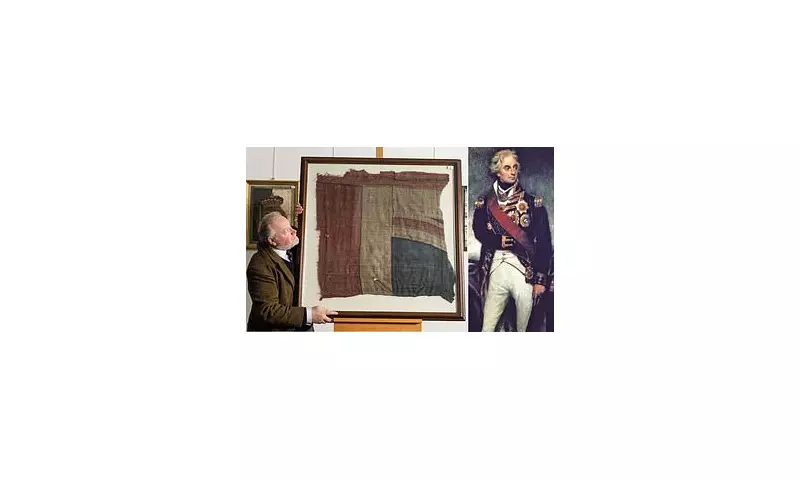
A crucial piece of British naval history, a fragment of the very flag that flew from Admiral Lord Nelson's flagship during the Battle of Trafalgar, is set to go under the hammer in London next week. Historians and experts are now urgently calling for the government to impose an export ban to ensure this "most important" surviving flag section from the era-defining battle remains in the United Kingdom.
The Historic Fragment and Its Provenance
The item for sale is a 34 by 36-inch segment of the white ensign that identified HMS Victory's nationality. This specific piece constitutes the bottom right section of the Union Flag that occupied the top left corner of the larger ensign. It still bears visible powder stains and splinter tears sustained during the ferocious fighting on 21 October 1805, the day Nelson led the Royal Navy to a decisive victory over the combined French and Spanish fleets but was fatally shot by a French sniper.
The flag's journey is as remarkable as the battle itself. It was originally intended to be entombed with Nelson in his crypt at St Paul's Cathedral. However, sailors who had marched with it during the hero's state funeral procession on 9 January 1806 instead tore it into pieces to keep as personal mementos. This fragment, expected to fetch around £700,000, is the largest and most significant of those souvenirs.

Precedent and the Call for an Export Ban
The sale has drawn immediate parallels with a similar artefact sold last year. In July, a Union Jack from the Royal Sovereign—the flagship of Nelson's second-in-command, Vice Admiral Cuthbert Collingwood—was offered for £450,000 in Cheltenham. In December, the UK government, through Culture Secretary Baroness Twycross, placed an export ban on that flag, deeming it too important to leave the country and allowing UK institutions time to raise funds to acquire it.
Experts argue the Victory fragment is of even greater historical significance due to its direct link to Nelson himself. Revered Nelson authority Martyn Downer stated, "This piece for sale is the most important flag or section of flag from the battle... if Royal Sovereign's Union Jack has an export ban placed on it... then the same should apply to this." He expressed a desire to see it displayed near HMS Victory at Portsmouth.
Auction and National Heritage Concerns
London auctioneer Charles Miller, who is overseeing the sale on Tuesday, acknowledged the likelihood of a review by the Export Licensing Committee. "I certainly would expect this flag fragment to go to review," he said, "Our government really should be supporting our museums to help them buy these items which are so important to our country."
Miller highlighted the fragment's unique value, noting that while interest in Nelson is no longer heavily featured in school curriculums, it remains immense internationally. "What lifts the importance of this fragment is that it was at Nelson's funeral, which was the first state funeral for a commoner and couldn't be replicated today," he added. The fragment has been in private hands for nearly a decade but boasts excellent provenance, having once been part of the collection of Admiral Hugh William Dobbie and presented to the Royal United Services Museum in 1860.
The overarching sentiment from historians is clear: this object is not merely a collectible but a tangible relic of the battle that secured Britain's naval supremacy for over a century and thwarted Napoleon's invasion plans. The campaign to keep it in the UK underscores the ongoing struggle to preserve pivotal artefacts of national identity within public view.