

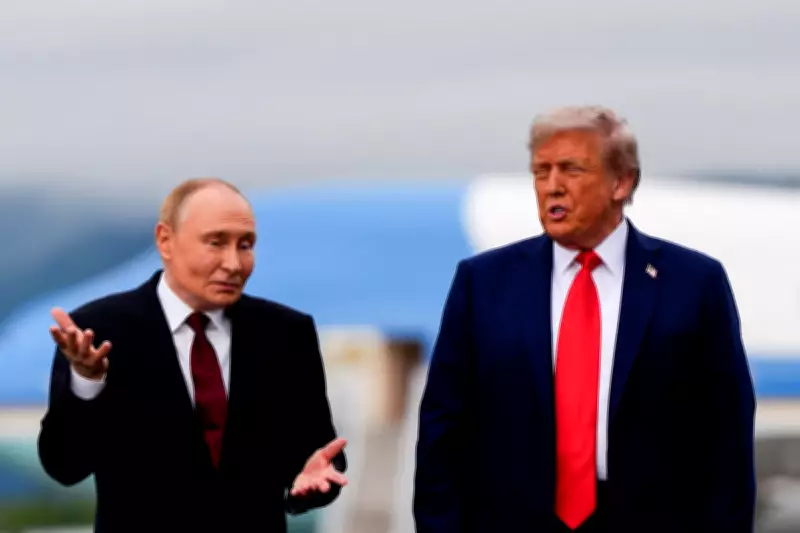
The final remaining mutual constraints on the world's two largest nuclear arsenals are set to vanish this Thursday as the New Start treaty between the United States and Russia officially expires. This pivotal moment marks the end of over five decades of arms control agreements, occurring against a backdrop of escalating global tensions and what experts describe as a crumbling rules-based international order established after the Second World War.
A Legacy of Stability Unravels
Alexandra Bell, President and Chief Executive of the Bulletin of the Atomic Scientists, issued a stark warning about the deteriorating situation. "When it comes to nuclear risks, everything is trending in the wrong direction over the course of 2025," Bell stated. "Nuclear risks have become more complex, more dangerous and we have seen leaders fail in their obligation to manage those risks." She emphasised that the international community is merely "two days away from watching the United States and Russia fritter away half a century of work to maintain nuclear stability between the two largest nuclear states."
The New Start agreement, originally signed in 2010 by then-Russian President Dmitry Medvedev and US President Barack Obama, established crucial limits. It capped each nation's deployed strategic warheads at 1,550 and restricted the total number of delivery systems—such as missiles and bombers—to 800. Beyond these numerical restrictions, the treaty created an extensive framework for mutual monitoring, data exchange, and on-site inspections, though Russia suspended its participation in these verification measures in 2023 in retaliation for Western support of Ukraine.

Diplomatic Efforts and Failed Negotiations
Despite last-minute appeals from arms control advocates, substantive negotiations to salvage the treaty appear to have faltered. In September, Russian President Vladimir Putin proposed a one-year extension, an idea which former US President Donald Trump initially described as "sounding like a good idea." However, Moscow later claimed it received no formal response to this proposal, and no concrete diplomatic progress followed.
Trump, in remarks to the New York Times in January, adopted a cavalier stance, stating, "If it expires, it expires. We'll just do a better agreement." A subsequent White House briefing clarified that the Trump administration seeks a future deal that also incorporates China, whose nuclear arsenal is significantly smaller. According to estimates from the Federation of American Scientists, China possesses roughly 600 warheads, very few of which are actively deployed. In stark contrast, the FAS assesses the US stockpile at 5,177 warheads and Russia's at 5,459.
Experts Warn of Dire Consequences
Jennifer Kavanagh, Director of Military Analysis at the Defense Priorities advocacy group, characterised Trump's hopes for a superior post-expiry deal as "wishful thinking." "If the administration thinks getting a new 'better' treaty after this one lapses will be easy, they are mistaken," Kavanagh cautioned. She argued that securing an agreement with Russia is likely a prerequisite for engaging China in nuclear arms control talks, suggesting the current administration would be wiser to preserve the existing framework.
The potential fallout extends far beyond bilateral relations. Daryl Kimball, head of the Arms Control Association in Washington, warned that the treaty's demise could "ignite a new arms race quite rapidly." He pointed to factions within the US nuclear establishment eager to rapidly expand capabilities to counter China's strategic military buildup. Furthermore, Kimball highlighted the threat this poses to the broader 1970 Nuclear Non-Proliferation Treaty (NPT), which obliges nuclear weapons states to pursue disarmament in good faith. "This would represent a direct violation of the United States' legal obligations under the NPT, and would shake the foundations of yet another core set of rules," he asserted.
The Erosion of Nuclear Deterrence
The historical premise that mutual nuclear arsenals create a stable, cautious standoff is being severely tested. Analysts note that even before the New Start expiry, the stabilising effect of nuclear deterrence has been diminishing, particularly following Russia's 2022 invasion of Ukraine and the subsequent surge in NATO-Russia border tensions.

In a recent commentary for the Bulletin of the Atomic Scientists titled Nuclear Deterrence Is Dying. And Hardly Anyone Notices, analyst Alex Kolbin argued, "Put simply, nuclear weapons are no longer functioning as a decisive factor in global security." This sentiment underscores a broader concern that the world is entering a perilous new chapter where the old rules of nuclear engagement no longer apply.
The expiration of New Start represents the latest collapse in a series of arms control agreements, following the demise of pacts limiting missile defence systems and intermediate-range forces. With both Moscow and Washington investing hundreds of billions in modernising their nuclear forces, and leaders openly brandishing their atomic capabilities in rhetoric, the path forward appears fraught with unprecedented risk and uncertainty for global security.





