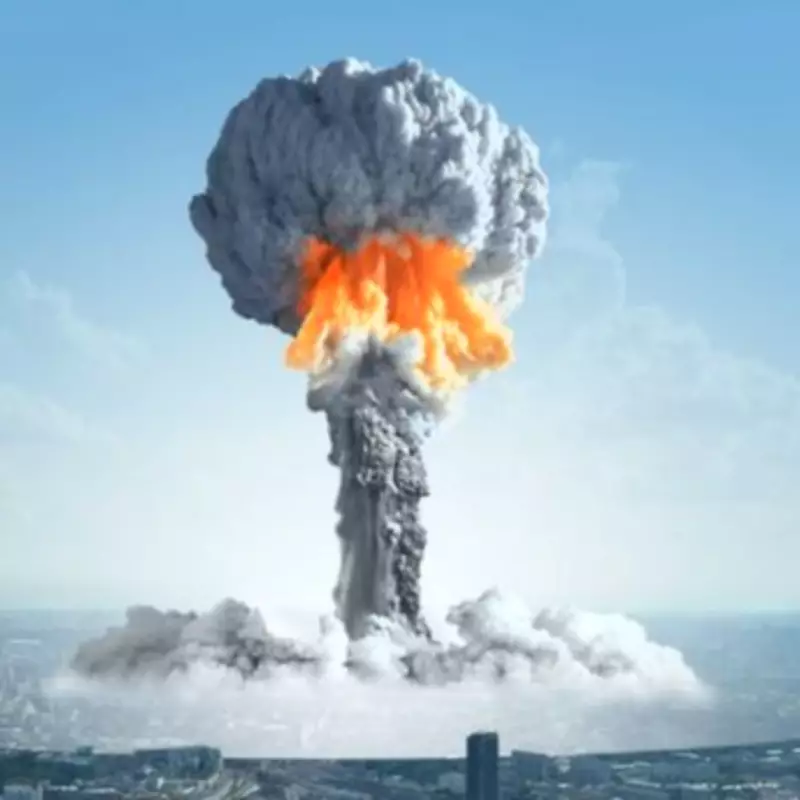
Global Nuclear Arsenal Report 2026: Nine Nations Hold 12,300 Warheads
As the conflict between the United States, Israel, and Iran intensifies in the Middle East, the spectre of nuclear warfare has become an increasingly pressing concern for global security. The ongoing hostilities, combined with other international confrontations such as the Russia-Ukraine war and Pakistan-Afghanistan clashes, create a volatile landscape where multiple nations with nuclear capabilities are engaged in dangerous military engagements.
The Current Nuclear Landscape
According to the Federation of American Scientists' 2025 Status of World Nuclear Forces, nine nuclear-armed states collectively possess approximately 12,300 warheads as of early 2026. Of these, more than 9,614 are maintained in operational military stockpiles ready for deployment through various delivery systems including missiles, naval vessels, aircraft, and submarines. The remaining warheads have been decommissioned but remain largely intact while awaiting disassembly.
The nine nuclear-armed nations are:

- Russia
- United States
- China
- France
- United Kingdom
- Pakistan
- India
- Israel
- North Korea
Of the 9,614 warheads in military stockpiles, approximately 3,912 are deployed with operational forces on missiles or at bomber bases. Among these, around 2,100 American, Russian, British, and French warheads are maintained on high alert status, ready for use on short notice.
Major Nuclear Powers: Russia and the United States
Russia is believed to possess approximately 5,459 nuclear warheads, with 1,150 retired from military service but still intact. The Kremlin maintains 2,591 warheads in its military stockpile designated for potential deployment, while 1,718 are already strategically positioned, bringing the active nuclear stockpile total to 4,309.
The United States maintains a total active stockpile of 3,700 nuclear warheads, comprising 1,670 strategically deployed, 100 non-strategically deployed, and 1,930 held in military stockpiles for potential use. America also holds 1,477 retired nuclear warheads, bringing their total inventory to 5,177. Notably, US nuclear weapons are stationed in five allied nations—Turkey, Italy, Belgium, Germany, and the Netherlands—in addition to American territory.
Collectively, Russia and the United States control an estimated 87% of the world's total nuclear inventory and 83% of the stockpiled warheads available for military deployment as of early 2026.
Other Nuclear-Armed Nations
China's total nuclear inventory is estimated at 600 warheads, with 576 in reserve stockpile and 24 strategically deployed. France maintains an active arsenal of approximately 300 warheads, comprising 280 strategically deployed nuclear weapons, 10 held in reserves, and 80 retired warheads, bringing their complete total to an estimated 370.
The United Kingdom is thought to possess a total nuclear inventory of 225 warheads, with 120 strategically deployed and 105 kept in reserve stockpiles. India is estimated to possess roughly 180 nuclear warheads, while Pakistan is thought to hold 170. North Korea has approximately 50 nuclear warheads, though estimates suggest they possess sufficient fissile material for 40-50 individual weapons.
Israel's precise warhead count remains unconfirmed, though intelligence suggests the nation has nuclear material for up to 200 weapons. India, Pakistan, and Israel have never signed the Non-Proliferation Treaty, while North Korea originally joined as a non-nuclear weapon state but withdrew in 2003.
Changing Nuclear Dynamics
While the current global total of 12,241 warheads represents a substantial decrease from the approximately 70,000 warheads held during the Cold War, experts anticipate numbers will climb steadily over the coming decade. Modern nuclear weapons are far more advanced than their Cold War predecessors, and several nations are actively expanding their arsenals.
French President Emmanuel Macron recently declared his nation would be expanding its nuclear arsenal, stating "The next 50 years will be an era of nuclear weapons" and unveiling plans for France's new nuclear-armed submarine called The Invincible, scheduled for 2036.

The quantity of warheads in global military reserves is increasing, with China, North Korea, India, Pakistan, France, the United Kingdom, and quite possibly Russia thought to be steadily expanding their current stockpiles. Meanwhile, the United States has reportedly depleted some of its nuclear weapons stockpile in its current conflict with Iran, including Tomahawk missiles, raising questions about future inventory adjustments.
While the worldwide stockpile of nuclear weapons continues to decline overall, the rate of reductions has significantly decelerated compared to the previous three decades, indicating a potential shift in global nuclear strategy amid escalating international tensions.