Pakistan's Airstrike Escalates Conflict with Afghanistan
Pakistan has dramatically escalated its ongoing conflict with Afghanistan this week by launching a major airstrike on a facility in Kabul, reportedly killing dozens and marking a severe intensification of cross-border clashes that have now entered their third week. According to the United Nations Assistance Mission in Afghanistan (Unama), the bombing resulted in 143 fatalities and numerous injuries. However, Afghan interior ministry spokesperson Abdul Mateen Quanie provided a higher toll, stating 408 people were killed and 265 wounded at what was described as a 2,000-bed drug rehabilitation centre.
Pakistan has firmly denied targeting the hospital, asserting that its strike was directed at a military terrorist ammunition and equipment storage site identified as Camp Phoenix, located miles away from the rehabilitation facility. Local residents, however, contend that Camp Phoenix is an abandoned NATO military base repurposed approximately a decade ago into a drug treatment centre, known locally as Omid Camp or camp of hope, with the official name Ibn Sina Drug Addiction Treatment Hospital.
Military Disparity Between the Neighbours
This incident represents the most significant escalation in hostilities between the two South Asian nations, who have been engaged in conflict since late February, coinciding with the United States and Israel initiating a war against the Iranian regime in Tehran. Pakistan has previously struck multiple locations in Afghanistan, declaring an open war with its neighbour. Military analysts highlight that while both countries possess military capacity, Afghanistan lags considerably due to its absence of air superiority and an economy devastated by prolonged warfare.

As tensions persist, a detailed examination of military capabilities, based on data from the London-based International Institute for Strategic Studies, reveals how Pakistan overwhelmingly surpasses Afghanistan in terms of armed forces and arsenals.
Overview of Military Strengths
Pakistan's armed forces benefit from robust recruitment and retention, significantly bolstered by equipment supplied by its primary defence partner, China. Islamabad continues to invest heavily in its military nuclear programmes while simultaneously modernising its navy and air force. In stark contrast, the capability of the Afghan Taliban's armed forces is in decline, hampered by a diminishing ability to operate foreign equipment seized when the Islamist group regained power in the landlocked country in 2021. Furthermore, a lack of international recognition for the Taliban administration has severely impeded military modernisation efforts.
Personnel and Equipment Breakdown
Personnel: Pakistan maintains 660,000 active personnel in its defence forces, comprising 560,000 in the army, 70,000 in the air force, and 30,000 in the navy. The Afghan Taliban's military strength is substantially thinner, with only 172,000 active personnel, though the group has announced plans to expand its armed forces to 200,000.
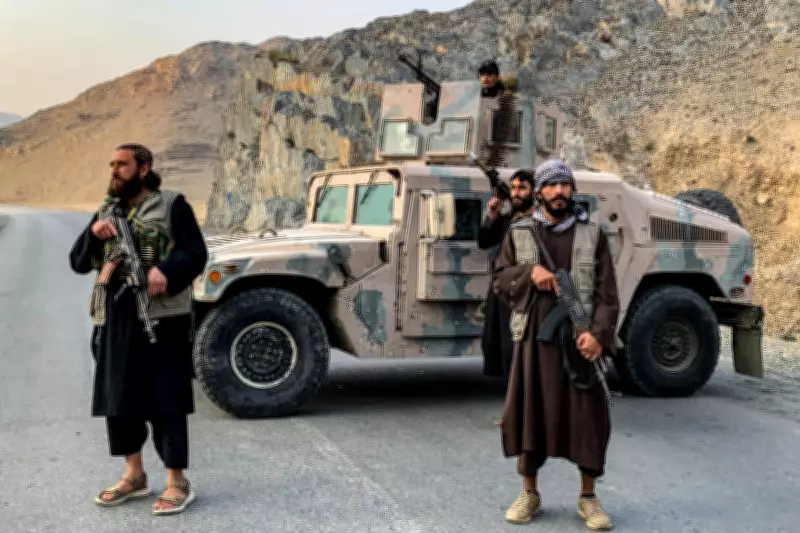
Fighting Vehicles and Artillery: Pakistan possesses more than 6,000 armoured fighting vehicles and over 4,600 pieces of artillery. Afghan forces also have armoured fighting vehicles, including Soviet-era main battle tanks, armoured personnel carriers, and autonomous underwater vehicles, but the exact numbers remain unknown. Similarly, the precise count of their artillery, which includes at least three different types, is not documented.
Air Force: Pakistan operates a fleet of 465 combat aircraft and more than 260 helicopters, encompassing multi-role, attack, and transport choppers. Afghanistan has no fighter jets and lacks a functional air force. It is known to possess at least six aircraft, some dating back to the Soviet era, and 23 helicopters, though the operational status of these assets is uncertain.
Nuclear Arsenal Disparity
While Pakistan is a nuclear-armed nation with an estimated 170 warheads, Afghanistan does not possess any nuclear arsenal, underscoring a critical strategic imbalance in the conflict.