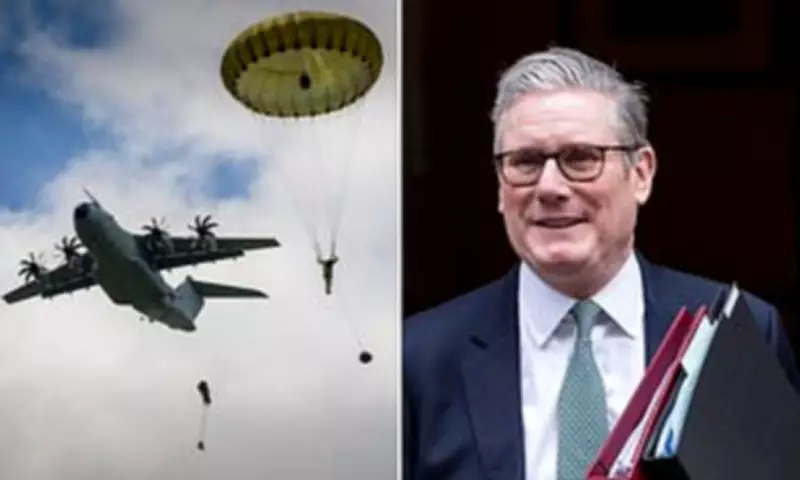
Parachute Regiment Jump Capability Faces Drastic Reductions
Penny-pinching defence chiefs are allegedly devising plans to slash the jumping capability of the legendary Parachute Regiment, according to fears raised last night. This development emerges just days after Downing Street sources hinted at an additional £17 billion being allocated to national security, suggesting that the Army's most elite unit could paradoxically be targeted for cuts.
Daily Mail Campaign and Parliamentary Concerns
The situation coincides with the Daily Mail's Don't Leave Britain Defenceless campaign, which has vocally advocated for increased support for the Armed Forces. All three battalions of the Parachute Regiment are currently trained and equipped to jump into warzones behind enemy lines, but there are now apprehensions that one or two of these battalions may lose their routine parachute jumping capability.
If any plans receive approval, a single Para battalion, likely either 2 or 3 Para, would continue to train for mass infantry insertions behind enemy lines. Conservative MP Ben Obese-Jecty has demanded immediate clarity regarding the implications of this potential move. Mr Obese-Jecty, who submitted a parliamentary written question on the issue, told the Daily Mail: 'The Government needs to clarify the future of the Parachute Regiment, rather than bury it in the overdue Defence Investment Plan.'

Ministry of Defence Denial and Broader Context
Last night, the Ministry of Defence issued a statement refuting these claims, asserting: 'These claims are incorrect. There are no plans to cut any Parachute Regiment battalion, nor Para pay.' This denial comes amidst a backdrop of significant political manoeuvring concerning defence expenditure.
The controversy follows reports that Keir Starmer is poised to accelerate a substantial rise in military spending after holding crisis meetings with defence chiefs on Monday night. The Prime Minister is expected to announce a timetable 'within weeks' for Britain to achieve a key defence spending milestone years ahead of schedule.
Defence Spending Increase and Treasury Hesitation
The proposed move aims to allocate 3 per cent of gross domestic product to defence spending, which would generate an estimated £17 billion in additional funding. However, because this money would need to be sourced from public spending cuts, increased taxation, or higher borrowing, the Treasury is understood to be withholding its approval.
This initiative comes almost two years after the Daily Mail launched its Don't Leave Britain Defenceless campaign, which demanded precisely the same increase on exactly the same timetable. Backed by senior officers, the newspaper called for Britain to commit to spending 3 per cent by the end of this parliament, or by 2029. Currently, this percentage is described as 'an ambition' by the end of the next parliament, which could extend as far as 2034.
Political Reactions and Historical Underfunding
The timetable to reach 3 per cent by 2029 could be confirmed as part of the Government's economic Spring Statement on March 3. It also follows a year after Tory leader Kemi Badenoch stated that her party would support Labour in any attempt to reach 3 per cent by 2029. On Monday night, speaking exclusively to the Daily Mail, Tory defence spokesman James Cartlidge remarked: 'This would be very welcome if it is true. But we called for this a year ago. Why has the Government waited a year? This exemplifies how the Prime Minister is making everything up as he is going along.'
The present level of defence expenditure stands at 2.4 per cent of GDP. Spending for the last financial year was £60.2 billion, with an expected rise to £62.2 billion in 2025/26. Sir Keir's decision was apparently solidified after he took a personal interest in the Defence Investment Plan – a blueprint for costed military priorities.

Delays and Strategic Challenges
The DIP was supposed to be published in the autumn but was delayed because the figures do not align, following reports of a £28 billion shortfall over four years. It is widely acknowledged that the Services have been 'hollowed out' by decades of underfunding. This issue has gained urgency as America's defence priorities shift away from Europe and the threat from Russia continues to escalate. Downing Street sources did not deny the move towards 3 per cent yesterday, adding further complexity to the ongoing debate.