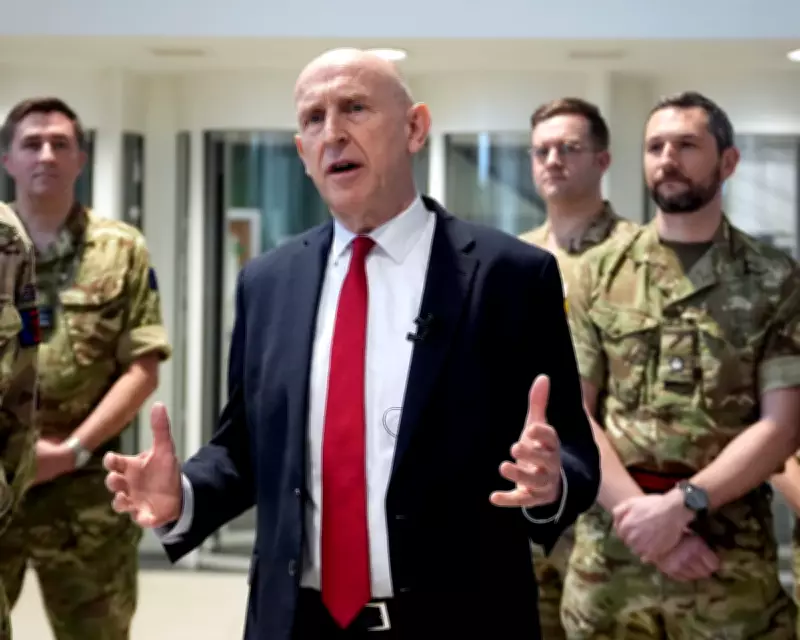
In a stark warning from the heart of British military command, Defence Secretary John Healey has asserted that Vladimir Putin's "hidden hand" is actively shaping Iran's evolving drone warfare tactics. The senior cabinet minister made these remarks following a comprehensive briefing by top officers at the UK's military headquarters in north-west London, where he was informed of alarming new developments in Iranian combat methods.
Russian Tactics Adopted by Iranian Forces
During his visit to the Ministry of Defence's main operational centre, Healey received detailed intelligence indicating that drone pilots from Iran and its proxy groups are increasingly adopting tactical approaches "from the Russians." This revelation comes amidst escalating tensions across the Middle East, where Iranian-backed forces have launched numerous attacks against Western interests.
Lieutenant General Nick Perry, the Chief of Joint Operations, personally briefed the Defence Secretary on these concerning developments. Perry explained that it appears Russia has been providing tactical advice to Iran and its allies on how to operate their drone fleets more effectively. "Iranian drone pilots were flying them much lower, and therefore they were more effective in hitting targets," Perry reported to Healey during their meeting.

Shahed Drones Become Problematic Weapon
The specific focus of concern is Iran's Shahed drone arsenal - long-range weapons that Russia has extensively deployed against Ukraine. According to military assessments, Iran has already launched more than 2,000 of these drones across the Middle East since the US-Israeli attack on February 28th. The adaptation of Russian flying techniques has made these weapons "proven problematic" for defence forces, as Perry noted they are becoming one of Tehran's more effective weapons as regional conflicts approach their third week.
Healey emphasized the strategic implications of this military cooperation, telling journalists after his briefing: "I think no one will be surprised to believe that Putin's hidden hand is behind some of the Iranian tactics and potentially, potentially some of their capabilities as well." He argued this collaboration benefits Putin significantly, as "the one world leader that is benefiting from sky-high oil prices at the moment is Putin because it helps him with a fresh supply of funds for his brutal war in Ukraine."
Recent Attacks Demonstrate Growing Threat
The urgency of Healey's warning was underscored by overnight attacks on a Western military base in Erbil, northern Iraq, where British personnel are stationed. Multiple drones struck the facility, with a UK counter-drone team successfully intercepting and destroying two additional threats. Fortunately, there were no British casualties reported from these incidents.
This military cooperation between Moscow and Tehran has been developing since Putin launched his full-scale invasion of Ukraine in 2022. Initially, Iran supplied Russia with Shahed 136 delta-wing drones and subsequently shared the design specifications. According to US intelligence sources, Moscow has reciprocated by providing Tehran with military intelligence over the past fortnight, though the Kremlin officially denies such exchanges.
Strategic Waterway Under Threat
Beyond drone warfare, Healey revealed additional concerns about Iran's activities in critical maritime corridors. The Defence Secretary disclosed that he discussed what amounts to the effective closure of the Strait of Hormuz with the E5 group of European defence ministers during Wednesday's meeting. He reported "clearer and clearer" intelligence indicating that Iran is attempting to mine this vital waterway, through which approximately one-fifth of global oil supplies normally transit.
The UK maintains some "autonomous systems" in the Middle East region that could potentially be deployed to search for Iranian mines. However, the Royal Navy's dedicated mine-hunting vessel, HMS Middleton, which was previously stationed in the area, has returned to the UK for essential maintenance work.

Economic and Military Implications
The combination of drone attacks on oil tankers, cargo vessels, and potential mining operations has already driven global oil prices to approximately $100 per barrel. Healey identified "a de-escalation of the conflict" as the quickest way to resolve this dangerous blockade of international shipping lanes.
While not ruling out eventual UK participation in a potential convoy system to protect merchant shipping through the Strait of Hormuz, Healey acknowledged that no formal proposal is imminent. This hesitation partly stems from ongoing uncertainty about the United States' position on the matter, with Washington reportedly vacillating over appropriate responses.
Britain's immediate naval capabilities in the region are limited, with no available warships currently positioned in or near the strategic waterway. HMS Dragon, the only British warship in the vicinity, set sail for Cyprus on Tuesday to protect UK airbases there, a voyage expected to take up to one week to complete.
The Defence Secretary's briefing and subsequent statements highlight growing concerns within the British military establishment about the deepening military cooperation between Russia and Iran, and the tangible consequences this partnership is having on regional stability and global energy markets.