

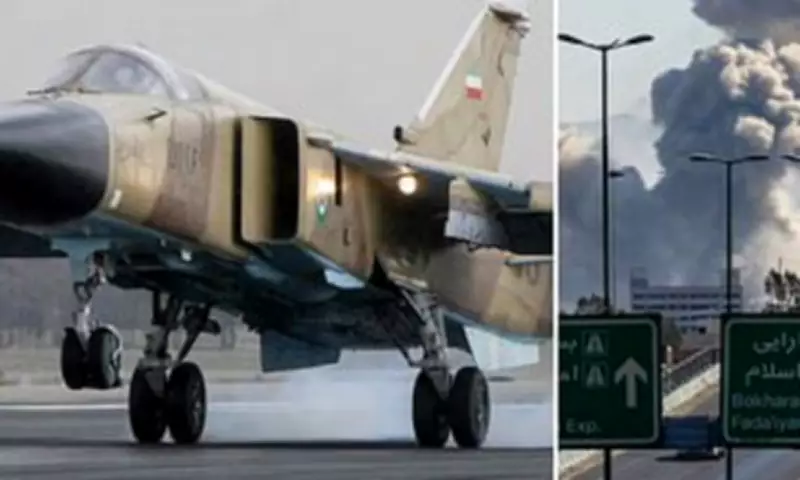
Qatari Fighter Jets Intercept Iranian Bombers Minutes From US Base Strike
In a dramatic escalation of Middle East hostilities, Iranian warplanes were reportedly just two minutes away from bombing a major American military base housing approximately 10,000 troops before Qatari fighter jets intervened to shoot them down. This incident, detailed in a new report from CNN sources, highlights the volatile security situation engulfing the region.
Imminent Attack on Al-Udeid Air Base Thwarted
According to intelligence sources cited by CNN, Iran dispatched two Soviet-era Su-24 tactical bombers early on Monday morning. These aircraft were directed toward two critical targets: the al-Udeid Air Base in Qatar and the Ras Laffan natural gas processing facility. Al-Udeid is the largest American military installation in the Middle East, serving as the headquarters for the US Central Command, the US Air Force's Central Command, and the RAF's 83rd Expeditionary Air Group, with a typical troop presence of up to 10,000 soldiers.
The Iranian bombers were observed carrying bombs and guided munitions, flying at an extremely low altitude of merely 80 feet to evade radar detection. After Qatari authorities attempted radio contact and received no response, they scrambled an F-15 fighter jet, which successfully engaged and downed both Iranian planes. The wreckage reportedly crashed into Iranian territorial waters.

Gulf States Drawn Into Conflict as Regional Tensions Soar
This incident underscores how Gulf nations like Qatar, which host Western military bases, are increasingly becoming targets in the broader Middle East conflict. In response, the European Union and the Gulf Cooperation Council issued a joint statement following a videoconference of foreign ministers, calling for dialogue and diplomacy to resolve the crisis. They reiterated that Gulf countries retain the right to defend themselves against Iranian aggression while emphasizing commitment to regional stability, civilian protection, and international law.
The statement affirmed unwavering support for diplomatic efforts to prevent Iran from acquiring nuclear weapons and to allow the Iranian people to determine their future. However, the ongoing war has severely disrupted maritime logistics, blocking access to major Gulf ports and stranding container vessels destined for the United Arab Emirates, Qatar, Saudi Arabia, Bahrain, and Kuwait.
Humanitarian and Supply Chain Impacts Intensify
MarineTraffic.com reported that this port blockade is impacting agricultural supplies for over 50 million people across the Gulf, a region that imports more than 90% of its food. The resulting supply chain crisis threatens widespread food insecurity amid escalating military confrontations.
Western Military Coordination Strengthens in Response
As Western interests face heightened risks, France, Italy, and Greece have agreed to coordinate the deployment of military assets to Cyprus and the Eastern Mediterranean. A French diplomat, speaking anonymously, confirmed that these nations will collaborate to ensure freedom of navigation in the Red Sea. This decision followed a call between French President Emmanuel Macron, Italian Prime Minister Giorgia Meloni, and Greek Prime Minister Kyriakos Mitsotakis.
Italy has further heightened its national air-defense systems and announced plans to send naval support to Cyprus, along with anti-missile and anti-drone defense systems to Gulf countries affected by retaliatory strikes from Iran. Prime Minister Meloni stated that while the United States has not yet requested to use its bases in Italy for operations against Tehran, any such request would be presented to Parliament. The US maintains over 12,000 military personnel across Italian bases, including facilities in Vicenza, Livorno, Aviano, Sigonella, Gaeta, and Naples.
The interception of Iranian bombers near a pivotal US base marks a critical juncture in the Middle East conflict, amplifying fears of broader regional warfare and prompting intensified international military and diplomatic responses.






