

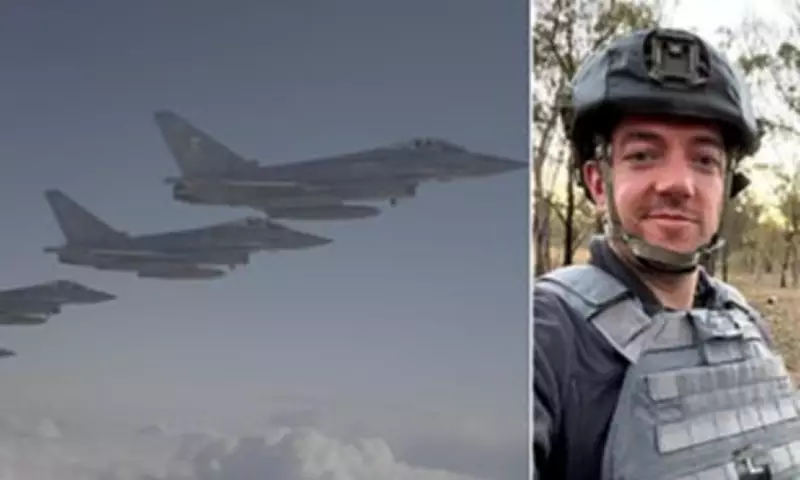
Roaring engines, crushing G-forces, and pilots fighting to stay conscious under extreme pressure—these are the Hollywood images of aerial combat that many associate with films like Top Gun. Yet, the reality is far more intense and unpredictable, as I discovered while cruising at 22,000 feet aboard what appeared to be a standard passenger plane. Mere moments before, we had narrowly avoided being shot down, a stark reminder that this was no ordinary flight.
Exercise Red Flag: A Realistic Combat Simulation
This aircraft was, in fact, an RAF Voyager, a mid-air refuelling plane, and we were immersed in one of the world's most realistic air combat simulations: Exercise Red Flag. Conducted from Nellis Air Force Base near Las Vegas, this drill involves British, American, and Australian forces. In a briefing room hours earlier, commanders emphasized that Red Flag differs from typical exercises—there is no scripted itinerary, rehearsed movements, or predetermined outcome. Instead, pilots engage in scenarios that mimic real combat as closely as possible without actual casualties.
The Mission: Blinding Enemy Defences
During my visit, the scenario pitted an allied force against a "near-peer adversary," a military term referring to nations like Russia or China. The mission involved British Typhoons, alongside American and Australian F-35s, aiming to destroy enemy radar systems to disable air defences. The strategy began with a small group of jets bombing ground infrastructure, such as roads and bridges, to provoke the enemy into activating their radar. Once illuminated, a larger reserve force would launch a devastating attack.

The unarmed Voyager played a crucial support role, holding back from the frontline with a fighter escort and refuelling jets to keep them operational. However, this made it a prime target for adversary forces, which included F-16s and fifth-generation fighters. Taking down the tanker would effectively ground all dependent aircraft, highlighting the high stakes of the exercise.
A Tense Moment in the Skies
Initially, the operation proceeded smoothly. Our unseen wingmen engaged enemies hundreds of miles ahead, while we provided support from a distance. At one point, four RAF Typhoons aligned perfectly alongside the Voyager, with two sweeping under its tail to refuel simultaneously from both wings. Then, a sudden radar ping signaled danger: an enemy jet had breached the frontline and was heading directly toward us.
With no offensive capabilities, the Voyager pilots prepared for evasive manoeuvres if the threat closed within a critical range—a challenging task in an aircraft essentially a repainted Airbus A330-200. The enemy jet approached to within 50 miles, a distance that seems substantial until considering speeds of up to 1,500 mph, allowing closure in just two minutes. Fortunately, our escort intervened, neutralizing the threat before it could strike, and we continued refuelling US F-35s before safely returning to base.
The Serious Purpose Behind the Drills
While exhilarating, these simulations serve a deadly serious purpose. Red Flag originated from the Vietnam War, designed to provide pilots with enough real-world experience to survive their first ten flights—statistically the most perilous period. Historically, many pilots at such bases had actual combat experience, but today, with no major airforce conflicts for over three decades, drills like this are essential. They bridge the gap between training and potential warfare with adversaries like China or Russia, potentially determining survival in future conflicts.
Exercise Red Flag underscores the critical importance of preparedness in modern aerial combat, ensuring that pilots are ready for the unpredictable nature of real-world engagements.






