Royal Navy Forced to Borrow German Frigate Amid Severe Ship Shortage
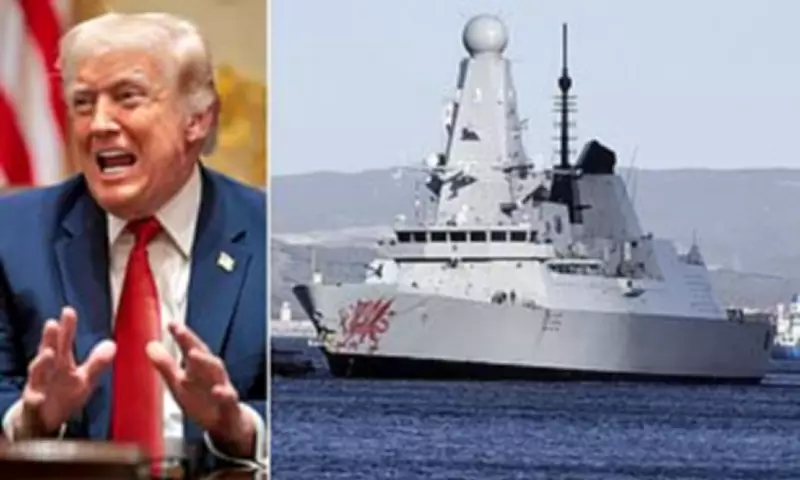
The Royal Navy has been compelled to borrow a German frigate to fulfil a NATO commitment, highlighting a critical shortage of operational vessels. This embarrassing development coincides with former US President Donald Trump mocking Britain's aircraft carriers, labelling them as mere 'toys' in comparison to American naval power.
NATO Mission Compromised by Redeployment
The destroyer HMS Dragon was originally scheduled to lead a NATO mission in the North Atlantic. However, it was hastily redeployed to Cyprus earlier this month following escalating tensions with Iran. This left the Royal Navy without a suitable vessel to command the NATO deployment, forcing them to utilise the German frigate FGS Sachsen instead.
This incident follows a recent pattern of reliance on allied nations. Just weeks ago, the UK required assistance from France, Greece, and Italy when an Iranian drone struck RAF Akrotiri in Cyprus. No British ship was positioned to defend the base, and it took HMS Dragon nearly a month to arrive in the Mediterranean, sparking calls from Cypriots to remove British bases from their territory.

Trump's Scathing Critique and Domestic Fury
Amid this operational crisis, Donald Trump publicly disparaged the UK's military capabilities. He stated that British aircraft carriers 'aren't the best,' adding derisively, 'They're toys compared to what we have.' This criticism has ignited fury among British military veterans and former commanders.
Former NATO commander General Sir Richard Shirreff branded the situation a 'bloody awful message' that deeply undermines national prestige. He urged the government to make financial sacrifices, arguing, 'We can't go on ploughing money willy-nilly into welfare.'
Royal Marine veteran Doug Cheshire, 102, who served in World War Two, expressed profound anger. 'I think it's a damn disgrace. They ought to be hauled over the coals for it,' he said. 'If Churchill was alive he would sack every one of them. I'm very upset. After what we went through, for them to get us into this parlous state, to borrow from the Germans to do a job which we should be able to do – they need pinning against the wall for this.'
Defence Spending Figures Revised Downwards
The controversy is compounded by newly released NATO data, which has revised UK defence spending figures downwards. The annual report shows the UK spent 2.31% of GDP on defence last year, a decrease from the previously predicted 2.4%. Estimates for 2024 have also been adjusted from 2.33% to 2.28%.
While UK military sources attribute this drop to changes in GDP calculations, similar to other nations, the revision fuels concerns about the government's commitment to bolstering defence. Defence Secretary John Healey admitted he is 'not happy with the situation,' citing the six-year timeline required to build a new warship as a significant constraint.
Political and Strategic Fallout
Tory MP and former Army officer Ben Obese-Jecty stated the episode demonstrates the UK has 'seemingly run out of ships,' lamenting that 'Britannia no longer rules the waves.' Former First Sea Lord, Admiral Lord West, warned that NATO allies 'are noticing that we are not the power we once were.'
'The Royal Navy was the second most powerful navy in NATO and the most powerful European navy. You can't really say that any more,' he said. 'Our American allies already are looking at us and saying, 'Oh dear, this isn't the British we're used to'.'
During a media appearance, Defence Secretary Healey attempted to frame the German assistance as a sign of NATO's strength. However, he stumbled when questioned on specific figures, incorrectly stating the Navy possesses 17 frigates and destroyers, when the actual number is 13.
The Ministry of Defence has issued a statement defending the UK's position, highlighting a £9 billion increase in defence spending since 2023 and a £270 billion investment planned across this Parliament. They also noted that commanding a NATO group from an allied warship is not uncommon. Nevertheless, the overarching narrative paints a picture of a Royal Navy stretched to its limits, reliant on foreign vessels to maintain its international obligations.