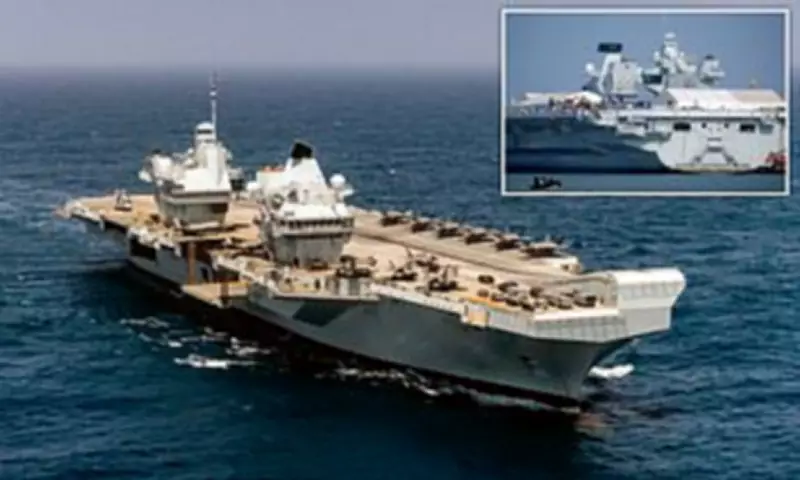
Royal Navy's Flagship Carrier Faces Escort Dilemma as Fleet Availability Plummets
Britain's premier aircraft carrier, HMS Prince of Wales, could require a French naval escort for any potential deployment to the Middle East due to critical shortages within the Royal Navy's operational fleet. The £3 billion warship has been placed on advanced readiness status, requiring its crew to be prepared to sail with just five days' notice, even as the vessel undergoes repairs at Portsmouth Naval Base.
Critical Shortages in Escort Vessels Raise Operational Concerns
With most Royal Navy warships either unavailable or undergoing maintenance, military planners are reportedly considering calling upon allied nations including France, the United States, and other European partners to provide essential escort protection. An aircraft carrier deployment typically requires accompaniment by two or three warships—either destroyers or frigates—along with an attack submarine to ensure operational security and combat capability.
The Royal Navy's current situation reveals significant challenges. Of the fleet's six destroyers, only HMS Dragon is considered action-ready, and even this vessel is scheduled to depart imminently for the Mediterranean to protect British sovereign base areas in Cyprus. Among the seven frigates, only HMS Somerset and HMS St Albans are understood to be available for immediate deployment, with the remainder requiring maintenance or repairs.

Shadow Defence Secretary James Cartlidge criticized the government's preparedness, stating: "Labour's talk of putting a carrier on greater readiness is a distraction from the real question: why didn't Starmer plan properly and move naval assets weeks ago, when a major US operation was clearly coming?"
He added: "The truth is Labour have prioritised welfare over defence, leaving an under-funded Ministry of Defence forced to make £2.6bn in cuts this year. That's why there are no Royal Navy warships in the Middle East and why even if a carrier were deployed, there would be serious questions about escort ships."
Military Leadership Defends Readiness Amid Escalating Crisis
Air Chief Marshal Sir Richard Knighton, Chief of the Defence Staff, has rejected claims that Britain's military was ill-prepared for the escalating Middle East crisis. He described the current period as "probably the most dangerous period in the last 30-odd years that I've been in uniform," while emphasizing that "the demands on defence are rising."
Regarding HMS Dragon's delayed deployment, Sir Richard explained: "HMS Dragon was in maintenance until this week. I'm enormously proud of the work of the Royal Navy—they've been working night and day to get that ship ready, get the ammunition on board, get the stores on board, and bring it out of its maintenance state so it's ready to go within the next few days."
The senior military leader dismissed suggestions that budget cuts had slowed Britain's response, stating that HMS Dragon was undergoing "routine maintenance" and that military planners had been preparing for such crises "over many years."
Regional Deployments and International Comparisons
Britain has faced particular criticism regarding its response to a drone attack on the Cyprus military base. While HMS Dragon is not expected to reach the eastern Mediterranean until next week, France and Greece have already deployed military assets to defend the island nation.
A Ministry of Defence spokesperson outlined Britain's regional military buildup: "We have been bolstering our UK military presence in the Middle East since January, and we have already deployed capabilities to protect British people and our allies in the region, including Typhoons, F-35 jets, air defence systems and an extra 400 personnel into Cyprus."
The spokesperson added: "Since the strikes began, we've had British jets in the sky shooting down drones and have sent additional assets to the region to further reinforce our air defences, including more Typhoons and Wildcat helicopters with drone busting missiles."
Regarding HMS Prince of Wales specifically, the MoD stated: "HMS Prince of Wales has always been on very high readiness and we are increasing the preparedness of the carrier, reducing the time it would take to set sail for any deployment."

Future Operations and Strategic Implications
Sir Richard Knighton signaled that Britain could join more proactive strikes in future operations after Prime Minister Keir Starmer granted permission for "defensive" US action against Iranian missile sites from UK bases. The military leader noted: "We saw overnight the first US bombers arrive at RAF Gloucester, and I would expect missions to be launched from there within the next few days."
The current situation highlights broader concerns about Britain's naval capabilities and strategic readiness. With only a fraction of the Royal Navy's destroyer and frigate fleet available for immediate deployment, the potential reliance on allied escorts for Britain's flagship aircraft carrier represents a significant operational challenge that could have lasting implications for the nation's military posture and international partnerships.