

Royal Navy's Diminished Capability Exposed in Mediterranean Crisis
There was an era, now seemingly relegated to history, when the Royal Navy could confidently assert its dominance over the world's oceans. Today, that proud legacy is under severe threat, with the service weakened by persistent political mismanagement, chronic budgetary shortfalls, and a growing incapacity to safeguard national interests effectively. The ongoing predicament of HMS Dragon serves as a stark symbol of this alarming decline, reflecting Britain's diminishing influence on the international stage.
Delayed Deployment Highlights Strategic Failures
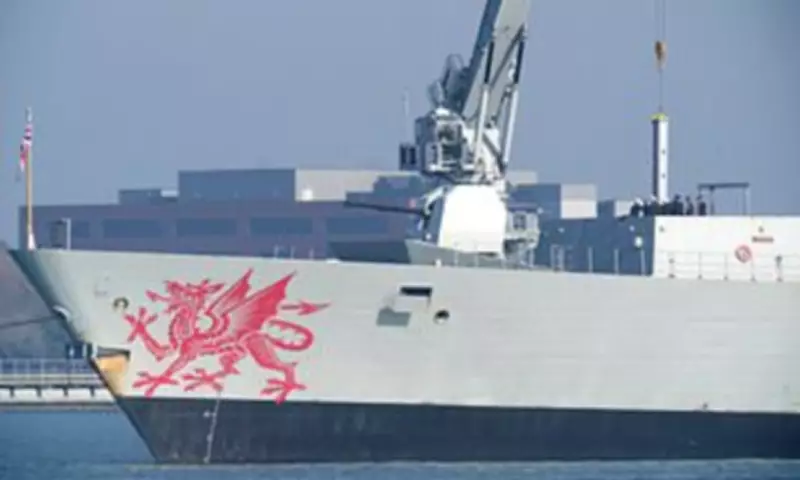
Following the Iranian drone assault on RAF Akrotiri in Cyprus, Prime Minister Keir Starmer announced that the £1 billion destroyer HMS Dragon, equipped with advanced missile defence systems, would be dispatched to the region to protect the base. However, three days later, the vessel remains anchored in Portsmouth and is not expected to reach the conflict zone for at least another week. Consequently, Britain must currently depend on French, Spanish, Greek, and even Italian warships for naval protection in the area.
This situation transcends mere embarrassment; it borders on criminal negligence. The Prime Minister had been aware for weeks that a US-Israeli offensive was imminent and that Iran might retaliate against Western targets. Why, then, were HMS Dragon and other naval assets not prepared and positioned for immediate action?

Political Denial and Leadership Vacuum
In a statement from Downing Street on Thursday, Sir Keir appeared deeply in denial. Rather than acknowledging any lack of preparedness, he insisted that all necessary military precautions had been taken prior to the drone attack and that the UK had been in a "heightened state of readiness." This assertion will undoubtedly surprise allies in the Gulf and Cyprus, who have expressed disappointment at Britain's failure to assist in defending against entirely predictable Iranian retaliations.
While the Prime Minister deliberated over the legal intricacies of military engagement, Tehran proceeded to bomb allied positions. Sir Keir also maintained that the "special relationship" with America remains robust, despite his initial refusal to permit US jets to attack Iran from British airbases, which provoked a furious response from Donald Trump.
Internal Discord and Policy ConfusionQuestions arise regarding whether Sir Keir made that decision independently. Leaks from the National Security Council indicate he may have been pressured by Ed Miliband, Rachel Reeves, and Yvette Cooper. If the Prime Minister is reduced to seeking foreign policy guidance from such politically lightweight figures, it may indeed be time for him to reconsider his role.
Perhaps the most laughable claim made on Thursday was Sir Keir's assertion that he is "providing calm, level-headed leadership." In reality, many perceive him as ineffective and out of his depth. Despite visiting 29 countries during his brief tenure, he has achieved negligible international success, with the notable exception of the controversial surrender of the Chagos Islands.
Domestic Disarray and Collapsing Support
On the domestic front, his policies are mired in confusion and disarray, marked by 14 significant U-turns on issues ranging from winter fuel allowances to the two-child benefit cap. Meanwhile, Labour's latest proposal to reduce migration involves paying failed asylum seekers up to £40,000 per family to leave the country. This raises the question: if their claims have been rejected, why not simply enforce their removal?
Unsurprisingly, the party's support has plummeted, allowing delusional far-left factions like the Greens to fill the political void. The government resembles a rudderless ship captained by a leader prone to calamitous decisions.

He frequently portrays himself as a statesman, but in practice, he embodies T.S. Eliot's concept of the "Hollow Men": "Paralysed force, gesture without motion." The Royal Navy's current plight is not merely a military issue; it is a symptom of a broader leadership crisis that threatens Britain's security and global standing.





