The recruitment and equipping of armed forces has always been an expensive and challenging endeavour throughout history, with the ultimate test of combat revealing unforeseen flaws. This timeless truth was starkly illustrated during the 1916 Battle of Jutland, when two British battlecruisers exploded under German fire. Admiral David Beatty famously remarked to a subordinate, 'There seems to be something wrong with our b***** ships today, Chatfield.' His observation proved prescient, as multiple deficiencies came to light.
Historical Precedents of Military Failures
This pattern of unexpected shortcomings continued in the interwar period. The majestic battlecruiser HMS Hood appeared formidable on the surface, but reality told a different story. On one notable occasion, one of her massive gun turrets slipped off its corroded bearings, requiring the ship's tug-of-war team to manually reposition it—a startling revelation of underlying maintenance issues.
Other branches of the military have faced similar challenges. The RAF's Fairey Battle bombers, developed at considerable expense just before the Second World War, proved tragically inadequate during the 1940 campaign against Germany in France. Despite the extraordinary courage of their crews, these aircraft were virtually useless in combat, leading to preventable losses.

The Modern Naval Crisis Unfolds
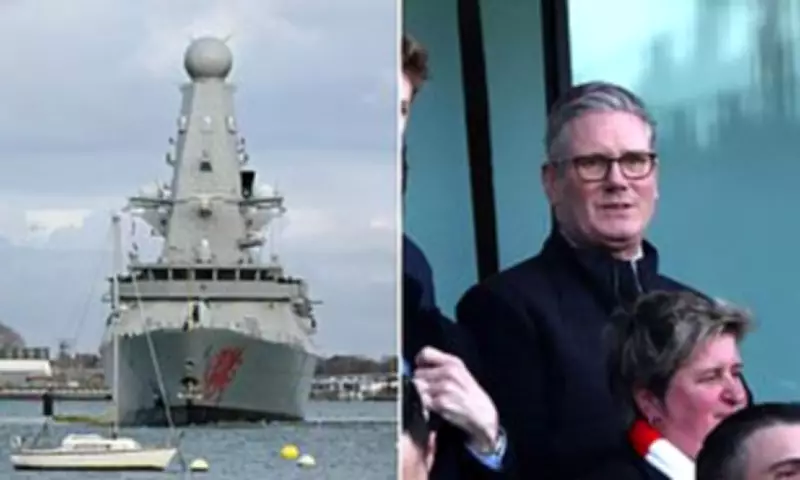
Such historical lessons remain critically relevant today, as failures in military preparedness continue to risk unnecessary casualties and potential defeat. The recent deployment of HMS Dragon, a Type 45 destroyer, to the Mediterranean serves as a contemporary case study full of cautionary insights.
The Type 45 class has gained notoriety for mechanical failures in warm waters like the Persian Gulf, where breakdowns have sometimes rendered these vessels vulnerable targets. Although expensive rectification efforts are underway, three destroyers remain non-operational. Meanwhile, the older Type 23 frigates face even more dire circumstances, with few of the officially available seven ships actually deployment-ready due to age-related deterioration and severe manpower shortages.
Compounding Challenges Across the Fleet
This ship crisis creates a vicious cycle: experienced seamen become increasingly reluctant to remain in service, while recruitment grows more difficult. The submarine fleet faces parallel difficulties, exacerbating the Royal Navy's overall readiness deficit.
The situation reached a critical point following an Iranian drone strike on the RAF Akrotiri base in Cyprus on March 1, 2026. Critics heavily criticised the government for lacking major warships near sovereign territory for defence. HMS Dragon only departed from Portsmouth on March 10—over a week after the attack—creating significant political embarrassment for Prime Minister Keir Starmer. France's ability to immediately pledge and deploy warships to the region highlighted Britain's comparative sluggishness, particularly as its premier air-defense destroyer remained stuck in port.
Strategic Implications and Historical Comparisons
Britain's two enormous and costly aircraft carriers consistently encounter operational problems, further diminishing naval capability. A navy predominantly confined to dock rather than deployed globally cannot respond with the speed of a fully prepared fleet. This contrast explains Britain's significantly faster response during the 1982 Falklands conflict compared to current limitations.
HMS Dragon's protracted preparations for departure proved embarrassing enough, but the revelation that the destroyer then spent three days stalled in the English Channel—still hundreds of miles from its intended defensive position near Cyprus—compounded the humiliation. In this context, former President Donald Trump's sudden request for a British naval presence in the Gulf seems unlikely to be fulfilled given current constraints.

Urgent Questions About National Defence
Examining the current state of British armed forces necessitates profound and immediate concern. Why does France—a nation with comparable population and economic strength—maintain a more effective and impressive naval force? This question demands urgent answers, as Britain must achieve similar capabilities promptly to ensure national security and fulfil international obligations. The lessons from HMS Dragon's deployment underscore that historical patterns of military unpreparedness persist, requiring decisive action to prevent future failures.