

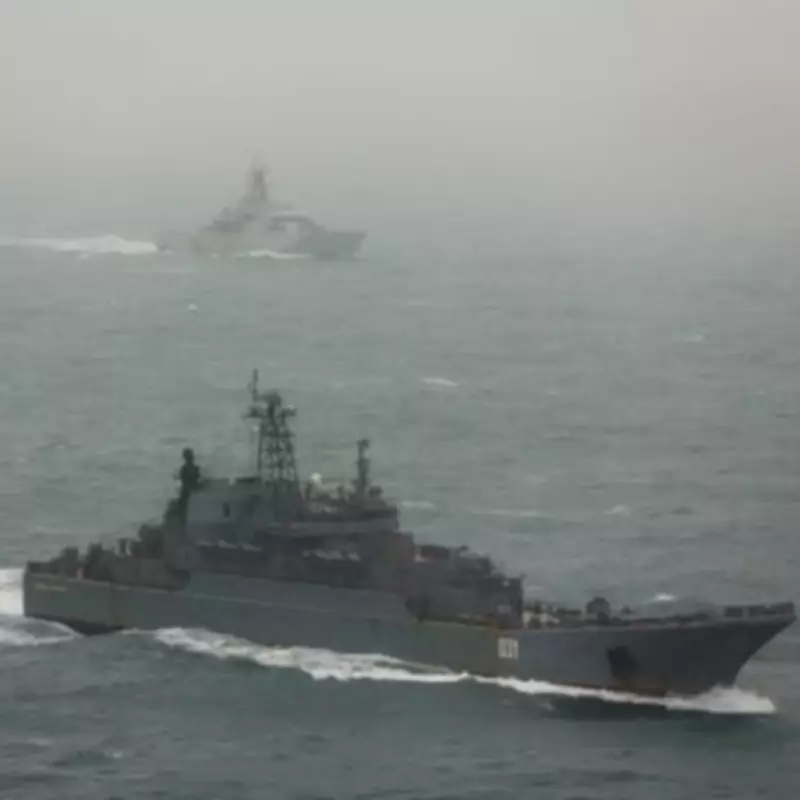
Royal Navy Monitors Russian Naval Movement in UK Waters
The Royal Navy has been actively monitoring two sanctioned Russian cargo vessels and their accompanying warships over the past week, as part of an intensive NATO operation spanning from the Mediterranean to the North Sea. This surveillance effort highlights the ongoing geopolitical tensions and the United Kingdom's commitment to maritime security in its territorial waters.
Deployment of HMS Tyne and Wildcat Helicopter
Portsmouth-based patrol vessel HMS Tyne, along with a Wildcat helicopter from the 815 Naval Air Squadron at Yeovilton, was deployed to track the Russian Navy Ropucha-class landing ship Aleksandr Otrakovsky and the merchant vessel Sparta IV. Throughout the Russians' passage across the Atlantic, through the English Channel, and onwards into the North Sea, HMS Tyne employed sophisticated sensors and radars to monitor every movement meticulously.
Concurrently, the Wildcat helicopter conducted a sortie above the Channel to deliver additional surveillance and security, ensuring comprehensive coverage of the naval activity. This coordinated effort underscores the Royal Navy's capability to respond swiftly and effectively to potential threats in British waters.

Initial Interception and Continued Surveillance
The Russian ships were initially intercepted by HMS Cutlass from the Royal Navy's Gibraltar Squadron as they navigated through the Strait of Gibraltar's Traffic Separation Scheme. Following this, an allied vessel monitored their northward journey before HMS Tyne was deployed for surveillance operations in the Atlantic approaches to the Channel.
Merely 48 hours after completing this mission, HMS Tyne and the Wildcat helicopter were deployed once more to monitor another Russian Ropucha-class warship, Aleksandr Shabalin, and the cargo ship MV Sabetta as they travelled westward through the English Channel. This repeated deployment demonstrates the persistent nature of the surveillance operations and the Royal Navy's readiness to address multiple incursions.
Statements from Defence Officials
Defence Secretary John Healey MP commented on the situation, stating, "I am proud of everything that our exceptional Armed Forces are doing to keep Britain safe – both around the UK and on deployments overseas. While our UK forces are in action in the Middle East to protect British people, British interests and our partners, this operation sends a warning to Putin: we are watching you." He added, "Iran's dangerous indiscriminate attacks will not distract us from deterring Russia and supporting Ukraine. We are ready to track, deter and defend our nation."
HMS Tyne's Executive Officer, Lieutenant Commander Matt Cavill, emphasized the importance of such operations, saying, "Maintaining the security of our Island Nation is paramount to ensuring we can project a global presence. The way in which we collaborate with allied nations assures us of the collective strength which we require in an uncertain world. Operations such as these are vital to demonstrate resolve, protect our waters and gain intelligence to support future operations."
Role of 815 Naval Air Squadron
Commander James Woods, Commanding Officer of 815 Naval Air Squadron, highlighted the professionalism and effectiveness of the squadron, noting, "This activation demonstrated the professionalism, speed and effectiveness that 815 Naval Air Squadron brings to operations at home and abroad. Our aircrew and engineers delivered clear, timely situational awareness and integrated seamlessly with HMS Tyne." He further explained, "Wildcat remains a potent maritime strike platform, providing a visible and persistent presence at sea. The aircraft's ability to support UK precision-effect capabilities with Martlet and Sea Venom reinforces the vital role it plays in maritime security."
Commander Woods concluded, "This routine tasking reflects our continued vigilance and underscores the very high readiness of our people and aircraft as we work to safeguard the UK's national interests and support our NATO commitments." This statement reinforces the ongoing commitment of the Royal Navy and its allies to maintain security and stability in the region amidst rising global tensions.






