

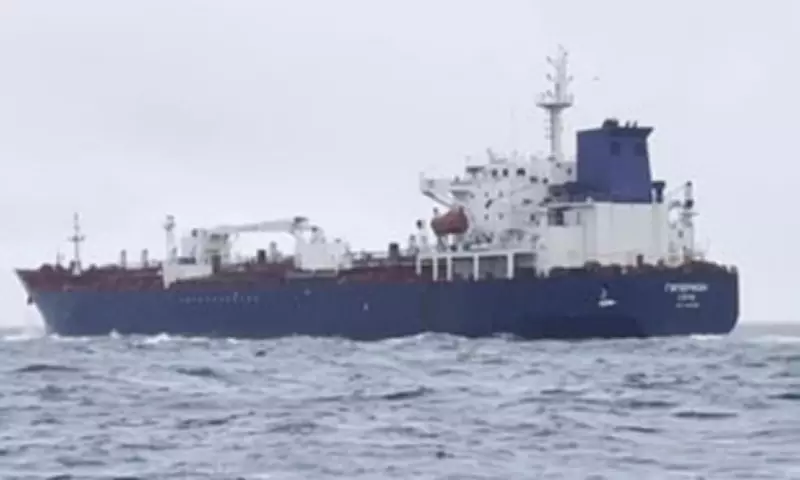
Russia's Shadow Tankers Defy Sanctions in Busy English Channel
Russia's shadow tanker fleet is operating with increasing boldness in the English Channel, with defence experts warning that a military confrontation could erupt near Britain's coastline as early as this year. Described as a clandestine network, these vessels are actually hiding in plain sight as they transport millions of barrels of oil through one of the world's busiest shipping routes, directly challenging Western sanctions, embargoes, and price caps.
Escalating Tensions and Sanctions
Dozens of these ships navigate the Dover Strait monthly, forming part of a shadow fleet estimated at up to 800 vessels that continue to fuel Vladimir Putin's four-year war against Ukraine. This week, the UK Government announced its most extensive sanctions package yet against Russia, aiming to sever critical oil revenues and undermine the Kremlin's capacity to sustain its illegal conflict. Experts reveal that over 60 percent of Russian crude oil exports now travel aboard this shadow fleet.
The Ministry of Defence has emphasised that deterring, disrupting, and degrading the Russian shadow fleet is a priority. However, defence analysts caution that rising tensions could precipitate clashes at sea, potentially right on Britain's doorstep.

Expert Warnings of Potential Confrontation
Professor Michael Clarke, a prominent defence analyst, told Sky News: 'There must come a point at which Britain and its allies—the Dutch, Danes, Norwegians, and other sea-going nations of Northern Europe—will collectively adopt a much tougher stance against these Russian ships, even if they are escorted.' He added, 'When that occurs, we are likely heading toward some form of militarised confrontation at sea, possibly in the Channel or the North Sea, certainly in proximity to the British coast, potentially within this year.'
Under international maritime law, vessels sailing under legitimate flags retain the right of innocent passage, and numerous countries have maintained trade relations with Russia since its full-scale invasion of Ukraine. This month, Sky News tracked three shadow tankers laden with oil as they traversed the English Channel.
Detailed Tracking of Shadow Vessels
The Rigel, a 270-metre Suezmax-class tanker with a capacity of one million barrels, loaded oil on February 2 at the Russian port of Primorsk, valued at approximately $55 million (£40.7 million). Sailing under a Cameroon flag, it faces sanctions from the UK, EU, and Canada, prohibiting it from using port facilities in those nations but allowing passage to its destination, Port Said at the Suez Canal.
The Kousai departed Ust-Luga, near the Estonian border, on the same day as the Rigel. Flying a Sierra Leone flag, its captain received a warning from the Coastguard to submit proof of insurance to a Government email address within 24 hours. Insurance coverage for these ageing vessels is often ambiguous, raising concerns about potential maritime disasters.
The Hyperion, sanctioned by the UK, EU, and US, sailed under a Russian flag through the Channel. As recently as December, it operated under a Sierra Leone flag but switched after delivering to Venezuela, evading a US naval blockade in the Caribbean. Such flag-switching, along with opaque ownership and unclear insurance, is commonplace among shadow fleet ships.
International Responses and Naval Operations
The US has initiated military actions against tankers linked to Venezuela, seizing at least seven since last year. French paramilitaries also confiscated a ship in the Mediterranean last month. In a recent operation, the Royal Navy intercepted Russian vessels in the English Channel, deploying warships and aircraft to shadow them over two days in coordination with NATO allies.
Portsmouth-based patrol ships HMS Mersey and HMS Severn, alongside a Wildcat helicopter from 815 Naval Air Squadron, intercepted Russian corvette Boikiy and accompanying oil tanker MT General Skobelev as they sailed toward the North Sea. Minister for the Armed Forces Al Carns MP stated: 'With this operation, our sailors have once again sent a message to Putin—we know exactly what his navy is doing. Every time a Russian ship approaches the UK, the Navy is prepared to track, deter, and defend.'

Government Strategies and Legal Measures
The UK Government is reportedly exploring legal grounds for detaining Russian tankers, potentially under the Sanctions and Money Laundering Act. Defence Secretary John Healey noted earlier this month that he has 'identified further military options to target shadow shipping,' which he is discussing with Cabinet colleagues to ensure 'Putin cannot easily fund his war machine in Ukraine through the sale of sanctioned oil.'
Healey emphasised: 'It is evident that we can escalate these efforts, increasing pressure on Putin. This strengthens Ukraine's position and encourages Putin to negotiate a proper peace deal.' A Ministry of Defence spokesperson reiterated: 'Deterring, disrupting, and degrading the Russian shadow fleet remains a government priority. We are intensifying our response alongside allies, including sanctioning suspected vessels and demanding proof of insurance. Since October 2024, the UK has challenged approximately 643 suspected shadow fleet vessels using this system.'





