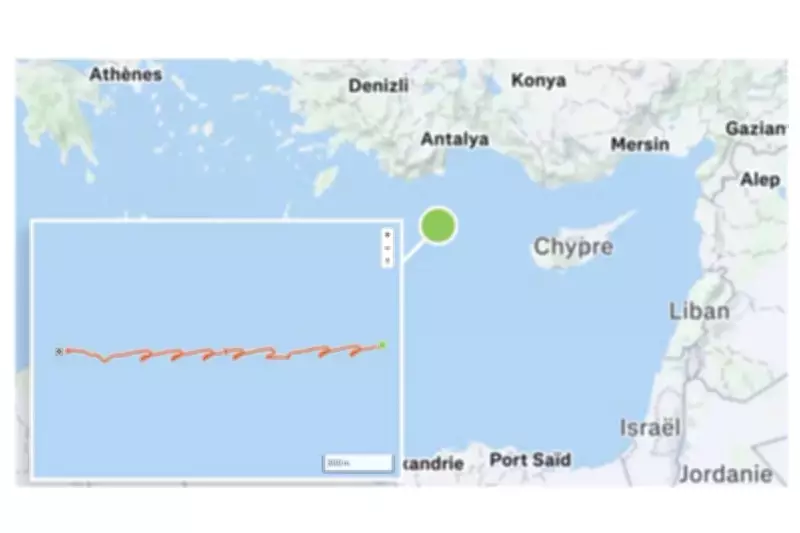
A significant security breach has occurred within the French navy after a sailor publicly uploaded a GPS-tracked run from the deck of the nuclear-powered aircraft carrier Charles de Gaulle to the fitness app Strava. This action inadvertently revealed the vessel's precise location and direction as it sailed through the eastern Mediterranean Sea, an area of heightened tension due to the ongoing US-Israeli conflict with Iran.
Details of the Inadvertent Disclosure
According to a report by the French newspaper Le Monde, the sailor used a smartwatch to monitor a 4.3-mile jog that lasted 35 minutes on the carrier's deck. The workout data, including geolocation, was uploaded to Strava immediately after the exercise, making it publicly accessible. Le Monde verified the leak by cross-referencing the Strava data with satellite imagery captured shortly after the run, which confirmed an aerial view of the 262-meter-long carrier positioned northwest of Cyprus.
Official Response and Broader Security Implications
France's Armed Forces General Staff stated that uploading the run violated current digital security directives and confirmed that appropriate measures would be taken by the command. This incident is not isolated; Le Monde identified at least one other crew member on a French naval vessel who had also publicly uploaded a geolocated workout, highlighting a recurring issue.

The newspaper has previously warned about security risks associated with Strava, using publicly available app data to map the patrol schedules of French nuclear submarines and uncover sensitive information about the bodyguards of world leaders, including Joe Biden, Donald Trump, and Vladimir Putin.
Strategic Context of the Charles de Gaulle Deployment
As the flagship of the French navy, the Charles de Gaulle is the only nuclear-powered aircraft carrier not operated by the United States military. French President Emmanuel Macron ordered its deployment to the Mediterranean on 3 March, just days after the US-Israeli war with Iran began on 28 February. Four days before the sailor recorded his run, Macron delivered a speech aboard the carrier, emphasizing France's role in protecting its allies and maintaining peace.
France's military response to the conflict has been substantial, deploying eight warships and two helicopter carriers to the region, in addition to the Charles de Gaulle carrier group. This scale surpasses that of most Western allies. In a joint statement issued recently, France, alongside Britain, Canada, the Netherlands, Germany, Italy, and Japan, committed to ensuring safe passage through the Strait of Hormuz, which Iran has blocked.
International Reactions and Diplomatic Restraint
UN Secretary-General António Guterres praised the restraint shown by France and its European allies in refusing to be drawn deeper into the conflict, despite repeated demands from former US President Donald Trump to send vessels to challenge Iran's control over naval traffic through the strait. This incident underscores the delicate balance between operational security and the pervasive use of personal technology in military settings.