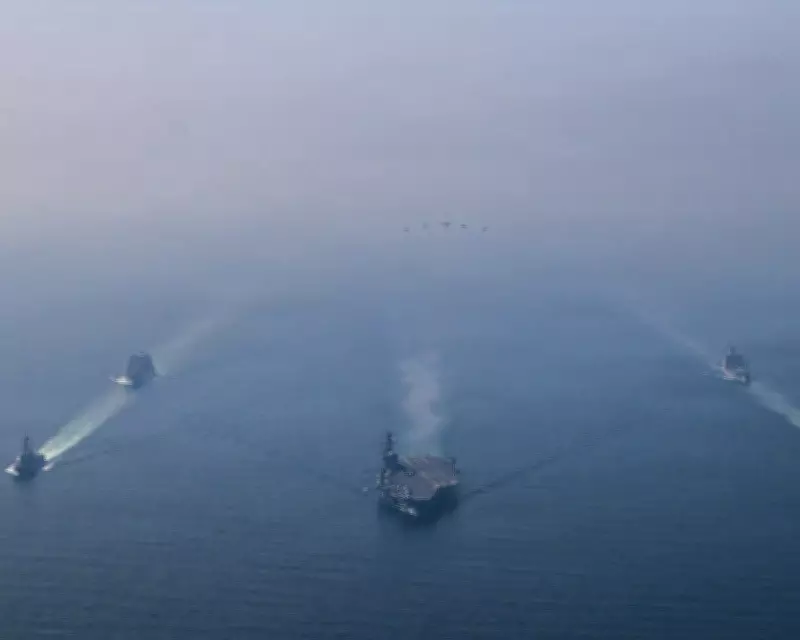
Experts indicate that the United States currently possesses sufficient military assets in the Middle East to initiate an aerial bombing campaign against Iran, potentially in coordination with Israel. However, the strategic objectives and outcomes of such an action remain uncertain.
Deployment of Carrier Strike Groups
The USS Abraham Lincoln aircraft carrier, along with its accompanying warships, has been stationed in the Arabian Sea for nearly a month. This strike group includes nine squadrons of advanced aircraft, such as F-35 Lightning IIs and F/A-18 Super Hornets, providing substantial airpower.
Movement of the USS Gerald R Ford
A second carrier strike group, led by the USS Gerald R Ford—the world's largest aircraft carrier—was last confirmed to be in the Atlantic Ocean west of Morocco on Tuesday. It is anticipated to transit through the Strait of Gibraltar and proceed towards the eastern Mediterranean, a journey expected to take several days.

The Ford recently operated in the Caribbean Sea, where it participated in a night raid last month that involved the seizure of Venezuela's Nicolás Maduro from a fortified compound.
Strike Capabilities and Military Buildup
Matthew Savill, the director of military sciences at the Royal United Services Institute, noted that together, these carrier strike groups could generate "several hundred strike sorties a day for a few weeks, an intensity greater than during the 12-days war."
Even without the Ford, aircraft from the Lincoln alone could execute 125 or more bombing missions daily, equipping the US with the means to commence attacks on Iranian government and military sites if President Trump opts for an aerial campaign.
Enhanced Command and Control
Aviation experts have observed a significant movement of military aircraft to the Middle East as the US escalates pressure on Iran. Six E-3 Sentry Awacs, crucial for real-time command and control operations, are now deployed at Prince Sultan airbase in Saudi Arabia, having been relocated from the US and Japan.
This buildup underscores the readiness of US forces for potential offensive actions, though the broader implications and goals of such a campaign continue to be debated among analysts and policymakers.