

Sir Mark Sedwill Issues Stark Warning on UK Defence Funding
Former Cabinet Secretary Sir Mark Sedwill has declared that the United Kingdom's defences are in a state of disrepair, necessitating immediate and substantial financial investment to halt further deterioration. In a compelling address, he stressed that now, more than ever, the nation must assert its values and demonstrate strength in upholding them. The urgency of this call comes amid growing concerns over military readiness and strategic vulnerabilities.
The Strategic Reality of Global Britain
Sedwill highlighted that Britain operates as an open economy with extensive global interests, relying heavily on critical trade routes such as the Malacca Straits and Suez Canal. He noted that 95 percent of the nation's data traverses Atlantic undersea cables, while half of its energy imports pass through the Strait of Hormuz. Contrary to being merely a values slogan, "Global Britain" represents a strategic imperative, as economic security is intrinsically linked to these trade routes, energy supplies, and international alliances spanning every ocean and continent.
NATO First and Its Limitations
The current government has shifted focus to "Nato First," a move Sedwill acknowledges as sound, particularly in response to the Ukraine war. However, he argues that while prioritising NATO is essential, it only partially addresses the needs of a country with Britain's broader global interests. Expeditionary capabilities to defend these interests, alongside soft power reinforcement, are not optional. NATO expects the UK to lead on its northern flank and contribute armoured divisions to the central front, yet even with Keir Starmer's commitment to spend 3.5 percent of GDP on defence by 2035, meeting both demands effectively remains unattainable.

Focus on Irreplaceable Capabilities
Sedwill contends that this is not primarily a resource issue but a strategic one. With Poland set to deploy over 1,100 tanks on the central front by 2030, Britain cannot meaningfully augment that force. Instead, the UK should concentrate on areas where it is irreplaceable, such as the North Atlantic, including the High North, Atlantic sea lanes, and undersea networks. Here, Russia exhibits both aggression and vulnerability, and blocking its advances serves as the forward defence of the British Isles. Capabilities in submarine and carrier warfare, commando and special forces, intelligence, space, and cyber operations can prove decisive in this region.
The Joint Expeditionary Force and Global Deployment
Earlier this year, Sedwill participated in Arctic training exercises with British commandos and Norwegian special forces, showcasing the potential of the Joint Expeditionary Force (JEF), a ten-nation Nordic and Baltic grouping led by Britain. These forces, designed for NATO's northern flank, can also be deployed globally to defend allies and interests. For instance, an allied carrier strike group in the High North could reach the Gulf within days, while JEF commandos are capable of engaging Russian forces in Scandinavia or countering terrorists in the Middle East. An expeditionary Army, deployable rapidly worldwide, could operate on NATO's central front as a vanguard force to blunt Russian advances while Poland and Germany mobilise their armoured units.
Current Trajectory and Urgent Needs
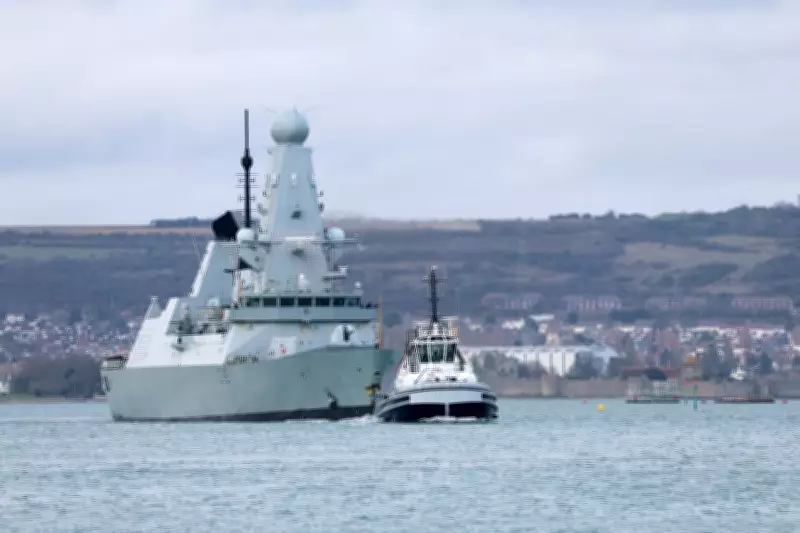
Sedwill warns that none of this is feasible under the current trajectory. For decades, the armed forces have been utilised as an auxiliary emergency service, assisting with vaccinations during Covid-19, flood responses, and strike actions. While admirable, these roles have compromised war readiness. Budgetary pressures have led to cuts in maintenance, ordnance, and training, exemplified by the Royal Navy's struggle to deploy a single serviceable destroyer to the Middle East recently. Much of the required funding uplift must first address these deficiencies as all three services undergo transformation to achieve the integrated force envisioned in the 2025 Strategic Defence Review (SDR).

Investing in Sovereign Capabilities
The remainder of the investment should focus on new sovereign capabilities to bridge the dangerous gap between conventional deterrence and the strategic nuclear threshold. This includes missile defence systems, hypersonic missiles, tactical nuclear weapons, autonomous systems, and enhanced space and cyber capabilities, integrated across all domains of modern warfare. A top priority is the overdue replacement of the ageing Trident nuclear deterrent with the Dreadnought submarines, next-generation nuclear-powered ballistic missile vessels being constructed to replace the Royal Navy's current Vanguard class.
Learning from History and Breaking Patterns
Sedwill references historian and former No 10 foreign policy adviser Professor John Bew, who noted that in the 1930s, Britain was unprepared for war despite a decade of warnings, facing adversaries with mobilised planned economies and advanced war machines. Post-Cold War British defence reviews have often set headline numbers and showcased iconic systems like aircraft carriers or next-generation fighters, only to underfund them. The SDR, backed by serious financial commitment, has the potential to break this pattern, but only if the government makes determined strategic choices.
A Call for Integrated and Allied Defence
A genuinely integrated force—nuclear, northern, expeditionary, cyber-enabled, and allied-by-design to amplify impact—would fulfil the UK's commitment to NATO's collective defence while safeguarding the global arteries and alliances upon which Britain depends. Sedwill concludes that "Nato First" defends national territory and continental allies, whereas "Global Britain" protects national interests and global allies. The government must heed the lessons from Ukraine and Iran, make strategic decisions, and convert political commitments to increased defence spending over the next decade into concrete, rapidly implemented programmes. The time for action is now.





