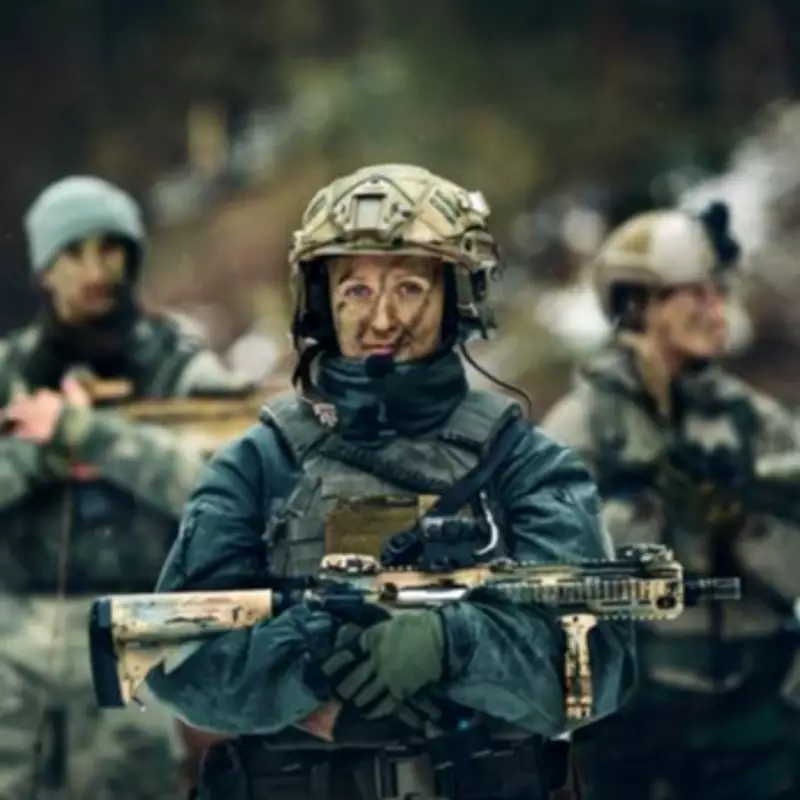
As conflicts in the Middle East persist, questions are emerging about how conscription might function in contemporary Britain. The UK's diminishing military forces have raised alarms among national security specialists, even as Prime Minister Keir Starmer asserts that the nation will currently steer clear of broader warfare.
Shrinking Forces and Expert Warnings
Following significant reductions to the Ministry of Defence since 2010, the British Army now has only 74,000 regular armed forces personnel—the lowest count since the Napoleonic era. Professor Anthony Glees, a security analyst, informs the Mirror that "at least doubling the size of our armed forces would be necessary" in a worst-case scenario.
International Precedents for Female Conscription
Nations like Latvia have revived conscription in response to Russia's invasion of Ukraine, though women are not included. Conversely, Denmark announced last July that women could face conscription, joining teenage males in a lottery system for mandatory service. This shift aligns with increased NATO security spending amid European tensions, mirroring policies in Sweden and Norway, which implemented female conscription in recent years.

Colonel Kenneth Strom, head of Denmark's conscription programme, stated the change is "based on a political decision and a political agreement made by the parties," aimed at enhancing combat power and skills across military branches.
Public Opinion and Historical Context
If conscription were reinstated in the UK, certain occupations might be exempt, but most individuals would be urged to contribute. Historically, the UK has never conscripted women for direct combat, but a YouGov poll this year revealed 72% support for including women if such measures return.
During World War II, men aged 18 to 41 were initially required to register for National Service, followed by a 1941 act calling up single women and widows aged 20 to 30 without children. By mid-1943, nearly 90% of single women and 80% of married women were engaged in war-related work, with exemptions for medical unfitness or essential industries like farming and medicine. Conscription expanded to include older age groups as the war progressed.
Post-war, mandatory enlistment ceased, and the armed forces transitioned to professional volunteers. National Service ended in 1963, and since 2018, women have been eligible for all military roles, including combat positions in the Royal Marines.
Economic and Strategic Implications
Professor Glees notes that current conflicts exhibit traits of a new global war—largely non-nuclear but technologically advanced and potentially prolonged. Economic repercussions for Britons could be swift, such as oil price spikes if shipping routes like the Strait of Hormuz are disrupted, affecting a quarter of global oil supply.
Sustained price increases might push oil above £75 per barrel, fueling inflation and hindering economic growth. Glees warns this could lead to higher fuel and food costs, increased mortgage rates, and strained household budgets. The UK maintains strategic bases in Cyprus, which could involve British forces more directly if conflicts escalate.
He suggests a modern conscription system would likely differ from World War II's mass approach, possibly adopting selective models like those in Sweden and Norway, where young people register but only some are chosen for service.