

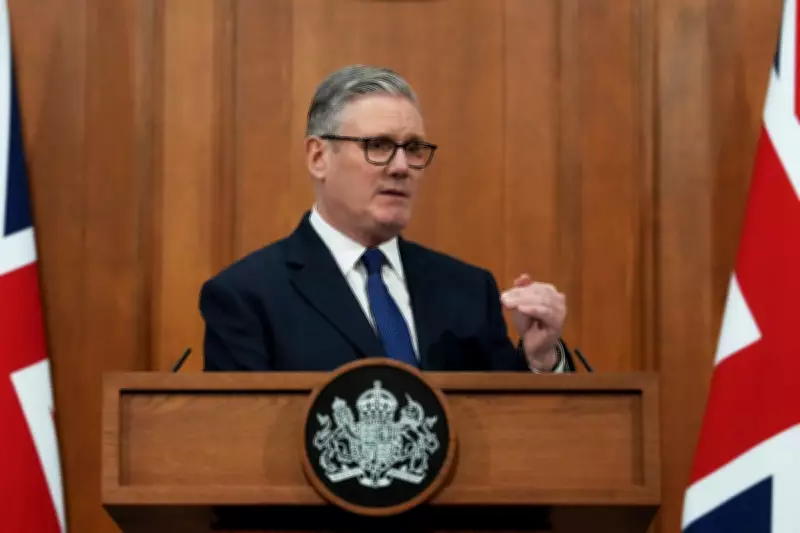
Prime Minister Sir Keir Starmer has issued a stark warning that the ongoing conflict with Iran will profoundly affect the future of the United Kingdom, while simultaneously asserting that the nation is well-positioned to withstand the economic turbulence. Speaking at a Downing Street press conference, Sir Keir acknowledged the widespread public anxiety but emphasised a long-term strategy to emerge stronger from the crisis.
Diplomatic Efforts to Reopen Key Shipping Route
In response to the escalating situation, Foreign Secretary Yvette Cooper is set to convene a meeting of international leaders. The primary objective of this gathering will be to assess all viable diplomatic and political measures aimed at reopening the Strait of Hormuz. Tehran's effective blockade of this critical maritime chokepoint has triggered a sharp increase in global oil and gas prices, placing significant strain on consumers and economies worldwide.
Reassurance Amid Economic Pressures
Sir Keir directly addressed the British public's concerns, stating, "I know that this is causing huge concern. People turn on their televisions, they look at their screens, they see explosions, infrastructure blown up, aggressive rhetoric. They worry that the UK will be dragged into this. We won't." He sought to provide reassurance, declaring that "no matter how fierce this storm, we are well-placed to weather it" and that the government has "a long-term plan to emerge from it a stronger and more secure nation."

The Prime Minister was adamant that he would not allow the British people to relive the severe energy shocks experienced during the 1970s. He pledged to act in the national interest "whatever the pressure on me and others, whatever the noise."
Strained Transatlantic Relations and NATO Commitment
The crisis has placed considerable strain on transatlantic alliances. US President Donald Trump has repeatedly criticised allies for their level of involvement in the conflict, even suggesting that the UK and other nations should secure the Strait of Hormuz themselves. He has also indicated he is considering whether to withdraw America from NATO.
When questioned about these remarks, Sir Keir robustly defended the North Atlantic Treaty Organisation, describing it as "the single most effective military alliance the world has ever seen." He reaffirmed Britain's unwavering commitment to the bloc and signalled that the UK would continue to pursue closer ties with the European Union in the wake of the oil crisis.
Impact on Cost of Living and Government Response
The conflict's economic repercussions are already being felt across the UK. The surge in oil prices has directly increased costs at petrol stations nationwide. As of Tuesday, average diesel prices had risen to 182.8p per litre, a 40p increase since the conflict began on February 28. Petrol prices reached 152.8p per litre, marking a 20p rise.
While the government has frozen fuel duty until September and is reviewing a scheduled increase, opposition critics and some members of the public are calling for more immediate measures to alleviate the cost of living burden, including cuts to energy bills and petrol costs.
The government has indicated it will not implement a broad, blanket energy bailout similar to the approach taken during Liz Truss's premiership. Instead, any additional support will be targeted and focused on assisting the poorest households if necessary.
Interestingly, the Ofgem price cap for most households actually fell by 7% to £1,641 annually starting Wednesday. However, respected energy analyst Cornwall Insight has projected that the price cap from July to September could rise to £1,929 for a typical dual-fuel household. This represents an increase of £288, or 18%, compared to the April cap, highlighting the volatile and uncertain energy market.
Chancellor Engages with Industry Leaders
Chancellor of the Exchequer Rachel Reeves is scheduled to meet with supermarket executives and regulators to discuss the broader impact of rising costs on consumers. The outcome of these talks could influence future government policy regarding economic support and market regulation.

The ultimate scale of the economic disruption may hinge on President Trump's strategic decisions concerning the Strait of Hormuz. He has hinted at a willingness to disengage from the military campaign initiated with Israel against Iran without guaranteeing the reopening of this vital shipping lane, a scenario that would likely prolong market instability.
As the situation develops, the UK government maintains its focus on diplomatic solutions, economic resilience, and protecting its citizens from the worst effects of a conflict that Sir Keir Starmer acknowledges will indelibly shape the nation's future trajectory.





