Prime Minister Keir Starmer has called for the United Kingdom to reconsider rejoining talks for a defence pact with the European Union, emphasising that Europe must "step up and do more" to bolster its security in an increasingly uncertain global landscape. This move signals a potential shift towards closer military collaboration with European allies, as the UK explores avenues to increase defence spending and capability.
Background on the Safe Defence Fund
Discussions for the UK to participate in the EU's €150 billion (£130 billion) Security Action for Europe (Safe) defence fund collapsed in November 2025, with reports citing disagreements over entry costs, largely attributed to French opposition. The Safe fund, financed through European Commission borrowing and repaid over 45 years by member states, aims to rapidly enhance EU defence capabilities by funding purchases of ammunition, drones, and missiles.
Renewed Appetite for Cooperation
There is now growing interest from both sides to revive negotiations, particularly in light of former US President Donald Trump's criticisms of NATO and geopolitical threats. Starmer highlighted this urgency during a trip to China, stating, "Europe, including the UK, needs to do more on security and defence... We've got to step up and do more." He pointed out that this sentiment is shared by other global leaders, not just Trump.

The Guardian recently revealed that the UK and EU are exploring new talks on defence cooperation. While defence is not formally on the agenda for upcoming meetings, such as those with EU trade commissioner Maroš Šefčovič, opportunities may arise at a political summit in Washington focused on critical minerals, where the Foreign Office will be represented.
Benefits for the UK Defence Industry
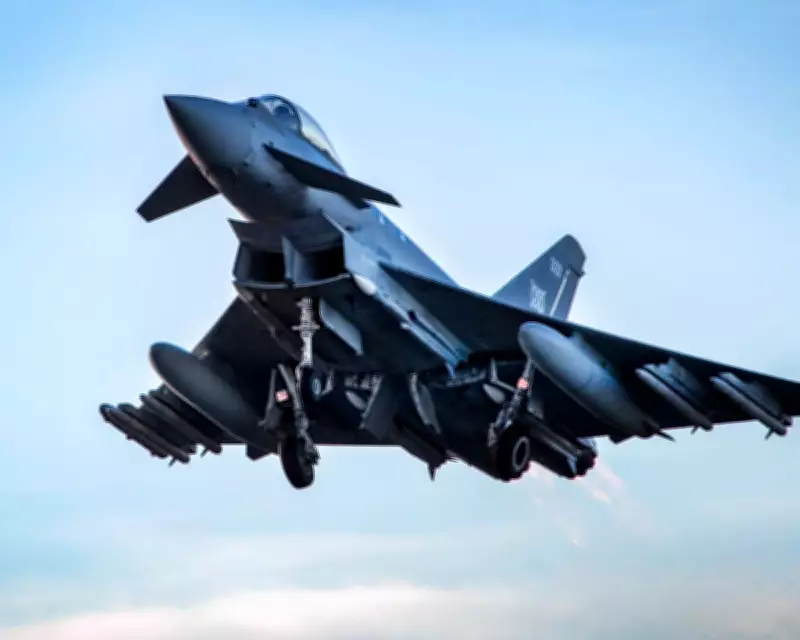
If the UK joins the Safe programme under third-country rules, British companies could gain access to more procurement contracts, providing a significant boost to the defence industry. This comes as the UK has already secured major deals, including a £10 billion agreement with Norway for anti-submarine warships built in Britain and a £8 billion sale of 20 Typhoon fighter jets to Turkey.
Financial and Political Considerations
Previous negotiations stalled over financial contributions, with the EU demanding around €2 billion from the UK, while British officials favoured a contribution in the hundreds of millions. Starmer expressed openness to evaluating schemes like Safe, saying, "I do think on spend, capability and cooperation we need to do more together... That should require us to look at schemes like Safe and others to see whether there is a way in which we can work more closely together."
He also addressed domestic political pressures, rejecting calls from within his party to rejoin the EU customs union due to potential disruptions to existing trade deals. However, Starmer is keen on further alignment with the single market and criticised Nigel Farage's Reform UK for its stance on Brexit, calling the previous deal "botched" and damaging to the economy.
Future Prospects and Challenges
Starmer aims to build on recent bilateral defence agreements with European nations and sees closer EU cooperation as a strategic priority. He emphasised the need for an "iterative process" to strengthen ties on defence, security, energy, emissions, and trade. As global tensions rise, this push for enhanced European collaboration could redefine the UK's role in continental security efforts.