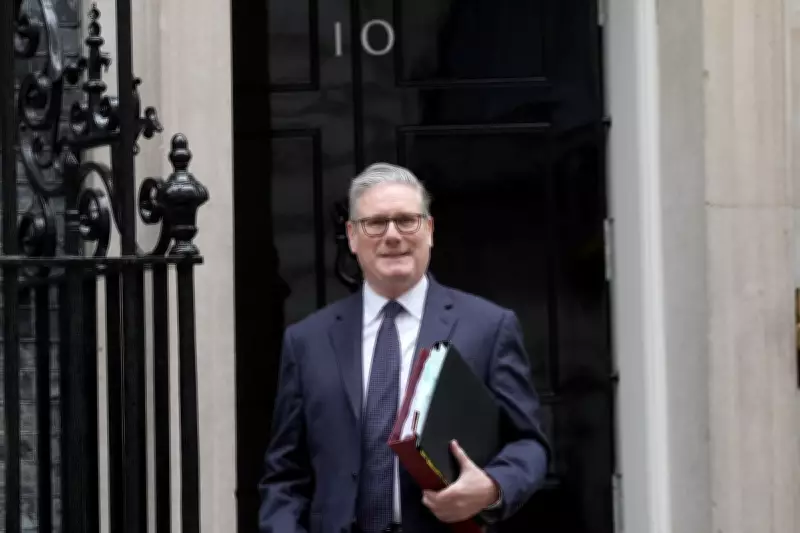
Prime Minister Sir Keir Starmer has firmly rejected criticism from former NATO Secretary General Lord George Robertson, who accused the Government of displaying "corrosive complacency" over defence spending and national security preparedness. The political clash unfolded during a tense Prime Minister's Questions session in Parliament.
Robertson's Stark Warning on Defence Underinvestment
Lord Robertson of Port Ellen, who previously served as both NATO chief and Labour Defence Secretary, delivered a scathing assessment of the UK's military readiness. He warned that the nation remains dangerously underprepared for potential conflict, claiming ministers have shown unwillingness to make the necessary financial commitments to safeguard national security.
"We cannot defend Britain with an ever-expanding welfare budget," Robertson declared during a speech on Tuesday, highlighting what he perceives as misplaced spending priorities within the Government.

Starmer's Defence of Government Record
Responding directly to these criticisms, Sir Keir Starmer expressed respect for Lord Robertson while firmly disagreeing with his assessment. "My responsibility is to keep the British people safe, and that is a duty I take seriously," the Prime Minister stated. "That is why I don't agree with his comments."
Starmer outlined his Government's defence spending commitments, noting that just seven months after taking office in February, he increased defence expenditure from 2.3% to 2.6% of GDP. This increase was reportedly funded through difficult decisions regarding overseas aid allocations.
The Prime Minister further highlighted commitments made at last June's NATO summit to raise core defence spending to 3.5%, alongside record defence funding announced in November's budget. "I reaffirm those commitments now," Starmer emphasized during the parliamentary exchange.
Strategic Defence Review Implementation
Central to the debate was the delayed publication of the Defence Investment Plan (DIP), which is intended to implement the 10-year Strategic Defence Review (SDR) blueprint for national security. "The defence investment plan will put that into effect," Starmer confirmed. "It will be published as soon as possible."
Conservative leader Kemi Badenoch pressed the Prime Minister on the timing of this publication, calling for its release before the end of the current parliamentary session. "Lord Robertson's criticisms were of the Prime Minister, and he says Britain's national security is in peril," Badenoch asserted. "Our armed forces are at the end of their tether waiting for this Government to fund the strategic defence review."
Financial Pressures and Alleged Cuts
The opposition leader raised concerns about reported Treasury demands for the Ministry of Defence to implement £3.5 billion in cuts this year. Badenoch directly challenged Starmer's spending priorities, suggesting defence was being sacrificed to fund welfare expansion.
"He won't fund our military because he wants to fund more welfare," Badenoch claimed. "That's why he has a welfare plan to 2031, but no defence investment plan at all."
She further questioned whether billions saved from abandoning the Chagos Islands sovereignty deal would be redirected to defence or absorbed into welfare spending.
Government's Defence Achievements
In response, Starmer highlighted what he described as significant defence accomplishments under his administration:
- £270 billion defence spending over the current Parliament
- £5 billion increase in defence funding this year alone
- The largest boost to defence spending since the Cold War
- Record pay increases for armed forces personnel in over two decades
- Unprecedented investment in military housing for half a century
"We are spending more on defence, record amounts on defence," the Prime Minister reiterated, defending his Government's approach to national security investment.

Parliamentary Distractions
The exchange took an unexpected turn when Badenoch referenced Labour MP Samantha Niblett's campaign to bring sex toys into Parliament as part of advocacy for more comprehensive sex education. "This is a moment of profound national seriousness, and what are they doing? They're promoting sex toys in Parliament," Badenoch remarked. "It gives a whole new meaning to fiddling while Rome burns."
This diversion highlighted the broader political tensions surrounding defence policy discussions, as the Government faces pressure to demonstrate concrete progress on military investment while managing competing budgetary demands across different sectors.