

Keir Starmer Dismisses Former NATO Chief's Stark Security Warning
Prime Minister Keir Starmer has firmly rejected a scathing public critique from a former NATO leader, who accused the government of displaying a "corrosive complacency" regarding national defence. The intervention comes amid mounting pressure on the Labour administration to publish a long-delayed defence investment plan, with serious questions being raised about Britain's military capabilities in an increasingly turbulent global landscape.
Lord Robertson's Explosive Critique
In a dramatic and highly critical statement, Lord Robertson, a former Labour defence secretary who co-authored last year's Strategic Defence Review, issued a stark warning that the United Kingdom's security is currently "in peril." He went further, accusing the Treasury of engaging in acts of "vandalism" through its handling of defence budgets. Lord Robertson publicly blamed an ever-expanding welfare budget and a perceived lack of urgency from the Prime Minister for leaving the nation unprepared for potential conflict.
"We cannot defend Britain with an ever-expanding welfare budget," Lord Robertson asserted this week, highlighting a fundamental tension between social spending and national security investment. His comments have ignited a fierce debate within political circles and defence communities about the government's priorities and strategic readiness.

Starmer's Forceful Rebuttal
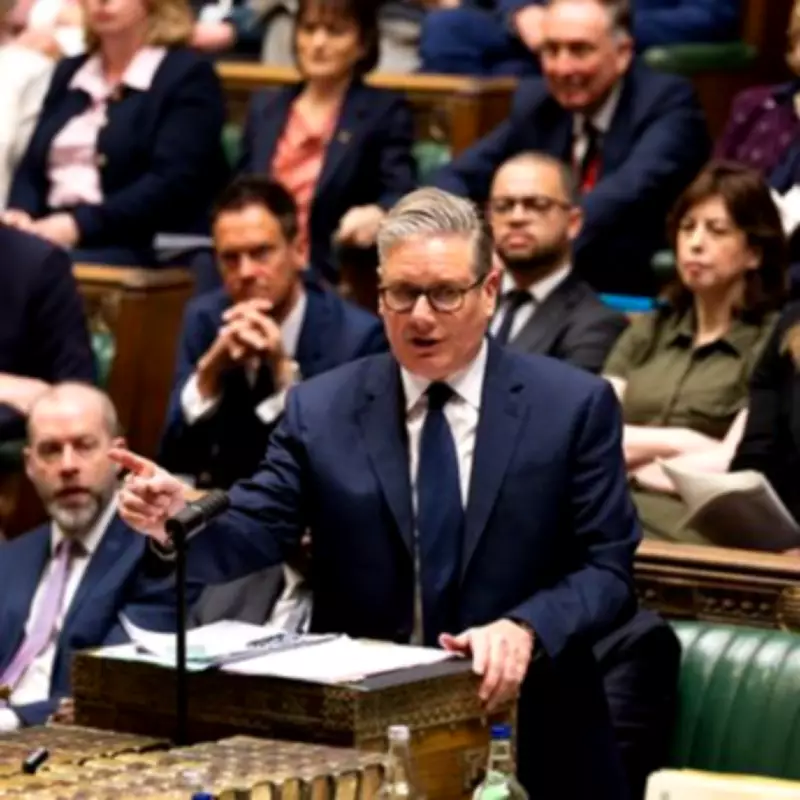
Responding directly to these allegations in Parliament, Prime Minister Starmer offered a respectful but firm rebuttal. "I respect Lord Robertson and I thank him again for carrying out the strategic defence review," Starmer told MPs. "My responsibility is to keep the British people safe, and that is a duty I take seriously. That is why I don't agree with his comments."
The Prime Minister insisted that defence spending under his government is rising rapidly and robustly. He pointed to Labour's decision last year to increase defence spending to 2.5% of Gross Domestic Product, a move funded by reductions to the foreign aid budget. Starmer also highlighted further commitments to elevate core defence spending to 3.5% by the year 2035, aligning with newly established NATO targets.
Starmer defended his administration's record by contrasting it with the previous Conservative government, stating that Labour had inherited "uncosted and undeliverable" defence plans from the Tories. He emphasised his government's proactive approach to bolstering national security in the face of global uncertainties.
Defence Secretary Backs Prime Minister's Stance
Defence Secretary John Healey echoed the Prime Minister's position, stating that he too disagreed with Lord Robertson's grave assessment. Speaking after a meeting of the Ukraine Defence Contact Group, Healey asserted, "There's no complacency, and we are getting on with the job in Government. We're getting on with the job of delivering that strategic defence review, of defending Britain."
Healey elaborated on the government's perspective, telling politicians and the public alike: "We know the threats that we face in Britain and that we face together as NATO allies are rising. We know the demands on defence are rising. We have demonstrated in less than two years as a Labour government that we are ready to make the decisions to increase defence investment, and we are doing that by the biggest amount since the end of the Cold War."
Parliamentary Concerns and Internal Labour Divisions
Despite the government's confident rebuttals, concerns persist within Parliament. Labour MP Tan Dhesi, who chairs the influential defence select committee, described Lord Robertson's warning as "sobering." Addressing the House of Commons, Dhesi stated, "His comments align with what the Defence Committee has been highlighting for several months now, that we are ill prepared to face the threats that we as a nation currently are facing in a more volatile world."
Dhesi urged the government to ensure its "rhetoric must align with reality," calling for a commitment to reach 3% GDP spending on defence within the current parliamentary term. "We cannot afford to kick the can down the road to the next Parliament," he warned, highlighting the urgency of the situation.

The debate has also exposed divisions within the Labour Party regarding funding sources. Reports suggest Chancellor Rachel Reeves is considering increasing defence spending by £10 billion over four years. However, military chiefs have warned of a staggering £28 billion shortfall resulting from years of chronic underinvestment. The comprehensive 10-year defence investment plan, originally scheduled for publication last autumn, remains unsigned as complex negotiations with the Treasury continue.
Further illustrating internal party tensions, Labour MP Emma Lewell-Buck, representing South Shields, voiced concerns that bolstering defence investment "should not come at the expense of those pensioners and people with disabilities receiving welfare." Her statement directly challenges Lord Robertson's critique of welfare spending and underscores the difficult balancing act facing the government as it seeks to strengthen national security while maintaining social support systems.
The ongoing controversy places significant pressure on the Starmer administration to finalise and publish its long-awaited defence investment plan, providing clarity on how Britain intends to navigate an increasingly dangerous world while addressing critical domestic needs.





