

Prime Minister Deploys Naval Force to Greenland Amid Russian Buildup Warnings
Prime Minister Sir Keir Starmer has announced the deployment of a Royal Navy carrier force toward Greenland, delivering a stark warning about Vladimir Putin's expanding military capabilities during a major security conference address today.
Ominous Historical Parallels Drawn in Munich Speech
Speaking at the Munich Security Conference, Starmer declared that Russia is actively rebuilding its army and could potentially be prepared to invade the remainder of Europe by "the end of the decade." The Prime Minister delivered a particularly pointed critique of what he termed "the easy answers of the extremes of left and right," suggesting that voting for either the Reform Party or the Green Party could accelerate the outbreak of war across the continent.
Starmer characterized both parties as ideological extremists who are "soft on Russia and weak on NATO," asserting they would fundamentally undermine Britain's national security and potentially bring conflict to Europe if they ever achieved power. He accused past political leaders of "looking the other way" regarding the growing Russian threat.

Echoes of 1914 in Contemporary Warning
Drawing deliberate parallels to the eve of the First World War, Starmer argued that Reform and the Greens would deliver nothing but "division and capitulation." He ominously warned that "the lamps would go out across Europe once again," directly referencing the famous words used by former British Foreign Secretary Sir Edward Grey in 1914 as Britain stood on the brink of war with Germany.
"It's striking that the different ends of the spectrum share so much," Starmer told the assembled audience of world leaders, military chiefs, and security officials. "Soft on Russia and weak on NATO — if not outright opposed. They are determined to sacrifice the longstanding relationships that we want and need to build on the altar of their ideology. The future they offer is one of division and then capitulation."
The Prime Minister emphasized the necessity of building public consent for difficult security decisions, stating: "We must level with the public and build consent for the decisions we will have to take to keep us all safe. Because if we don't, the peddlers of easy answers on the extremes of left and right are ready."
Political Context and Immediate Reactions
Starmer's significant foreign policy address comes as he faces considerable domestic political pressure, particularly ahead of a crucial three-way contest for the key parliamentary seat of Gorton & Denton in Manchester. A Labour loss in this constituency, which the party previously won with a 13,000-vote majority, could potentially trigger a leadership challenge against the Prime Minister.
The speech prompted immediate and sharp rebuttals from the parties he criticized. A spokesperson for Reform UK stated: "This is a speech from a prime minister on the verge of being hounded out of office by his own party. This is a man that refuses to find the money to increase defence spending and is making our country weaker and less secure. Reform UK believes our priority should be rebuilding our armed forces, properly funding defence to at least 3.5 per cent of GDP, standing up to China and Russia and strengthening our bilateral relationships."
Meanwhile, a Green Party source told The Times: "This is a caretaker prime minister running scared, losing what's left of his authority by going abroad to a summit on our future security and making cheap smears against the Green Party, because he knows Labour have blown it in Gorton & Denton."
Strategic Shift Toward European Security Integration
In his comprehensive address, Starmer outlined a clear foreign policy vision that involves bringing the United Kingdom closer to Europe while cautiously managing relations with the United States. He called for the development of a more "European NATO" and advocated for a strategic shift away from "overdependence" on America toward greater "interdependence" with European partners.

"We are not the Britain of the Brexit years any more," Starmer declared. "Because we know that, in dangerous times, we would not take control by turning inward. We would surrender it. And I won't let that happen. There is no British security without Europe and no European security without Britain. That is the lesson of history — and it is today's reality too."
While affirming that the United States remains an indispensable ally, the Prime Minister elaborated: "I'm talking about a vision of European security and greater European autonomy that does not herald US withdrawal but answers the call for more burden-sharing in full and remakes the ties that have served us so well."
Europe as a 'Sleeping Giant' of Defense Capability
In what was clearly intended as a rallying cry to European leaders, Starmer praised Europe's latent power, describing the continent as a "sleeping giant" whose combined economies "dwarf Russia's, ten times over." He highlighted significant untapped defense potential across European nations.
"We have huge defence capabilities," Starmer noted. "Yet, too often, all of this has added up to less than the sum of its parts. Across Europe, fragmented industrial planning and long, drawn-out procurement mechanisms have led to gaps in some areas — and massive duplication in others."
High-Level Diplomacy and Defense Collaboration
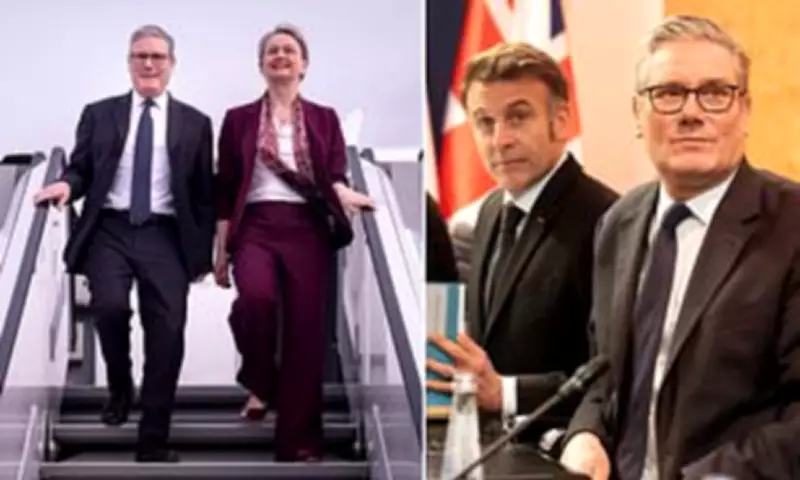
Sir Keir is participating alongside approximately 50 world leaders at the three-day Munich Security Conference, where he has already conducted high-level discussions with German Chancellor Friedrich Merz and French President Emmanuel Macron. The leaders also met with Ukrainian President Volodymyr Zelensky to coordinate efforts toward ending the ongoing conflict with Russia as the four-year anniversary of Vladimir Putin's full-scale invasion approaches.
European defense architecture and the future of transatlantic relations form central themes at this year's conference, occurring amid growing questions about America's commitment to NATO. Recent tensions have surfaced following former President Donald Trump's threat to acquire Greenland from NATO ally Denmark, alongside various diplomatic insults directed at European leaders.
In a briefing on the conference sidelines, Defence Secretary John Healey emphasized that the Prime Minister was "re-establishing Britain's proud role in the world and its necessary role within Europe." Healey also indicated openness to French and German participation in Britain's advanced Tempest fighter jet project, also known as the Global Combat Air Programme (GCAP).





