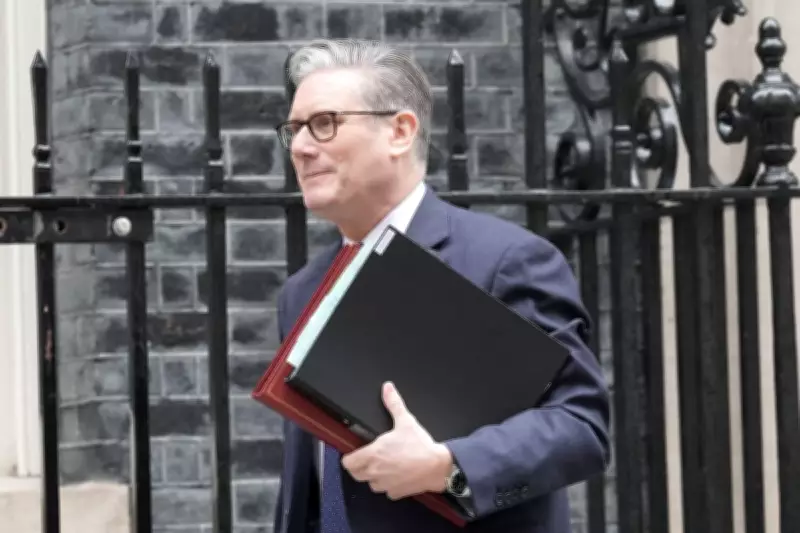
Starmer to Update on Middle East War as Defence Secretary Travels to Cyprus
Prime Minister Sir Keir Starmer is set to provide a critical update on the escalating conflict in the Middle East, while Defence Secretary John Healey engages in high-level talks in Cyprus to address growing tensions over Britain's military response to recent drone attacks on the island. The Prime Minister will host a press conference at Downing Street at 2pm, focusing on ongoing efforts to safeguard lives and repatriate British nationals from the volatile region.
UK Faces Criticism Over Military Preparedness
Britain has faced mounting criticism for allegedly failing to deploy sufficient military assets in the Middle East, particularly after RAF Akrotiri in Cyprus was struck by an Iranian-made Shahed drone launched from Beirut, Lebanon. Cypriot officials confirmed that the attack occurred overnight on Monday, damaging a hangar at the base. In response, British warplanes intercepted and shot down two additional drones detected on the same day.
Sir Keir Starmer acknowledged public concern, stating on social media: "I know that the situation in the Middle East is worrying for people across the UK and in the region. This afternoon, I’ll be giving an update on the action we continue to take to protect lives and bring British nationals back home." His spokesman later detailed that Mr Healey met with Cypriot counterpart Vasilis Palmas to discuss reinforcing UK air defences to enhance shared security.

Defence Deployments and International Support
The UK government has moved to bolster its defensive capabilities, deploying air defence destroyer HMS Dragon to protect Cyprus, though the Type 45 warship is not expected to arrive until next week. Additionally, Wildcat helicopters equipped with anti-drone technology have been dispatched and are anticipated to reach the island sooner. Foreign Office minister Hamish Falconer informed MPs that RAF Typhoon jets conducted further missions on Wednesday night to defend Qatar, with F-35 jets also deployed to support allies in the Middle East.
However, Kyriacos Kouros, the Cypriot high commissioner to the UK, expressed frustration over the timing of HMS Dragon's deployment, noting it would take "more than a week" to arrive. He emphasised that while Greek, French, and other European forces have already provided support, the UK's presence is "the least we expect" given the shared defence responsibilities. Reports indicate that Italy, the Netherlands, and Spain are also sending naval assets to aid Cyprus.
Evacuations and Repatriation Efforts
In parallel with military actions, the UK has facilitated the evacuation of over 4,000 people from the Middle East, with half arriving from the United Arab Emirates, according to Mr Falconer. He described the scale of support as unprecedented, "not seen since Covid," with additional flights planned for Thursday. However, challenges persist, as a repatriation flight from Oman to Britain remained grounded due to issues with boarding passengers, though it was expected to depart later in the day.
Home Office minister Alex Norris affirmed the government's serious approach, stating: "This is a very significant situation, one that has profound implications for our nation. Here, we’ve moved quickly. We will continue to work with our partners in the region in our collective self-defence." Sir Keir's spokesman defended the UK's preparedness, rejecting claims of insufficient urgency and highlighting that defensive capabilities, including air defence systems and radar, have been active since January.

Political Reactions and Calls for Action
The conflict has sparked political debate, with Conservative leader Kemi Badenoch urging offensive measures against Iran following attacks on UK bases in Bahrain and Cyprus. She warned that Britain "will be in a lot of trouble" if it does not join bombing raids to destroy Iranian missile sites, arguing that such actions are necessary to prevent further assaults and reassure regional allies. Mrs Badenoch told BBC Radio 4's Today programme: "Once our bases had been attacked, I think we became part of this, whether we liked it or not. I don’t want to see an escalation. But I think it is very important that where we have put bases in other people’s countries and they are being attacked, we do what we can to stop those attacks from taking place."
As the situation evolves, the UK government continues to balance defensive deployments, international cooperation, and evacuation efforts, amid scrutiny from both domestic and international observers over its strategic response to the Middle East crisis.