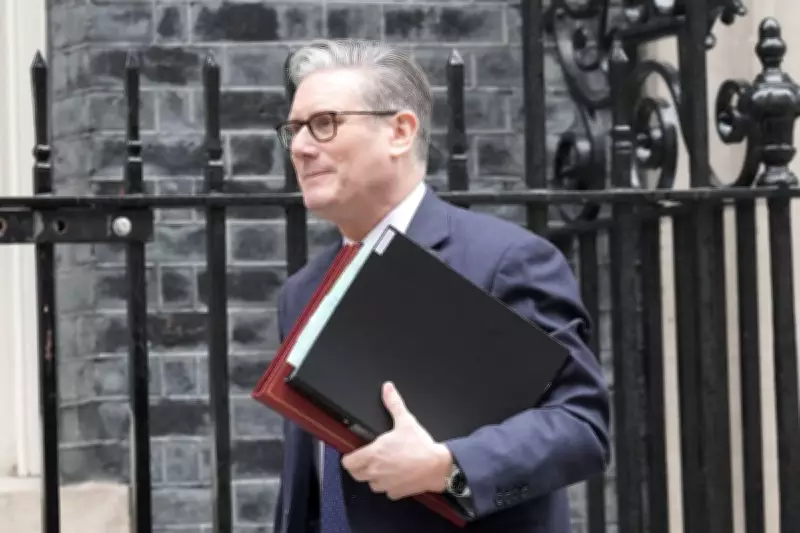
Starmer to Update Nation on Middle East War as Defence Secretary Travels to Cyprus
Prime Minister Sir Keir Starmer is set to provide a critical update on the escalating conflict in the Middle East during a Downing Street press conference scheduled for 2pm. This comes as Defence Secretary John Healey engages in high-level discussions with his Cypriot counterpart, Vasilis Palmas, in Cyprus, aiming to address growing tensions over Britain's military response to recent drone assaults on the island.
UK Faces Criticism Over Military Preparedness
The British government has faced mounting criticism for allegedly failing to deploy sufficient military assets in the Middle East region, particularly after RAF Akrotiri in Cyprus was struck by an Iranian-made Shahed drone overnight on Monday. Cypriot officials confirmed the drone was launched from Beirut, Lebanon, damaging a hangar at the base. In response, British warplanes successfully intercepted two additional drones detected on the same day.
Sir Keir's official spokesman firmly rejected accusations of inadequate military readiness, stating, "I don't accept that. Operational decision-making is always kept under review." The spokesman emphasised that the UK's defensive capabilities, including air defence systems, radar, and advanced aircraft, have been actively deployed since January to bolster security in the region.

Enhanced Defence Measures and International Support
To reinforce Cyprus's security, Britain has dispatched Wildcat helicopters equipped with anti-drone capabilities, which are expected to arrive imminently. Additionally, the air defence destroyer HMS Dragon has been deployed to protect the island, though it is not anticipated to set sail until next week. Kyriacos Kouros, the Cypriot high commissioner to the UK, welcomed the deployment but noted the delay, remarking that a British military presence is "the least we expect" given the collective defence efforts.
Foreign Office minister Hamish Falconer informed MPs that RAF Typhoon jets conducted further missions on Wednesday night to defend Qatar, while F-35 jets have been deployed to support allies across the Middle East. The international community is rallying, with Italy, the Netherlands, and Spain reportedly sending naval assets to Cyprus, alongside existing support from Greek and French forces.
Evacuation Efforts and Political Reactions
In parallel with military actions, the UK has evacuated over 4,000 people from the Middle East, with half arriving from the United Arab Emirates. More repatriation flights are planned, though a flight from Oman to Britain faced delays due to issues with passenger boarding. Falconer described the evacuation scale as unprecedented, "not seen since Covid."
Conservative leader Kemi Badenoch voiced strong opinions on the conflict, warning that Britain "will be in a lot of trouble" if it does not join offensive bombing raids on Iranian missile sites. She argued that such actions are necessary to prevent further attacks on UK bases in Bahrain and Cyprus, cautioning that allies may perceive the UK as abandoning them. Badenoch stated, "Once our bases had been attacked, I think we became part of this, whether we liked it or not."
Home Office minister Alex Norris reiterated the government's serious approach, affirming, "This is a very significant situation, one that has profound implications for our nation. We have moved quickly and will continue to work with our partners in collective self-defence." As the situation unfolds, the UK's strategic responses and diplomatic engagements remain under intense scrutiny.