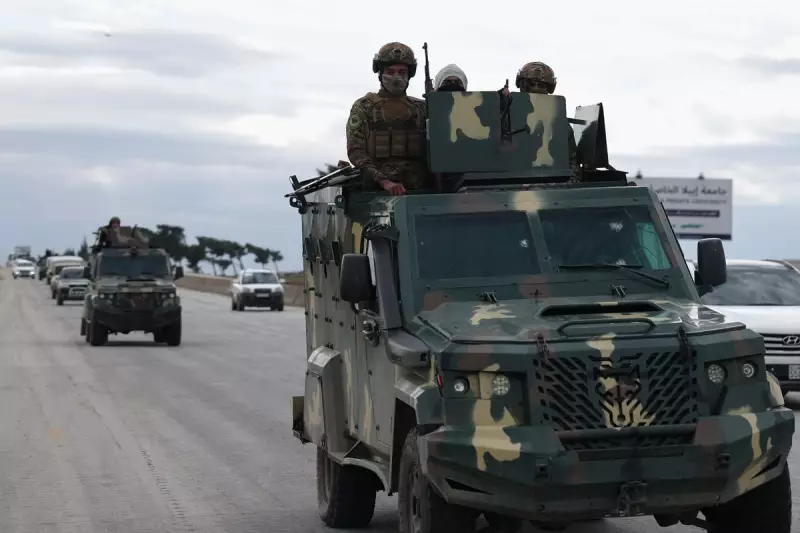
The Syrian military has announced it will open a "humanitarian corridor" for civilians to evacuate from a contested area east of Aleppo, a move widely seen as a precursor to a significant new offensive. The corridor will be operational from 9 a.m. to 5 p.m. on Thursday, 15 January 2026, allowing residents to leave the towns of Deir Hafer and Maskana and their surrounding villages.
Military Buildup and Accusations
The army's late Wednesday announcement comes after it sent substantial troop reinforcements to the region, approximately 60 kilometres (40 miles) east of Aleppo city. The government accused the Kurdish-led Syrian Democratic Forces (SDF) of building up its own forces there, a claim the SDF has denied. Despite the denials, there have been limited exchanges of fire, and the SDF has reported Turkish drone strikes in the area.
In a direct demand, the Syrian military called on the SDF and other armed groups to withdraw east of the Euphrates River, effectively ceding control of the zone. Tensions were already high following a government accusation that the SDF launched a drone strike on the Aleppo governorate building last Saturday, shortly after a news conference with two cabinet ministers.

Context of Stalled Negotiations and Recent Violence
This escalation follows several days of intense clashes in Aleppo city last week, which concluded with the evacuation of Kurdish fighters and government forces taking control of three neighbourhoods. That fighting resulted in at least 23 deaths, dozens injured, and displaced tens of thousands of people.
The violence underscores the complete breakdown of negotiations between Damascus and the SDF. The talks, which had aimed to integrate forces and grant the central government control over border crossings and oil fields in the northeast, have now stalled. Complicating the landscape is the composition of the new Syrian army, formed after the fall of Bashar Assad in December 2024, which includes former Turkey-backed insurgent groups with a history of conflict with Kurdish forces.
International Reactions and Warnings
The situation has drawn cautious responses from international players. The SDF issued a stark warning of "dangerous repercussions on civilians, infrastructure, and vital facilities" should the escalation continue, holding Damascus fully responsible for any humanitarian fallout.
From the United States, Admiral Brad Cooper of U.S. Central Command stated on Tuesday that Washington is "closely monitoring" the situation. He called for maximum restraint from all parties, avoidance of escalatory actions, and a return to good-faith negotiations. Despite the U.S.'s long-standing partnership with the SDF in fighting ISIS, the Trump administration has also cultivated ties with the interim Syrian government and has pushed the Kurds to accept the integration deal, carefully avoiding public alignment in the Aleppo clashes.
The unfolding crisis highlights the fragile and complex alliances in Syria's protracted conflict, where local confrontations risk triggering broader instability amidst delicate regional and international diplomacy.