

Conservatives Pledge to Boost Defence Spending by Reinstating Two-Child Benefit Cap
The Conservative Party has announced a bold policy proposal to reinstate the two-child benefit cap, with the funds raised directed towards a significant increase in defence spending. This move comes as Labour's legislation to abolish the cap progresses through Parliament, setting the stage for a heated political debate over national priorities.
Funding Defence Through Benefit Changes
The Conservatives estimate that reversing the abolition of the two-child benefit cap would generate over £3.2 billion annually. Under their plan, half of this amount would be allocated to reducing the national deficit, while the remaining half would be earmarked exclusively for defence purposes. This financial injection is intended to fund the recruitment of 20,000 new soldiers – comprising 6,000 regular soldiers and 14,000 reservists – along with their accommodation, equipment, and training.
The two-child benefit cap, initially introduced by the Conservatives in 2017, limits child tax credit and Universal Credit payments to the first two children in most households. Its potential reinstatement represents a significant shift in social policy, with the party arguing that current global conflicts necessitate stronger military investment.

Political Clash Over Priorities
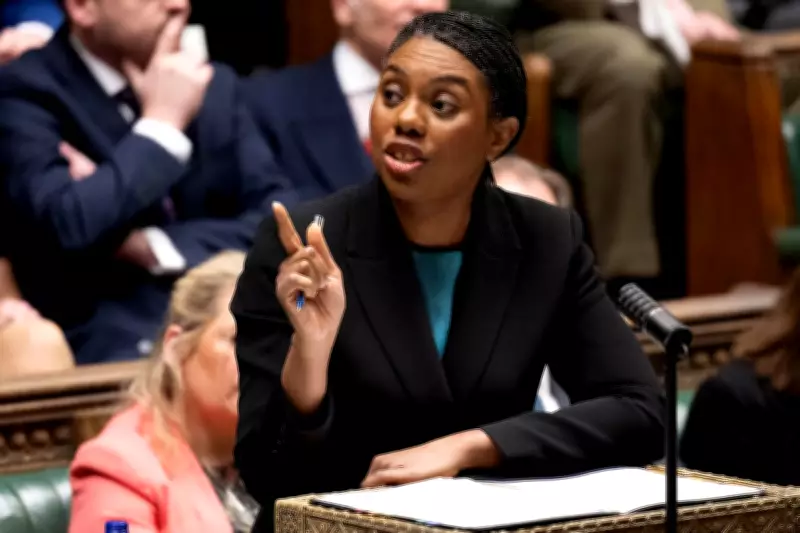
Conservative Party leader Kemi Badenoch launched a sharp critique of Labour's position, stating: “This Prime Minister’s priorities are completely wrong. As we saw at the spring statement this week, Keir Starmer and Rachel Reeves have a plan to raise benefits and no plan for how to properly fund our armed forces.”
Badenoch emphasized the geopolitical context, noting: “With a war in Europe and now also in the Middle East, it’s more important than ever that the Government gives our military the backing it needs. Instead, Keir Starmer is pandering to his backbenchers with more welfare giveaways – he simply doesn’t have the backbone to take tough decisions.”
Shadow defence secretary James Cartlidge defended the Conservative approach, arguing: “Cutting welfare to fund defence means we can commit to a bigger British Army of 80,000 regulars and 40,000 reservists. Britain needs an Army that is credible and deployable to tackle the threats we face today, and that’s what we would deliver, because of our willingness to make tough choices.”
Broader Defence Spending Context
The Conservative pledge emerges amid intensifying calls for increased defence spending, particularly following conflicts in the Middle East. Sir Keir Starmer has committed to spending 2.5% of GDP on core defence by April 2027, with plans to raise this to 3% in the next parliament. In contrast, the Conservatives have proposed creating a sovereign defence fund, which they claim could generate £17 billion in public investment and up to £33 billion in private capital.
Additionally, the Tories suggest that scrapping the deal to return the Chagos Islands could free up to £35 billion for defence purposes, though this remains a contentious proposal.
Social Impact and Parliamentary Dynamics
The move to abolish the benefit cap has proven popular in Parliament, with MPs voting overwhelmingly in favour of it in February. According to analysis by the Joseph Rowntree Foundation, the change would result in approximately 400,000 fewer children living in poverty starting this April, when the government intends to implement the abolition.
Labour's draft legislation to eliminate the cap has successfully passed through the Commons and is currently progressing through the House of Lords, creating a legislative race against the Conservative proposal. The outcome will significantly impact both social welfare policy and military funding, reflecting deeper ideological divisions about government spending priorities in an era of global instability.






