

US Leadership Launches Stinging Criticism Against Britain's Naval Forces
United States President Donald Trump and his Defense Secretary Pete Hegseth have delivered a series of damning assessments regarding the United Kingdom's naval capabilities. Their pointed jibes have struck a nerve within a nation that possesses a long and distinguished maritime heritage, though their comments contain elements of factual substance that merit examination.
Geopolitical Tensions Fuel Diplomatic Friction
The United Kingdom has found itself at the forefront of President Trump's displeasure since the commencement of the Iran conflict on February 28th. This diplomatic strain originated when British Prime Minister Keir Starmer initially declined to grant American military forces access to British bases. Although this decision has been partially reconsidered, with permission now granted for defensive utilisation of facilities including Diego Garcia in the Indian Ocean, Trump remains steadfast in his belief that he was let down by a key ally.
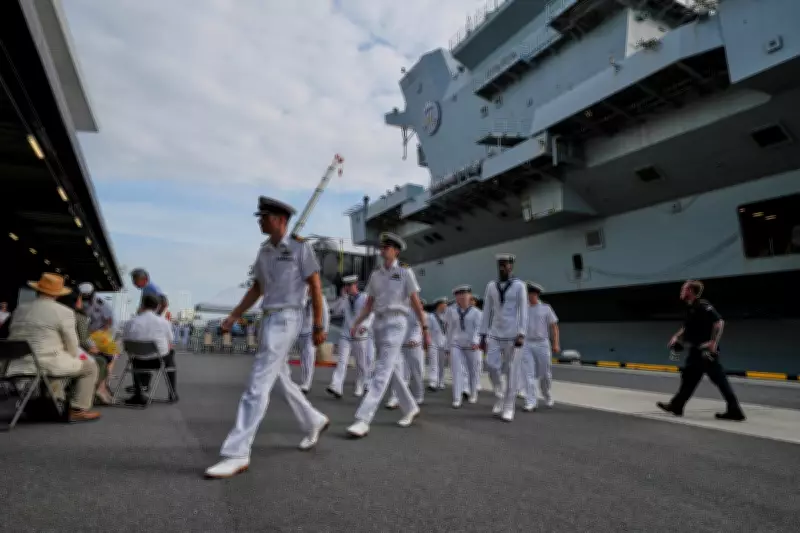
President Trump has repeatedly directed his frustration toward Prime Minister Starmer, going so far as to dismiss the Royal Navy's two aircraft carriers as mere "toys." In comments published by Britain's Daily Telegraph, Trump asserted, "You don't even have a navy. You're too old and had aircraft carriers that didn't work." Meanwhile, Defense Secretary Hegseth offered sarcastic commentary, suggesting that the "big, bad Royal Navy" should participate in securing the Strait of Hormuz for commercial shipping operations.

Historical Context and Contemporary Realities
For multiple strategic and economic reasons, the Royal Navy no longer commands the global dominance it enjoyed during the era when Britannia ruled the waves. However, defence analysts note that Britain's naval capabilities are not as feeble as Trump and Hegseth imply. In fact, the Royal Navy maintains comparable strength to the French navy, with which it is frequently contrasted in European defence discussions.
Professor Kevin Rowlands, editor of the Royal United Services Institute Journal, provided balanced perspective: "On the negative side, there is a grain of truth, with the Royal Navy being smaller than it has been in hundreds of years. On the positive side, the Royal Navy would say that it's entering its first period of growth since World War II, with more ships set to be built than in decades."
Capabilities and Preparedness Under Scrutiny
The contrast between historical naval power and current capabilities is stark. During the 1982 Falkland Islands conflict, Britain assembled a formidable task force of 127 vessels, including two aircraft carriers, to respond to Argentina's invasion. That campaign, which received only lukewarm support from then-US President Ronald Reagan, represented the final major demonstration of Britain's traditional naval strength.
Contemporary analysts agree that nothing approaching that scale of naval mobilisation could be achieved today. Since the conclusion of World War II, Britain's combat-ready fleet has experienced substantial reduction, influenced by evolving military technologies, strategic realignments, and the dissolution of empire. The numerical decline has been particularly dramatic: according to analysis of Ministry of Defence and House of Commons Library figures by The Associated Press, combat vessels in the Royal Navy fleet have decreased by two-thirds from 466 in 1975 to just 66 in 2025.
While the Royal Navy currently operates two aircraft carriers, there was a significant seven-year period during the 2010s when it possessed none. Furthermore, destroyer numbers have been halved to six, and the frigate fleet has been dramatically reduced from 60 vessels to merely 11.
Diminished State and Operational Challenges
The Royal Navy faced considerable criticism for the time required to deploy the HMS Dragon destroyer to the Middle East following the outbreak of hostilities with Iran. Although naval personnel worked tirelessly to prepare the vessel for a mission different from its original assignment, to many observers this delay symbolised the extent to which Britain's military capabilities have been reduced since the fall of the Berlin Wall in 1989.

Throughout much of the Cold War era, Britain allocated between 4% and 8% of its annual national income to military expenditure. Following the Cold War's conclusion, this proportion steadily diminished, reaching a low of 1.9% of GDP in 2018. This reduction has provided ammunition for critics like President Trump.
Similar to other nations, Britain—particularly under Labour governments led by Tony Blair and Gordon Brown—sought to utilise the so-called "peace dividend" following the Soviet Union's collapse. This involved redirecting funds previously earmarked for defence toward other priorities, including healthcare and education. Additionally, austerity measures implemented by Conservative-led governments after the 2008-2009 global financial crisis prevented any significant increase in defence spending, despite clear indications of a resurgent Russia following its annexation of Crimea and eastern Ukrainian territories.
No Quick Fix for Defence Challenges
In the aftermath of Russia's full-scale invasion of Ukraine in 2022, coupled with ongoing Middle Eastern conflicts, there is growing cross-party recognition that defence reductions may have gone too far. Following the Ukraine invasion, Conservative governments began reversing the trend of military spending cuts. Since the Labour Party regained power in 2024, Prime Minister Starmer has sought to accelerate British defence spending increases, partially financed by reductions to the nation's long-heralded international aid budget.
Starmer has committed to raising UK defence spending to 2.5% of gross domestic product by 2027, with an updated target of 3.5% of GDP by 2035 as part of a NATO agreement championed by President Trump. In practical terms, this commitment will translate to tens of billions in additional defence expenditure, representing substantial new equipment and capabilities for Britain's armed forces.
Political pressure is mounting for the government to accelerate this spending timetable. However, with public finances further strained by the economic consequences of the Iran conflict, the source of additional funding remains uncertain.
Professor Rowlands, who previously served as a captain in the Royal Navy, anticipates that critical commentary will likely continue despite what he views as unfair and inaccurate assessments. "We are dealing with an administration that doesn't do nuance," he observed, referencing the current American leadership's approach to international defence discussions.





