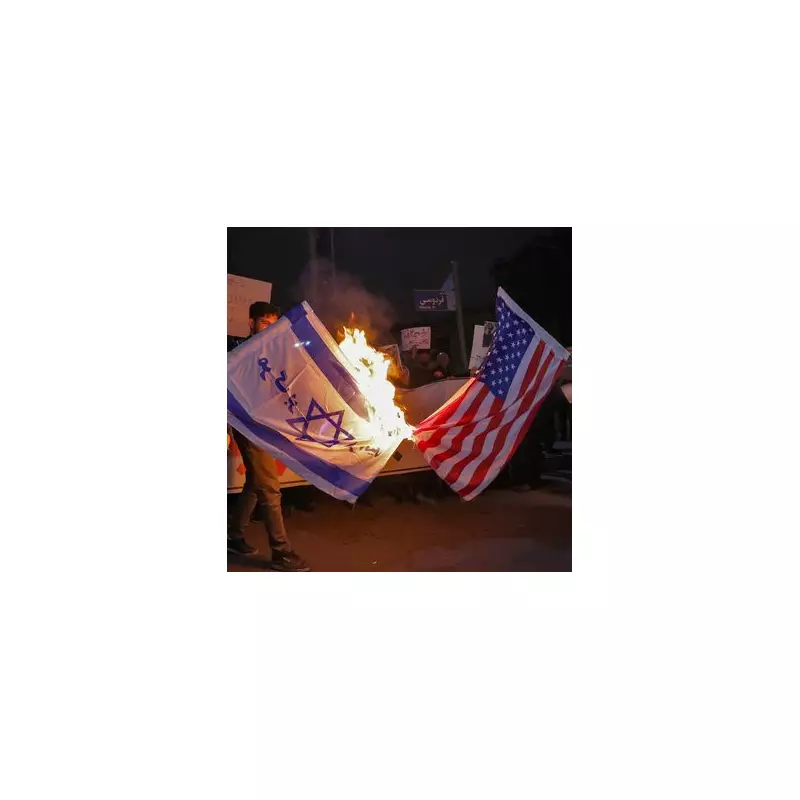
US President Donald Trump has once again brought global tensions to a boiling point, reportedly ordering and then abruptly cancelling plans for a massive military strike against Iran. The dramatic reversal, which occurred overnight, was driven by assessments that the operation's objectives would likely not be met.
Why the Attack Was Called Off
According to security sources, President Trump pulled the plug after being advised that the attack's core aims were unlikely to be achieved. This does not, however, mean the threat has evaporated. Military action is believed to be on hold, pending more reliable and timely intelligence from inside the Islamic Republic. The possibility of a US strike, followed by a significant Iranian retaliation, remains very much alive.
A key factor in the decision appears to have been the security of Israel. There were significant concerns that an American attack on Iran could trigger a devastating response from Hezbollah in Lebanon, a powerful militia funded and armed by Tehran. Combined with the ongoing threats from Houthi rebels in Yemen and pro-Iranian militias in Iraq, the potential for a multi-front conflict putting Israel at extreme risk was deemed too great.

The Immense Challenge of Toppling the Regime
If the US objective was to empower the protest movement and help topple the Iranian regime, it represented an enormous ambition. Success would require wiping out a significant portion of the Islamic Revolutionary Guard Corps' facilities, a monumental task made harder by the likelihood that Iranian forces have now received a clear forewarning.
Furthermore, pinpointing the locations of the regime's top military, intelligence, and political leaders at any given moment is a formidable challenge. The streets of Tehran and other cities are now flooded with security patrols, checkpoints, and declared no-go zones, making the kind of precise intelligence needed for a successful decapitation strike extremely difficult to obtain. The environment is starkly different from past successful operations, where crowds provided cover; now, protesters are being shot dead at random.
A President Who Defies Prediction
All analysis of Trump's potential actions comes with a major caveat: the usual rules of statecraft often do not apply. The President's bellicose threats have successfully seized the world's attention, but he has a history of backing down after achieving that spotlight. For now, he has reportedly accepted Iranian assurances that there will be no executions of protesters, which may be one positive outcome of his rhetoric, however naive it may be to take the regime at its word.
Behind the scenes, enormous efforts are underway to ascertain the true situation inside Iran. The flow of information is problematic, with much footage from Tehran reportedly 24 hours old. It is unclear if the protest movement has run out of steam or if the 20,000 secret opposition cells mentioned in earlier reports have been exposed and dismantled.
The final calculation for Trump may be one of perceived strength. If Western suspicions are correct that thousands, perhaps even tens of thousands, have been killed in Iran's recent crackdown, and the US fails to respond, the President will be seen as weak. This, analysts fear, would embolden Tehran to continue its brutal suppression of dissent. Trump has specifically warned that Iran will face a "strong" reaction if violence escalates, setting a red line that his administration may feel compelled to enforce.