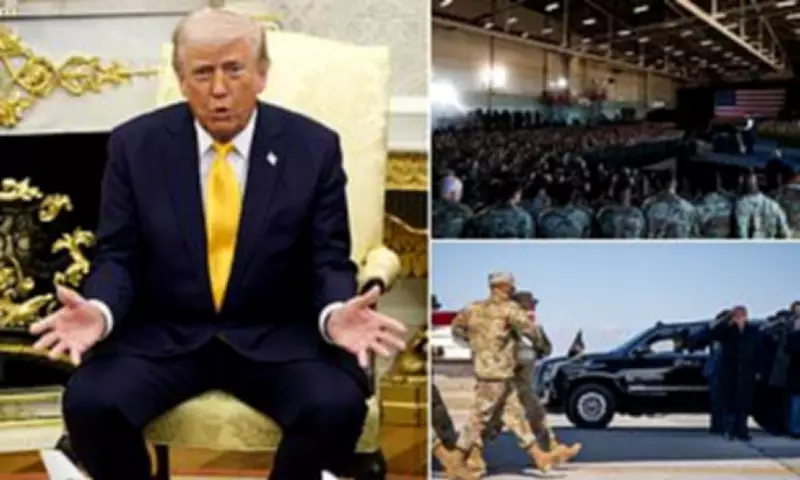
President Donald Trump has made a definitive pledge not to deploy American boots on the ground as the war with Iran escalates, with recent strikes targeting oil and gas facilities across the region. This declaration comes amid reports that the Trump administration was considering sending thousands more US troops to the Middle East, a move that has sparked significant debate and concern.
Funding and Casualties in the Conflict
The Pentagon has requested a substantial $200 billion from Congress to fund the ongoing war effort, highlighting the financial strain of the military engagement. Tragically, thirteen US troops have been killed in the conflict, with more than 140 others wounded, underscoring the human cost of the hostilities.
Economic Impact on Americans
Americans are feeling the economic repercussions at the pump, with gas prices soaring to a national average of $3.90 per gallon. This marks a sharp increase from $2.90 before the US and Israel launched the war against Iran on February 28, adding to domestic pressures and public discontent.

Trump's Oval Office Statement
During a meeting with Japanese Prime Minister Sanae Takaichi in the Oval Office on Thursday, Trump responded sharply to questions about troop deployment. "No, I'm not putting troops anywhere," he stated firmly. He added, "If I were, I certainly wouldn't tell you. But I'm not putting troops and we will do whatever is necessary to keep the price low," emphasizing his focus on economic stability.
Public Opinion and Polling Data
Recent polling reveals that Americans lack an appetite for US boots on the ground in Iran, particularly after Trump criticized the 'forever' wars of Iraq and Afghanistan during his 2024 presidential bid. A March poll from the Daily Mail and JL Partners found that 50 percent of voters oppose deploying troops, with only 25 percent in favor and a mere 12 percent strongly supporting the idea.
Similarly, a CNN poll conducted in early March showed 60 percent of respondents against the President sending ground troops, with just 12 percent in favor. This data reflects widespread public hesitation and aligns with Trump's stated position against further military entanglements.
Diplomatic Engagements and Strategic Discussions
Trump's meeting with Prime Minister Takaichi was heavily focused on the Iran war, as the President has asked allies to assist with patrolling the Strait of Hormuz. This critical waterway sees a fifth of the world's oil flow, and Japan is particularly vulnerable, with 95 percent of its crude oil sourced from the Middle East in 2024.
Surprise Comments and Historical References
In a notable exchange, Trump made an eye-popping comment when asked why he did not reveal his Iran war plans to allies. "You don't want to signal too much ... we wanted surprise," he explained. He then quipped, "Who knows better about surprise than Japan? Why didn't you tell me about Pearl Harbor!" This remark added a layer of historical context to the discussions, though it was met with diplomatic reserve.
Prime Minister Takaichi, a political ally of Trump, complimented him despite describing the world as being in a 'very severe security environment.' She expressed confidence, stating, "But even against the backdrop, I firmly believe that it is only you, Donald, who can achieve peace across the world."
Broader Implications and Future Outlook
As the war continues to spiral, with ongoing strikes and economic impacts, Trump's vow against troop deployment sets a clear policy direction. However, the Pentagon's funding request and the rising casualty figures suggest that the conflict may require sustained resources and strategic adjustments. The interplay between military strategy, economic pressures, and public opinion will likely shape the trajectory of US involvement in the Middle East in the coming months.