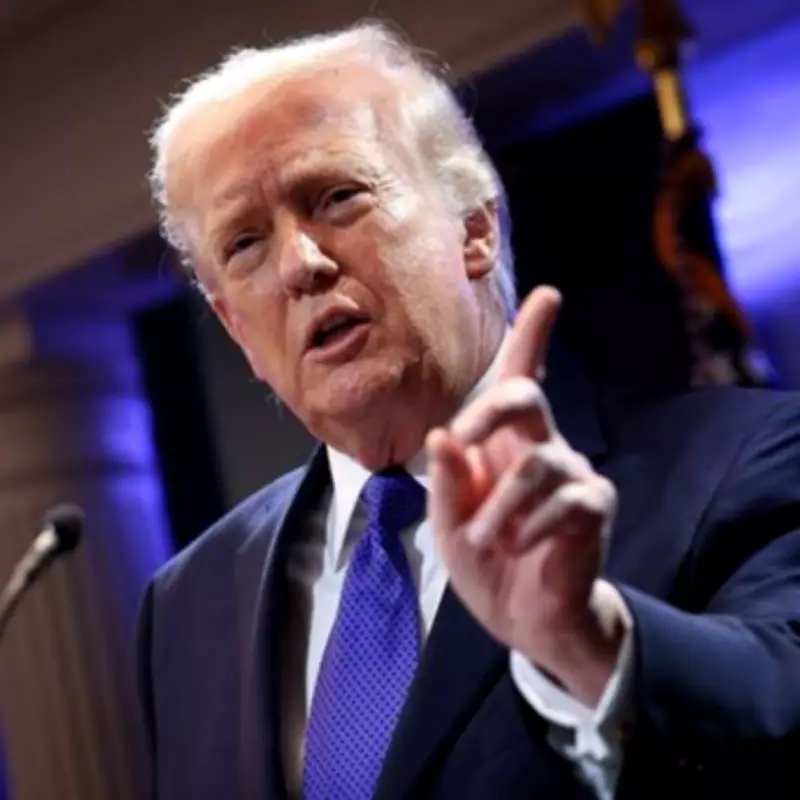
Trump Announces Iran War Progress as Tensions Surge Across Region
In a major update on the ongoing conflict, former US President Donald Trump has declared that the war with Iran is "very complete, pretty much", suggesting a potential nearing end to hostilities. Speaking in an interview with CBS, Trump emphasised that the United States is "very far" ahead of the initial four to five-week timeframe set for the conflict. He detailed that Iran has been significantly weakened, stating, "They have no navy, no communications, they've got no air force." This statement comes just hours after Iran appointed its new Supreme Leader, Mojtaba Khamenei, who swiftly authorised missile strikes against Israeli and US targets in the Middle East.
New Iranian Leadership and Military Actions
Mojtaba Khamenei, the second son of the late Ayatollah Ali Khamenei, was selected as Iran's new Supreme Leader on Sunday. He immediately took an aggressive stance, pictured signing a missile with the words "At your service, Sayyid Mojtaba" as he launched fresh strikes. Iranian state TV reported that Khamenei has been wounded in the conflict, referred to as "janbaz" or wounded by the enemy, though details remain scarce. His appointment follows the death of his father in US-Israeli strikes on February 28, with Foreign Office ministers warning it suggests no change in direction from Iran's hostile policies.
International Responses and Security Measures
The United Kingdom has implemented several precautionary measures in response to the escalating tensions. The Foreign Office announced the temporary withdrawal of families of British embassy staff from Dubai, citing safety concerns. Additionally, RAF Typhoon fighter jets successfully intercepted and destroyed drones heading towards Jordan and Bahrain, as confirmed by the Ministry of Defence. Over 37,000 British nationals have returned from the Middle East, with more than 40 government-chartered flights scheduled for departure today.

Economic and Diplomatic Fallout
The conflict has triggered significant economic repercussions, with oil prices skyrocketing above $100 per barrel for the first time since 2022. Chancellor Rachel Reeves warned that the situation is likely to put upward pressure on inflation, and she stands ready to support a coordinated release of international oil reserves. Meanwhile, US Senator Marco Rubio claimed that the US is "well on our way" to eliminating Iran's ballistic missile threat, using overwhelming force and precision. In a diplomatic move, France has committed to sending two frigates to the Red Sea as part of a European Union naval mission.
Humanitarian Crises and Casualties
Civilian casualties continue to mount, with UNICEF reporting at least 83 children killed and 254 injured in Lebanon over the past seven days, averaging more than 10 child deaths daily. The Iranian Deputy Health Minister stated that at least 1,255 people have been killed in Iran, including 200 children and 11 healthcare workers, due to US-Israeli attacks. In a related development, Donald Trump urged Australia to grant asylum to Iranian footballers, warning they would "most likely be killed" if forced to return to Iran.
Military Developments and Alliances
NATO confirmed intercepting a missile heading towards Turkey, with fragments landing in Gaziantep. The Israeli Air Force launched a new wave of strikes across Tehran, Isfahan, and southern Iran, while IDF troops began a targeted ground assault in southern Lebanon to dismantle Hezbollah infrastructure. The US has advised non-essential staff to leave its consulate in Adana, Turkey, and three B-52 bombers have landed at RAF Fairford in Gloucestershire, indicating increased military activity.

Political Reactions and Future Outlook
Prime Minister Sir Keir Starmer defended the UK's response to the crisis, emphasising close collaboration with the US, including intelligence sharing and joint military operations. He pledged to protect Britons from the economic impact of the war. As tensions persist, the G7 group plans an emergency meeting to address oil price volatility, highlighting the global stakes of the conflict. With Trump's declaration of progress and ongoing military engagements, the situation remains fluid, with potential for further escalation or diplomatic resolutions in the coming days.