Trump Calls on Defence Industry to Ramp Up Missile Production Amid Iran Conflict
President Donald Trump is actively soliciting assistance from top defence executives to sustain his military campaign against Iran, as Pentagon officials are reportedly scrambling to replenish dwindling US weapons stockpiles. This urgent move comes amid escalating concerns over the United States' ability to arm its allies and defend against sustained Iranian counterattacks as the war enters its second week.
Escalating Conflict and Missile Depletion
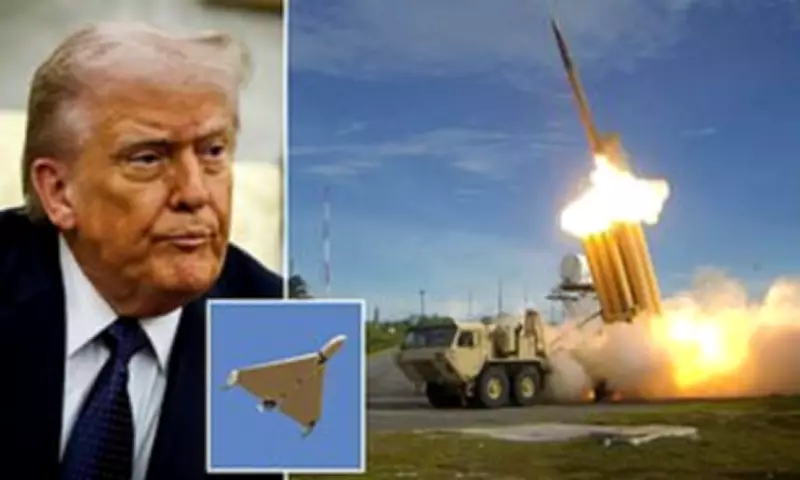
Since the onset of hostilities a week ago, US forces in the Middle East have deployed thousands of missiles in both offensive and defensive capacities, striking over 2,000 targets across Iran. In response, Iranian ballistic missiles and Shahed drones have been launched at US positions and Gulf states, creating a high-intensity exchange. Operation Epic Fury, a joint US-Israel offensive, has already consumed a significant portion of the US missile inventory, raising alarms about future capabilities.
Andrius Kubilius, the EU commissioner for defence and space, has cautioned that the US lacks sufficient missiles to simultaneously support Gulf states and Ukraine, highlighting potential vulnerabilities on multiple fronts. A former US military official warned the Daily Mail that missile defence is often overlooked in discussions about nuclear deterrence, underscoring the strategic importance of maintaining robust air defence systems.

White House Meeting with Defence Executives
In response to the crisis, Trump convened a meeting at the White House on Friday with executives from major defence contractors, including Lockheed Martin, Northrop Grumman, RTX, Honeywell, and L3Harris Technologies. The discussions focused on proposals to quadruple production of advanced weaponry, such as hypersonic missiles and other high-precision, long-range systems. One defence executive noted that the meeting was centred on ramping up missile output to support the war effort, with companies keen to avoid public criticism from Trump on social media platforms.
The President confirmed that agreements were reached to accelerate manufacturing, but concerns persist about the cost-effectiveness of current strategies. A defence executive pointed out the asymmetric nature of the conflict, where $10 million missiles are used to intercept $100,000 drones, a dynamic that could strain resources in a prolonged engagement.
Potential Congressional Funding and Alternative Solutions
Trump is considering requesting additional funding from Congress, with estimates suggesting a $50 billion military supplemental package could kickstart production. Democratic Senator John Fetterman expressed support for such a measure, stating, "I'm expecting a supplemental package and would fully back it. Country over party." However, the White House has not yet formally asked Congress to prepare a defence spending package, according to committee spokespeople.
To address the growing need for air defence, the administration is also exploring alternatives beyond traditional defence primes. Start-up companies like Anduril, Singularity, and Castelion are being considered for their ability to provide high-impact, low-cost solutions, such as directed energy lasers, which could supplement expensive systems like Patriot and THAAD interceptors. A defence executive emphasised, "I think you have to deploy everything you can," advocating for a combined approach using both established firms and innovative startups.
Intelligence and Strategic Concerns
The Pentagon has requested 100 additional military intelligence officers to assist US Central Command, indicating potential shortcomings in pre-operation intelligence preparation. One military official described an "influx of uncleaned intelligence" that needs processing, suggesting the administration may not have fully anticipated the intelligence demands of the campaign.

Current and former military officials warn that Iran might be waiting for US air defence munitions to deplete before launching large-scale drone swarms at allies like the UAE, Qatar, or Saudi Arabia. A former high-ranking official noted that Iran could time a full counterattack to exploit weaknesses in US defences, adding to the urgency of replenishing stockpiles.
Administration's Stance and War Goals
Despite these challenges, the White House maintains that the US is not lacking supplies for the conflict. Press Secretary Karoline Leavitt asserted, "The US military has more than enough munitions, ammo, and weapons stockpiles to continue demolishing the Iranian regime." She clarified that the meeting with defence executives was scheduled weeks ago and emphasised Trump's commitment to accelerating the production of American-made weapons.
The administration's objectives for the war include dismantling Iran's nuclear and ballistic missile programs, destroying its Navy, and neutralizing proxy groups like Hezbollah, the Houthis, and Hamas. As the conflict persists, with Trump suggesting it could last four to five weeks or even "forever," the focus remains on ensuring a steady supply of advanced weaponry to sustain military operations and protect regional allies.