Trump's $11.3bn Bomb Bill in Iran War First Week Sparks Spending Priorities Debate
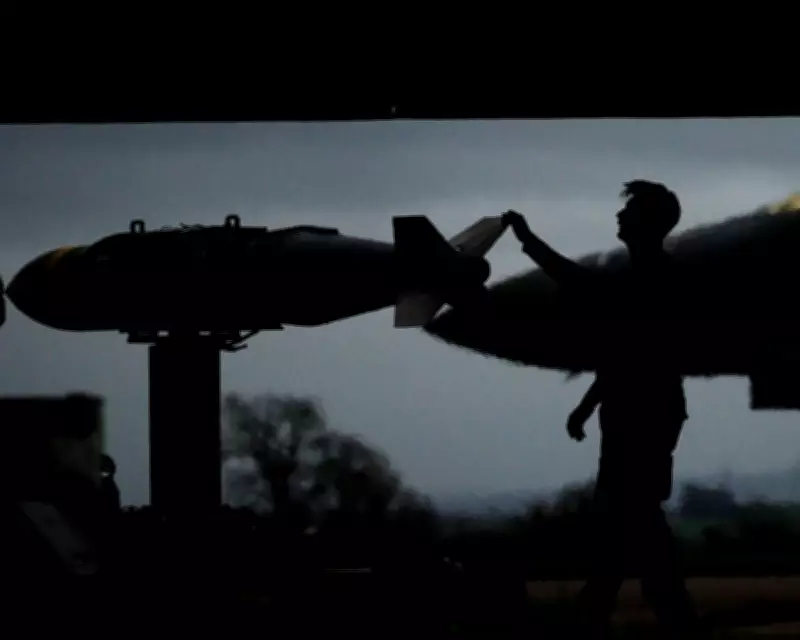
In a stark revelation that contradicts Donald Trump's campaign promises to curb government expenditure and avoid foreign conflicts, the Pentagon has disclosed that a staggering $11.3 billion was spent on American taxpayer-funded bombs during the initial six days of the joint US and Israel military assault on Iran. This offensive commenced on 28 February 2026, with munitions, including suspected JDAM bunker-busting bombs, being loaded onto US Air Force B-1B Lancer bombers at RAF Fairford in England as recently as 12 March.
Campaign Rhetoric Versus Governing Reality
During his bid for the presidency, Trump consistently pitched himself as a fiscal conservative who would rein in excessive spending and keep American troops out of unnecessary wars. However, his administration's actions tell a different story, with billions of dollars worth of ordnance already deployed in a conflict that has resulted in hundreds of fatalities. The $11.3 billion figure, confirmed to lawmakers, represents only the direct cost of the bombs and does not account for broader military expenditures such as troop deployments, which are likely to have inflated the total significantly given the ongoing nature of the hostilities.
Stark Comparisons with Domestic Spending
The financial outlay for the first week of the Iran war alone surpasses the annual budgets of several crucial US public health and scientific agencies. To put this into perspective, the cost exceeds the full funding for the Environmental Protection Agency ($8.8 billion), the Centers for Disease Control and Prevention ($9.2 billion), or the National Cancer Institute ($7.4 billion). Moreover, it outstrips the total allocation for federal scientific research via the National Science Foundation this year.

"This just shows a disturbing prioritization of militarism over the health and welfare of the American public," remarked Adam Gaffney, a professor at Harvard Medical School who has analysed the health impacts of the administration's policies. His comments underscore the growing concern over the allocation of national resources.
Political and Strategic Fallout
The massive expenditure has ignited a fierce debate about America's priorities, with critics arguing that it highlights a misplaced focus on military aggression at the expense of domestic wellbeing. Meanwhile, in a surprising twist, Tulsi Gabbard, the Director of National Intelligence who once sold "No War With Iran" merchandise, testified before the Senate Intelligence Committee that the US strikes on Iran constituted a strategic success. This stance marks a significant shift from her previous anti-war advocacy.
Broader Implications and Related Developments
The conflict's ripple effects extend beyond budgetary concerns. The Federal Reserve has opted to hold interest rates steady amidst fears that the war is driving up oil prices and inflation, complicating economic policy. Additionally, the confirmation hearing for Markwayne Mullin as Secretary of Homeland Security raised alarms among disaster management experts, while White House officials expressed frustration over Republican representative Nancy Mace's independent rescue efforts in the Middle East.
Other notable events from the period include a study revealing a higher early Covid-19 death toll than officially recorded, a fire on the USS Gerald R Ford aircraft carrier, and allegations of misconduct against the late labour organiser César Chávez. Instagram also announced it would cease encrypting private messages, bowing to pressure from law enforcement and child safety groups.
As the war continues, the $11.3 billion bomb bill serves as a potent symbol of the Trump administration's controversial spending decisions, prompting urgent questions about the balance between military might and public welfare in contemporary US governance.