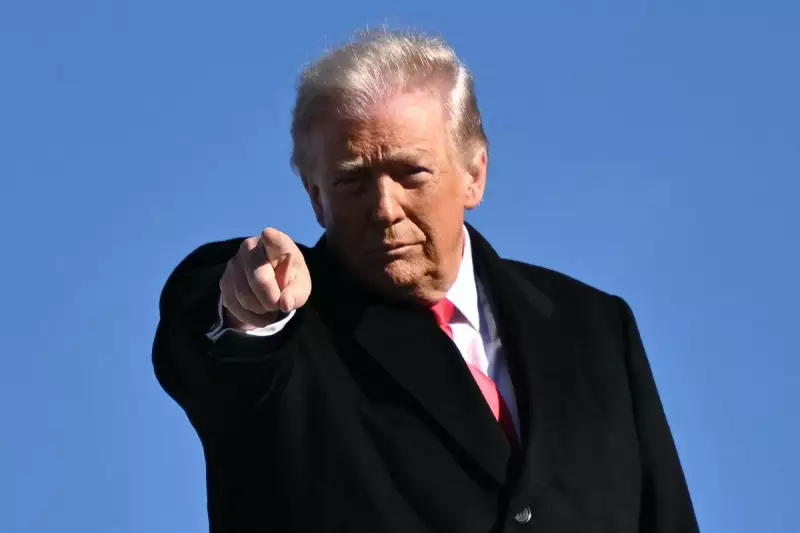
US President Donald Trump has pledged that "help is on the way" for protesters in Iran, as the Tehran regime continues a violent crackdown that rights groups say has claimed around 2,000 lives. However, his threats of military intervention come at a time when America's capacity for decisive action in the region appears significantly constrained.
Military Capacity Stretched Thin
On 2 January, Trump warned Iran that if authorities killed protesters, the US was "locked and loaded and ready to go". Yet the strategic landscape has shifted since last June, when the US, in conjunction with Israel, conducted a major bombing campaign against Iranian nuclear facilities at Fordow, Natanz, and Isfahan. That operation, codenamed Midnight Hammer, involved approximately 125 US aircraft, decoy deployments, and cruise missiles.
Today, US naval assets are dispersed globally. Aircraft carriers are positioned in the Americas and Asia, not the Middle East. The Gerald R. Ford Carrier Strike Group was redeployed from the Mediterranean to the Caribbean for operations against Venezuela's Nicolas Maduro. An administration official confirmed this week that no major troop or asset movements to the Middle East are currently being prepared.

Furthermore, the US faces a depleted stockpile of interceptor missiles, such as Patriots, crucial for defending its bases against potential Iranian retaliation. A former defence official warned that the US "could get in a sticky situation very quickly on that front" in a prolonged conflict.
Cyber and Non-Kinetic Alternatives
With conventional military options limited, officials have reportedly presented alternatives including cyber attacks aimed at disrupting Iranian command structures, communications, and state media. However, experts caution about the unpredictability and potential blowback of such actions.
Ciaran Martin, former head of the UK's National Cyber Security Centre, noted that targeting civilian infrastructure like electricity could harm ordinary Iranians more than the regime. The effectiveness of any online campaign to boost anti-government sources is also hampered by Iran's severe internet blackout, which has crippled protest mobilisation. Trump stated on Sunday he would speak to Elon Musk about restoring internet access via Starlink.
The Elusive Goal of Regime Change
While exiled crown prince Reza Pahlavi has worked to draw defectors from Iran's security forces, he lacks Trump's explicit backing as a potential successor. Analysts doubt that full regime change is the immediate US objective.
Will Todman of the Center for Strategic and International Studies suggested Trump's goal is more likely to influence Tehran's behaviour, perhaps to secure concessions in nuclear talks or halt the crackdown. Meanwhile, reports indicate Supreme Leader Ayatollah Khamenei has prepared a succession plan and may flee to Moscow if his security is compromised.
To date, Washington's most decisive action has been to sanction Iran's trading partners, a move that falls short of the direct aid promised to protesters. As the crisis deepens, the gap between Trump's rhetoric and his actionable military and strategic options grows increasingly apparent.