Trump's Iran Ground Invasion Plan: A Deadly Trap Set by Tehran, Experts Warn
As US President Donald Trump finalises plans for a potential ground invasion of Iran, defence experts are issuing stark warnings that this move represents a deadly trap meticulously set by Tehran. The objective, they argue, is to humiliate America and ensnare its military in a protracted guerrilla conflict that could spiral out of control.
Massive Troop Mobilisation Underway
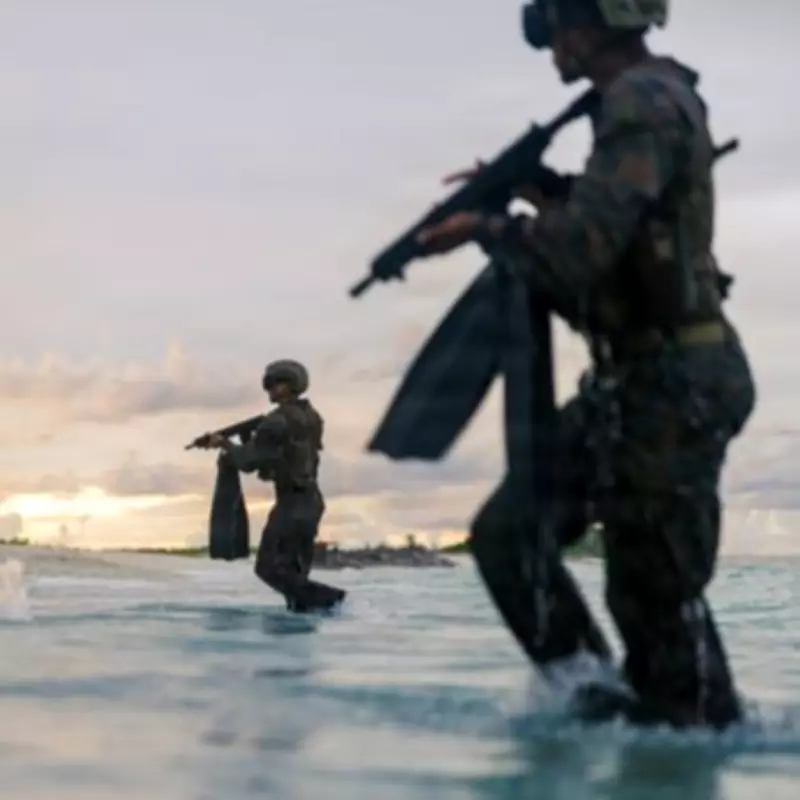
Military preparations are advancing at a rapid pace. Nearly 20,000 paratroopers and Marines are expected to be positioned within days for a potential 'boots on the ground' mission. The primary stated aim is to secure the strategic Strait of Hormuz, though objectives may expand significantly. Several thousand troops are already stationed in the Gulf region, with thousands more en route. The Pentagon is reportedly considering an additional deployment of up to 10,000 personnel.
This invasion force would face a formidable and prepared adversary. Intelligence suggests a wave of suicide bombers, missiles, rockets, mines, and improvised explosive devices awaits any ground incursion. The situation may force President Trump, despite his previous boasts about imposing 'regime change' and 'winning the war,' to ultimately commit troops to a high-risk operation.

A Strategy of Decentralised Guerrilla Warfare
Military analysts, historians, and commentators globally are echoing Iranian warnings about setting US forces 'on fire.' They concur that this scenario is a deliberate trap. Recognising it could not confront American and Israeli military might directly, Iran has strategically decentralised its military capabilities. This move prepares the nation for asymmetric guerrilla warfare, making it exceptionally difficult to neutralise its core strength through conventional means.
The current Iranian regime is noted as being more determined, defiant, and hard-line than its predecessors. A recent report by former FBI terrorism and Middle East expert Ali Soufan highlights the grave risks, predicting potential 'fatalities' and the dangerous phenomenon of 'mission creep.'
The Peril of Mission Creep: Lessons from History
The concept of mission creep—the tendency to continually escalate troop numbers and resources in a failing conflict—has proven disastrous historically. General Westmoreland's persistent requests for more troops during the Vietnam War, while claiming weekly victories, ultimately led to a humiliating defeat. Similarly, the nearly 20-year conflict in Afghanistan embedded the term in the lexicon of military families, ending in a chaotic withdrawal.
Despite these stark historical lessons, the Trump administration appears to be mobilising ever more ground troops. Missions under consideration range from a landing operation near the Strait of Hormuz to potential special forces campaigns deep within Iranian territory.
A Fractured Coalition and Chaotic Strategy
President Trump's public statements on the Iran conflict have been notably chaotic, oscillating between threats like 'taking Khark Island' and claims of 'very good negotiations' regarding a peace deal. He has paused, for a second time, threats to strike Iranian infrastructure, even as the Israeli military has proceeded with such attacks.
Overnight, explosions reverberated through Tehran and other major cities, with Israel's military boasting it is 'attacking the infrastructure throughout Tehran.' This highlights a growing divergence between the US and Israeli strategies. While America seeks a diplomatic 'off-ramp,' Israel is capitalising on the moment to inflict maximum damage.
A critical complication is that Iranian Revolutionary Guard Corps units and civilians are unlikely to distinguish between Israeli and American ordnance. This erodes trust in Trump's envoys, as Iran accuses them of engaging in peace talks while simultaneously supporting attacks.
Operation Epic Fury: A Catastrophe Unfolding
The military campaign, dubbed Operation Epic Fury, is described by observers as a catastrophe spiralling out of control. Its original purpose has become obscured by weeks of escalating violence, a situation exacerbated by what critics call the administration's inconsistent messaging.

In his latest analysis, Ali Soufan warns: 'Any ground incursion into Iranian-held territory, even if limited, risks the loss of US personnel to a multiplicity of threats from Iran’s drone and missile arsenal, direct and indirect ground fire, roadside and improvised explosive devices, and suicide bombings.'
Experts further caution that introducing ground troops almost inevitably risks mission creep. A limited operation could rapidly expand in response to Iranian counteractions, potentially evolving into a broader campaign to capture towns and cities—a scenario with devastating historical precedents. The residents of war-battered Tehran, already living among debris, face the prospect of a far more destructive and prolonged conflict should US boots hit the ground.