

Trump's Daring Plan: US Special Forces Mission to Seize Iran's Nuclear Material
President Donald Trump has charged his top military officials with developing a bold and perilous plan to seize Iran's nuclear material, a mission that could become one of the most daring and dangerous special operations ever undertaken by the United States.
The Operation's Scope and Timeline
The proposed operation, which would heavily rely on US special forces such as Navy SEALs and Army Rangers already deployed in the Middle East, calls for hundreds or potentially thousands of troops to be deployed on the ground in Iran. Their objective: to capture nearly 1,000 pounds of highly enriched uranium. According to multiple officials familiar with the planning, the extraction process could take weeks if approved.
While Trump originally stated that Operation Epic Fury would last a maximum of six weeks, the current proposed plan could extend that timeline significantly. As of Thursday, the conflict has been ongoing for four weeks and five days. In a national address on Wednesday night, Trump asserted that the war with Iran would conclude "very shortly" and promised that the US would strike Iran "extremely hard" over the next two to three weeks if necessary.

Logistical Challenges and Dangers
The operation would involve complex logistics, including:
- Flying in heavy excavation equipment to the sites
- Constructing a runway capable of handling heavy cargo aircraft
- Extracting highly radioactive material, much of which is buried under rubble from previous US and Israeli strikes
Insiders anticipate that excavating the uranium—which Trump has referred to as "nuclear dust"—could take weeks, during which US forces would be vulnerable to attacks from Iranian military units. The plan was briefed to Trump within the past week after he specifically requested a proposal from military leaders.
Mick Mulroy, a retired CIA and Marine officer, told the Washington Post: "This would be one of, if not the largest, most complicated special operations in history. It's a major risk to the force."
Protective Measures and Feasibility
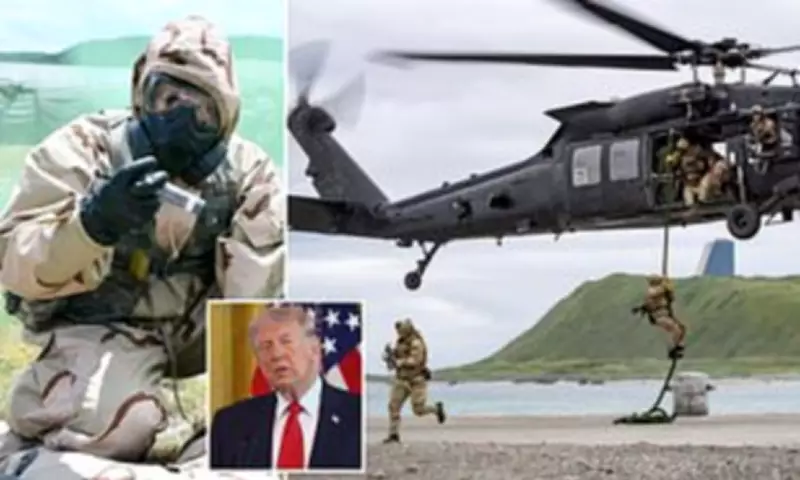
Complicating the mission is the highly radioactive nature of the material and its potential impact on soldiers tasked with recovery. Troops would likely need to wear MOPP (Mission-Oriented Protective Posture) gear while conducting operations, adding to the difficulty of an already risky endeavor.
Several officials have noted that while the plan is technically feasible and special forces are trained for such missions, it would be exceptionally dangerous and expose operators to hostile fire deep within Iranian territory. White House Press Secretary Karoline Leavitt emphasized: "It's the job of the Pentagon to make preparations in order to give the Commander in Chief maximum optionality. It does not mean the President has made a decision."
Background and Current Situation
Following US airstrikes on Iran's nuclear facilities at Isfahan, Natanz, and Fordow in June 2025, many of the Islamic Republic's enrichment capabilities were buried under tons of concrete. Sources familiar with the plan explained that accessing the nuclear material at Isfahan would require breaking through concrete and lead shielding, reaching the bottom of silos, and removing containers full of nuclear material for extraction.
According to the International Atomic Energy Agency (IAEA), Iran possesses approximately 970 pounds of uranium enriched to 60 percent. Weapons-grade uranium requires enrichment to 90 percent, a process that could be completed in a matter of days. Trump has repeatedly stated that Iran was either weeks or days away from developing nuclear weapons.
IAEA Director General Rafael Mariano has noted: "We haven't seen big movements showing Iran is trying to unearth the material." He observed that while there may have been vehicles visiting the bombed sites, there were no indications of bulldozers actively digging out materials.

Execution Strategy
The operation would likely commence with targeted strikes on Iranian defenses to create a safe corridor for soldiers from the Army's 82nd Airborne and Rangers to parachute into nuclear sites and establish secure perimeters. Engineers would then need to rapidly construct an airstrip to facilitate the delivery of excavation equipment and other supplies necessary for recovering the nuclear material.
The logistical demands would be immense, requiring numerous soldiers, pilots, mechanics, drivers, refueling personnel, resupply teams, and potentially civilian nuclear experts to guide troops in handling the dangerous material. Sustained supplies of food, water, and gasoline would be essential to maintain around-the-clock operations.
This mission would essentially involve establishing a forward operating base deep within enemy territory while US forces excavate and extract any discovered uranium. The work would be grueling, involving blasting through reinforced concrete rubble while wearing restrictive protective equipment and air filtration systems.
Additional challenges include determining the precise location of the nuclear material, as US forces may face difficulties without detailed facility layouts. The operation underscores the administration's determination to prevent Iran from obtaining nuclear weapons, even if it means undertaking extraordinarily risky military actions.





