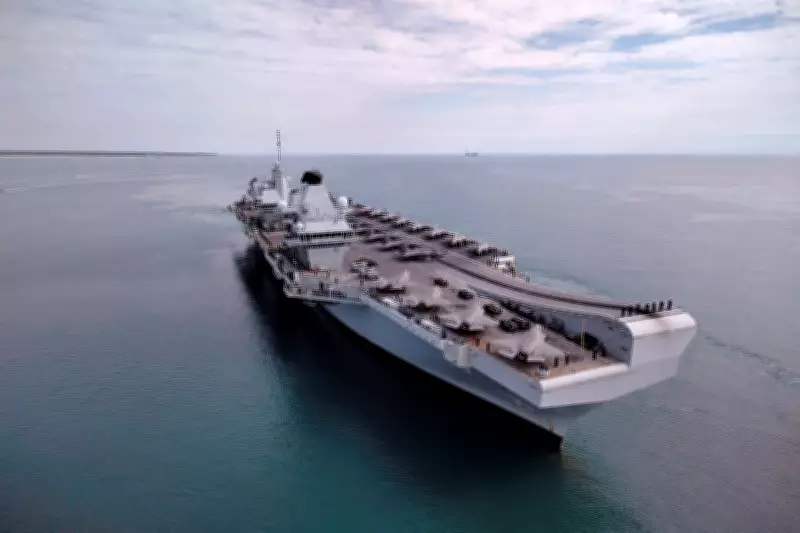
Trump's Mockery of UK Aircraft Carriers as 'Toys' Overlooks Their Strategic Value
Former US President Donald Trump recently sparked controversy by comparing Britain's aircraft carriers, HMS Queen Elizabeth and HMS Prince of Wales, to mere "toys" in contrast to American vessels. This remark, however, fails to grasp the sophisticated design and strategic purpose of these Royal Navy warships, which are tailored for modern warfare rather than sheer size.
A Personal Perspective on Naval Capabilities
Chris Terrill, who spent four years embedded on HMS Queen Elizabeth, highlights that Trump's comments ignore critical technical, strategic, tactical, and diplomatic points. From observing the carrier's construction in Govan shipyard since 2009 to documenting its operational deployments, Terrill emphasizes that these ships are built for efficiency and precision in fifth-generation stealth operations using F-35B fighters.
Design Differences and Interoperability
The Queen Elizabeth-class carriers represent a modern approach with high automation, requiring a crew of 700–1,600, compared to over 2,600 for the USS Gerald R. Ford. They utilize integrated electric propulsion, making them cost-effective and nimble. Unlike the US Nimitz-class carriers, designed in the mid-20th century for power projection, the UK carriers focus on interoperability with allies, a key factor in today's volatile global security landscape.

Strategic Roles and Alliance Commitments
Despite Trump's claims, the Royal Navy's primary missions include defending the North Atlantic and Arctic regions against threats like Russian aggression, not deploying carriers to conflicts such as those in the Middle East without NATO consensus. The operational carrier, HMS Prince of Wales, is preparing for High North deployments, underscoring Britain's focus on regional security and trade lane protection.
The Human Element in Naval Effectiveness
Ultimately, a warship's success hinges on its crew. As Captain Jerry Kyd noted, the hardware is secondary to the skilled sailors who bring it to life. British naval personnel are renowned for their training, a point echoed by US admirals who have expressed admiration for the Queen Elizabeth-class carriers' capabilities.
In summary, Trump's dismissal overlooks that these carriers are not toys but vital assets designed for contemporary challenges, proving that bigger isn't always better at sea.