Britain has been rapidly drawn into the escalating Middle East conflict, with Prime Minister Keir Starmer concluding that involvement was inevitable due to Iranian retaliation, regional alliances, and repeated requests for assistance from the United States. In a significant policy shift, Starmer has determined that what was once considered an illegal war has now become, in certain respects, legally justifiable under international law.
How the UK Prepared for Potential Strikes on Iran
Over the past six weeks, the United Kingdom has been steadily building up military assets across the Middle East region. This strategic deployment aims to protect existing British bases, particularly the facility at Akrotiri in Cyprus, while simultaneously providing support to key allies throughout the Gulf. In a notable move during January, a joint UK-Qatari squadron was relocated from Lincolnshire to Qatar, positioned to act in self-defence should the Gulf nation or other regional partners come under attack.
The prevailing expectation among defence officials was that any US and Israeli assault on Iran would likely provoke Tehran to retaliate aggressively. Such retaliation would probably involve launching ballistic missiles and drones targeting US bases throughout the region, where British troops are frequently co-located, as well as striking a range of allied nations. RAF Typhoons stationed in Qatar, alongside F-35 and Typhoon aircraft at Akrotiri, would be deployed to intercept incoming drones and assist in defending allied territories if attacked.

The Prime Minister's Initial Refusal and Subsequent Reversal
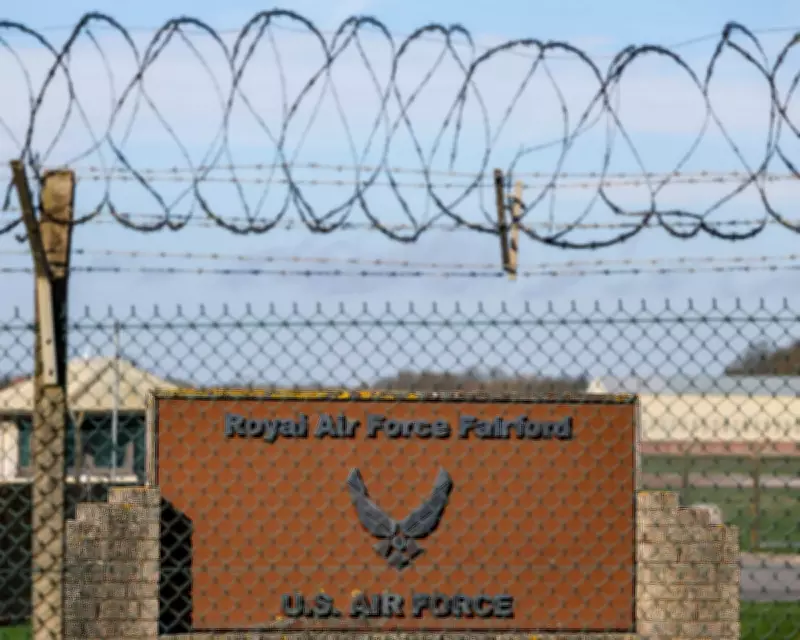
Last month, Prime Minister Starmer declined a request from former US President Donald Trump to authorise the use of two critical British bases—RAF Fairford in Gloucestershire and Diego Garcia in the Indian Ocean—as part of a coordinated US-Israeli offensive against Iran. In an interview with the Telegraph on Monday, Trump expressed his disappointment with this decision, remarking that "it sounds like he was worried about the legality" of such involvement.
However, in a dramatic policy reversal announced during a video address on Sunday night, Starmer unveiled a new strategic position. The United Kingdom would, after all, grant the United States permission to utilise British bases for what the Prime Minister characterised as a "specific and limited defensive purpose"—namely, to destroy Iranian missiles before they can be launched by bombing their storage depots or launchers.
The Legal Justification for UK Involvement
The calculus behind Sunday's decision rests on the interpretation that this level of involvement is permissible under international law because Britain is participating in the collective self-defence of allied nations. Iran has already retaliated against nine countries using missiles and drones:
- Israel
- Jordan
- Kuwait
- Bahrain
- The United Arab Emirates
- Qatar
- Saudi Arabia
- Oman
- Cyprus
What UK Missions Might Entail
While Prime Minister Starmer provided limited additional detail, military analysts have outlined the most probable immediate scenario. The United Kingdom is expected to allow the United States to employ RAF Fairford and the Diego Garcia base to conduct bombing raids on Iran's so-called "missile cities". These are five or potentially more sites, carved deep into Iran's mountainous terrain at depths reaching approximately 500 metres, where high-speed ballistic missiles—Tehran's most dangerous weapons—are stored and can be launched from protected positions.
Effectively targeting these fortified locations would likely necessitate the deployment of US heavy bombers equipped with specialised bunker-buster munitions. Aircraft such as B-2 stealth bombers or B-52s operating from Fairford or Diego Garcia would be preferred by the US Air Force due to their proximity to Iran compared to bases within the continental United States.

Potential for Further UK Escalation
Additional Iranian retaliation directed against the United Kingdom or its allies could easily draw Britain deeper into the conflict. A series of drones appeared to target the RAF base at Akrotiri on both Sunday and Monday, with one successfully striking the facility on Sunday night. The UK may seek to retaliate directly against those it believes responsible for launching these attacks.
More broadly, the United States may well request further military support from Britain if the aerial assault on Iran continues. Prime Minister Starmer has demonstrated that the UK is willing to adopt a flexible stance, provided that any expanded military effort can be framed as defensive in nature. Should the war escalate further or attacks intensify, Britain's commitment to the conflict may well deepen correspondingly.