

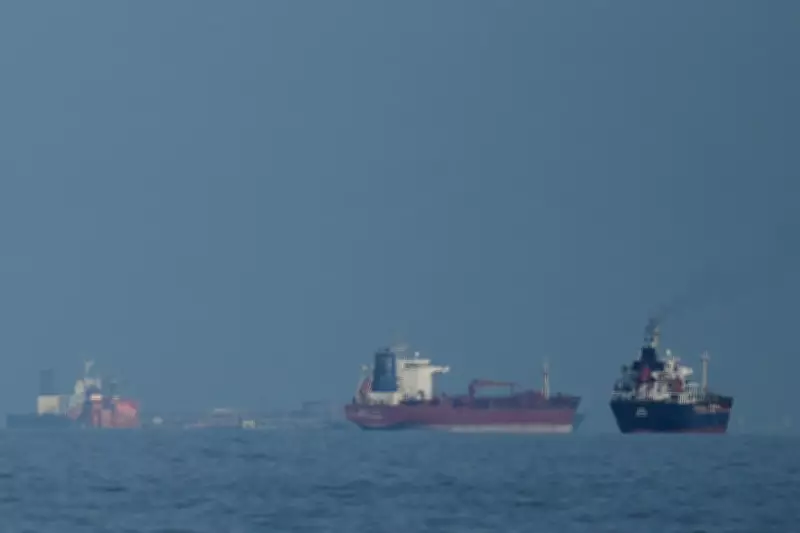
UK to Provide Substantial Military Support for Strait of Hormuz Protection Force
Britain has committed to delivering a wide-ranging military contribution to an international mission designed to protect commercial shipping in the critical Strait of Hormuz. The announcement was made by Sir Christian Turner, the UK ambassador to the United States, during an event in Washington. This commitment emerges against a backdrop of persistent concerns regarding the condition and funding of the nation's armed forces.
International Coalition Forms to Secure Vital Trade Artery
The multinational mission, spearheaded by the United Kingdom and France, aims to offer reassurance to vessels navigating the essential Gulf waterway following the conclusion of the Iran conflict. Sir Christian revealed that the initiative was launched during talks in Paris involving nearly fifty countries. He stated this demonstrates a global resolve to prevent any tolls or restrictions from being imposed on this crucial shipping route, which facilitates the movement of approximately one-fifth of the world's oil and gas supplies.
To date, around twelve nations have pledged to participate in the defensive operation. The mission's objectives include protecting merchant vessels, reassuring commercial shipping operators, and conducting mine clearance operations as soon as conditions allow.

Diplomatic Context and Broader Security Concerns
The ambassador's statement follows recent sharp criticism from Labour's former defence secretary and ex-NATO chief, Lord Robertson of Port Ellen, who accused the government of exhibiting "corrosive complacency" in the face of clear security dangers. These warnings highlight long-running anxieties about defence under-funding within the UK.
Sir Christian emphasised that the planned steps to safeguard future freedom of navigation would follow "seamlessly" from Iran's announcement that it had reopened the strait to shipping, part of the cessation of hostilities in the Middle East. The US and Iran are currently observing a fragile truce set to last until April 22nd, while Israel and Lebanon have begun a ten-day ceasefire. Iran had effectively closed the Strait of Hormuz since the US-Israeli bombing campaign commenced in late February, a move that drove up global energy and fuel prices.
Addressing International Politics and NATO's Role
The initiative has been dismissed by US President Donald Trump, who used it as another opportunity to label NATO as "useless," following the alliance's refusal to support his offensive against Iran. In response, Sir Christian clarified that this mission is not being led by the military alliance, though he praised President Trump's leadership in urging increased defence spending by NATO members.
"Although NATO was an observer of the talks, this is not a NATO mission," Sir Christian explained, "because it's a mission we're trying to stand up in the Strait of Hormuz." He simultaneously stressed the enduring importance of NATO, describing it as "the most successful and enduring defensive alliance in history."
Operational Details and Forward Planning
Sir Christian hailed the coalition as a significant development and a strong signal of intent. He noted that military planning is currently underway, focusing on marshalling capabilities to provide reassurance to the shipping industry once the ceasefire is firmly established.
"The UK itself will be making a wide-ranging military contribution, and that will be confirmed and announced at a military planning conference," he stated. This conference, scheduled for early next week, aims to consolidate all contributions under a clear command and control structure. The ambassador expressed hope that this protective capability would ensure the continued freedom of navigation following the strait's reopening.






