

Escalating Middle East Conflict Raises UK Drone Attack Fears
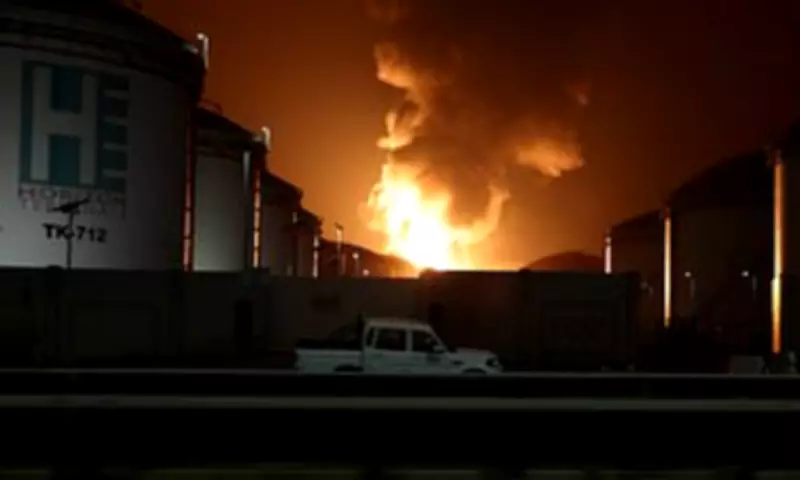
As hostilities in Iran intensify and spread across the Middle East, mounting concerns suggest the world could be edging toward a third global war. Prime Minister Sir Keir Starmer has attempted to maintain British neutrality, yet recent strikes targeting an RAF installation in Cyprus indicate this position may become untenable should the warfare continue to expand. While the probability of a direct assault on British territory remains relatively modest, security specialists have issued stark warnings about Iran's arsenal of Shahed drones, which possess the capability to launch surprise attacks without prior detection.
Scientific Survival Strategies for Drone Assaults
Scientists have now disclosed optimal safety measures should a drone offensive impact the United Kingdom. Each Iranian Shahed drone transports a formidable 90-kilogram high-explosive warhead, sufficient to demolish structures with a precise impact. Consequently, the most secure refuge during an aerial bombardment on British soil would be subterranean locations. For inhabitants of London, who might find themselves at the heart of a potential strike, the London Underground network provides superior protection, particularly at deeper stations such as Hampstead Heath.
Nevertheless, if accessing an underground shelter proves impossible, authorities advise remaining indoors and bracing for detonation effects. The Shahed drones boast an operational range of 1,500 miles (2,400 kilometers), theoretically placing Britain beyond direct reach from Iran. However, security analysts caution that a clandestine fleet of vessels in the North Sea could circumvent Britain's fragmented radar systems, deploying drones across UK territories.

Expert Analysis of Vulnerable Targets
Professor Anthony Glees, a security and intelligence authority from the University of Buckingham, informed the Daily Mail that hostile drone-carrying crafts might approach the UK via the Channel and North Sea. He emphasized that Russia presents an escalating threat from northern regions, with probable targets including Aberdeen's oil industry, nuclear submarine facilities on the Clyde and Holy Loch, and RAF Lossiemouth. Launched at velocities reaching 100 miles per hour (160 km/h) from coastal ships, these lethal suicide drones could penetrate deeply before Quick Reaction Alert Typhoons stationed at RAF Coningsby in Lincolnshire could intercept them.
Dr. Geert de Cubber, head of the Robotics and Autonomous Systems Unit at the Royal Military Academy of Belgium, indicated to the Daily Mail that such drones would likely aim at critical infrastructure, including electricity grids, desalination plants, military installations, and command centers. Yet, as contemporary conflicts have repeatedly shown, civilian infrastructure frequently suffers direct and indirect drone strikes, meaning proximity to non-military areas does not guarantee safety, especially in densely populated urban zones.
Comprehensive Survival Guidelines
Immediate Shelter Protocols:
- Seek underground areas like metro stations or basements whenever feasible.
- If subterranean options are unavailable, retreat to the lowest room in your residence.
Indoor Safety Measures:
- Avoid windows entirely, as they can shatter violently during explosions.
- Position yourself in a room corner, but refrain from leaning against walls, which may transmit shockwaves.
Personal Protection Techniques:
- Cover yourself with non-flammable materials or a heavy jacket to mitigate burn injuries.
- Prepare for blast effects by slightly opening your mouth to safeguard lungs from pressure differentials.
- Close your eyes to prevent debris-induced blindness.
The World Health Organisation (WHO) corroborates that during a drone attack, entering the nearest building swiftly is paramount. If an underground shelter is inaccessible, occupy the lowest section of a structure. Dr. de Cubber further recommends maintaining distance from windows, since glass fragmentation can cause severe harm even at considerable distances from blast epicenters.

Advanced Blast Dynamics Research
Investigations from the University of Nicosia in Cyprus reveal that both windows and corridors can funnel high-velocity winds generated by explosions, amplifying dangers. Computer simulations of nuclear detonations demonstrate that supersonic shockwaves expand through apertures, creating winds capable of propelling individuals. Consequently, areas adjacent to windows, doors, and corridors represent the most hazardous during blasts; optimal positioning is in a corner distant from entrances.
For extended sheltering, identify the safest room in your home, preferably with thick concrete walls and minimal windows. Bathrooms often serve well due to typically fewer windows. Prepare for prolonged confinement by filling baths and sinks with drinking water. Enhance shelter safety using mattresses, tables, or book piles. When explosions occur, shield skin with fire-resistant coverings; alternatives like coats or newspapers offer some burn protection.
Professor Glees suggests that remote regions such as the Scottish Highlands, Cotswolds, and Welsh Mountains might provide safer havens, though for urban dwellers, the emphasis remains on immediate protective actions. This guidance emerges as conflict expands, with two Iranian drones reportedly detonating in Azerbaijan, underscoring the escalating regional threat.





