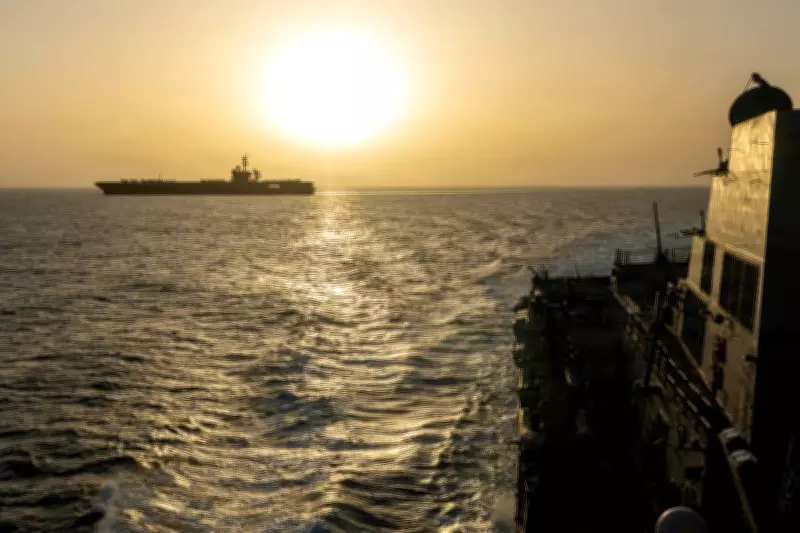
Military planners from nations seeking to join a major UK and France-led international mission to secure the Strait of Hormuz are convening in London this Wednesday for critical talks. The two-day conference, co-hosted by the UK and France at the UK's Permanent Joint Headquarters in Northwood, north London, aims to coordinate efforts to reopen and protect this vital global shipping route once the Iran war concludes.
Global Economic Impact of Strait Closure
The Strait of Hormuz, through which a fifth of the world's oil flows, has been effectively closed by Iran since the US-Israeli bombing campaign began in February. This blockade has triggered a severe global economic shock, sending energy prices soaring worldwide and disrupting international trade networks. The closure has inflicted widespread financial strain, highlighting the strait's crucial role in maintaining global energy security and economic stability.
Coordinating a Multinational Defence Mission
Over 30 nations are expected to send military planners to the London conference, building on discussions held last week by UK Prime Minister Sir Keir Starmer and French President Emmanuel Macron in Paris. The primary goal is to establish a joint defensive mission after a sustainable ceasefire agreement is reached in the Iran conflict. This mission is designed to protect merchant vessels, reassure commercial shipping operators, and conduct essential mine clearance operations in the region.

The talks will focus on key operational aspects, including military capabilities, command and control structures, and deployment strategies for forces in the region. Defence Secretary John Healey emphasised the urgency of the task, stating that the objective is to translate diplomatic consensus into a concrete joint plan to safeguard freedom of navigation in the strait and support a lasting ceasefire.
Fuel Price Surge Alters UK Behaviour
Meanwhile, the rise in fuel costs resulting from the strait blockage has led to significant behavioural changes across the UK. According to Savanta polling commissioned by the Liberal Democrats, 49% of UK drivers have cut back on car usage, while one in ten reported stockpiling fuel. Additionally, 25% of employed individuals said they had switched to working from home or altered their working patterns due to escalating commuting costs.
The aviation sector has also been heavily impacted, with airlines cancelling flights and increasing fees as they absorb higher costs and prepare for potential fuel shortages. This widespread disruption underscores the far-reaching consequences of the strait's closure on everyday life and economic activities in the UK and beyond.
International Commitment to Reopening the Strait
Defence Secretary Healey expressed confidence that substantial progress would be made during the two-day conference, noting that international trade, energy security, and global economic stability depend on freedom of navigation. He stressed that by strengthening multinational coordination and planning for effective collective action, the coalition can help reopen the strait, stabilise the global economy, and protect populations from further economic hardship.
The London talks represent a crucial step in mobilising international military and diplomatic resources to address one of the most pressing global security and economic challenges of the decade. As nations collaborate to devise a practical framework for the mission, the outcomes of this conference could significantly influence post-conflict recovery and long-term stability in the region.