

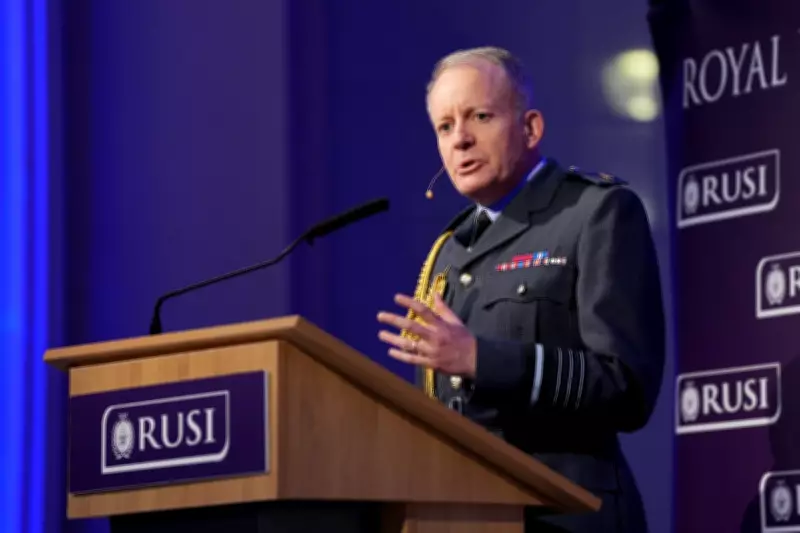
UK Armed Forces Chief Dismisses Claims of Unpreparedness for Iran Conflict
The head of Britain's armed forces has robustly rejected criticism that the military was ill-prepared for the escalating conflict with Iran, while simultaneously warning that the nation is navigating "probably the most dangerous period" it has faced in over three decades.
Air Chief Marshal Sir Richard Knighton, the Chief of the Defence Staff, stated unequivocally that he "completely reject[s] that criticism" regarding commentary on the UK's military readiness when Israel and the United States initiated strikes a week prior.
Assessing the Escalating Threat
Sir Richard provided a detailed timeline of the military's assessment and response. "When the war started on Saturday, it became clear over the next 48 hours that Iran's response was going to be far broader and more reckless compared to what we saw in the 12-day war last summer," he explained. "We also assessed that a drone had been launched from Lebanon by an Iranian-aligned group targeting Cyprus."

He emphasised that the subsequent actions were deliberate and timely. "So, on Sunday and Monday, we assessed our options and looked at what the risks were in response to that much broader and reckless action by Iran." When questioned if this response was tardy, he countered, "I completely disagree," asserting that the UK's military posture had been methodically developed over several preceding weeks.
HMS Dragon Deployment and Maintenance Timeline
A focal point of criticism has been the deployment timeline of the Royal Navy's Type 45 destroyer, HMS Dragon, which is being dispatched to the Eastern Mediterranean following a drone strike on a UK base in Cyprus. Sir Richard clarified the vessel's status, noting it was in a scheduled maintenance period until this very week.
"HMS Dragon was in maintenance until this week," he stated. "I'm enormously proud of the work of the Royal Navy — they've been working night and day to get that ship ready, get the ammunition on board, get the stores on board, and bring it out of its maintenance state so it's ready to go within the next few days."
The warship is expected to depart imminently, with the transit through the Atlantic, Strait of Gibraltar, and across the Mediterranean projected to take a number of days. Sir Richard firmly dismissed any suggestion that this timeline was a consequence of historical defence cuts, attributing the delay solely to "routine maintenance."
Future Military Posture and Allied Coordination
The senior military leader signalled a potential shift in the UK's operational stance, indicating that the nation could participate in more proactive strikes in the future. This follows Prime Minister Sir Keir Starmer granting permission for "defensive" US action against Iranian missile sites from UK bases.
"But these campaigns and conflicts evolve over time, and we will keep all options under review," Sir Richard said, while stressing that the immediate mission remains the protection of UK and regional partner interests.
He also highlighted the arrival of American military assets, specifically a bomber capable of carrying 24 cruise missiles, at RAF Fairford in Gloucestershire. "We saw overnight the first US bombers arrive at RAF Gloucester, and I would expect missions to be launched from there within the next few days," he confirmed.
In his concluding remarks, Sir Richard underscored the heightened global demands on defence, reinforcing his assessment of the severe and protracted danger facing the nation and its allies.






