UK Navy Thwarts Russian Submarine Surveillance of Undersea Cables
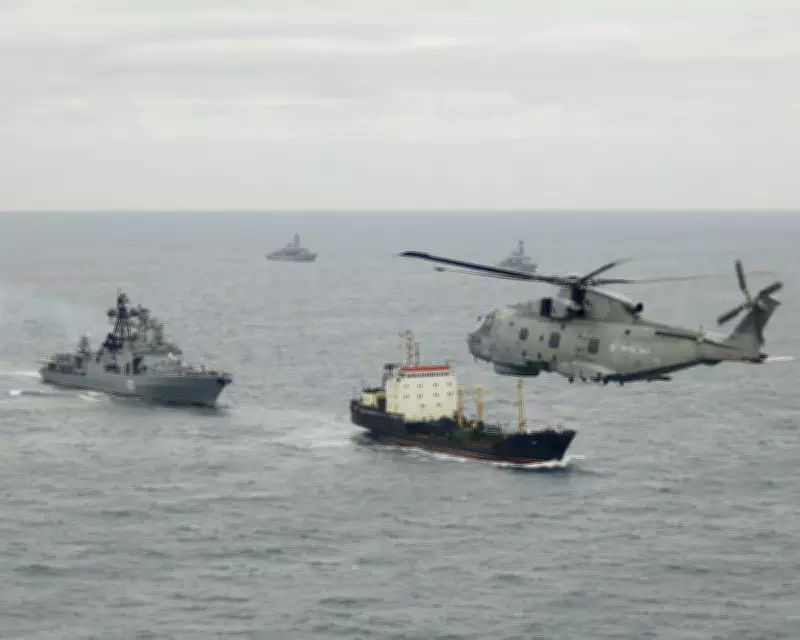
In a significant defence operation, the Royal Navy successfully tracked and deterred Russian submarines attempting to survey vital undersea infrastructure in the North Atlantic, according to Defence Secretary John Healey. The operation, which lasted over a month, involved a warship and a P8 marine patrol aircraft monitoring three Russian submarines to prevent any malign activity.
Operation Details and Strategic Response
Speaking at a Downing Street press conference, Healey disclosed that the submarines included a nuclear-powered Akula class vessel and two deep-sea submarines from Russia's directorate for deep sea research (Gugi). The activity occurred in the UK's exclusive economic zone, extending up to 200 nautical miles from the coastline, rather than in territorial waters. He emphasized that this took place while global attention was focused on the Middle East due to US-Israeli tensions with Iran.
Healey issued a direct warning to President Vladimir Putin, stating, "We see you. We see your activity over our cables and our pipelines, and you should know that any attempt to damage them will not be tolerated and will have serious consequences." He assured that there is no evidence of damage to pipelines or cables, but UK forces, alongside allies, are verifying this.

Monitoring and Deterrence Efforts
The operation involved 500 UK personnel who ensured 24/7 surveillance of the Russian submarines. Healey described how the Akula submarine retreated home after being closely tracked, while the two Gugi submarines were monitored in and around UK waters until they departed northward. The Ministry of Defence notes that Gugi vessels can survey underwater infrastructure in peacetime but also possess capabilities to damage or destroy these critical links during conflicts.
This incident underscores growing concerns among the UK and NATO allies about the risks Moscow poses to undersea cables and pipelines, particularly following the invasion of Ukraine. Healey highlighted the operation as a demonstration of the UK's ability to detect and deter threats, advocating for increased defence spending to bolster such capabilities.
Broader Implications and International Context
When questioned about Donald Trump's criticisms of European NATO contributions, Healey refrained from commenting on social media but referenced discussions with US officials, affirming the US's commitment to NATO and Article 5 while urging European nations to enhance their efforts. The operation serves as a reminder of the ongoing geopolitical tensions and the importance of robust defence strategies in protecting national and allied interests.