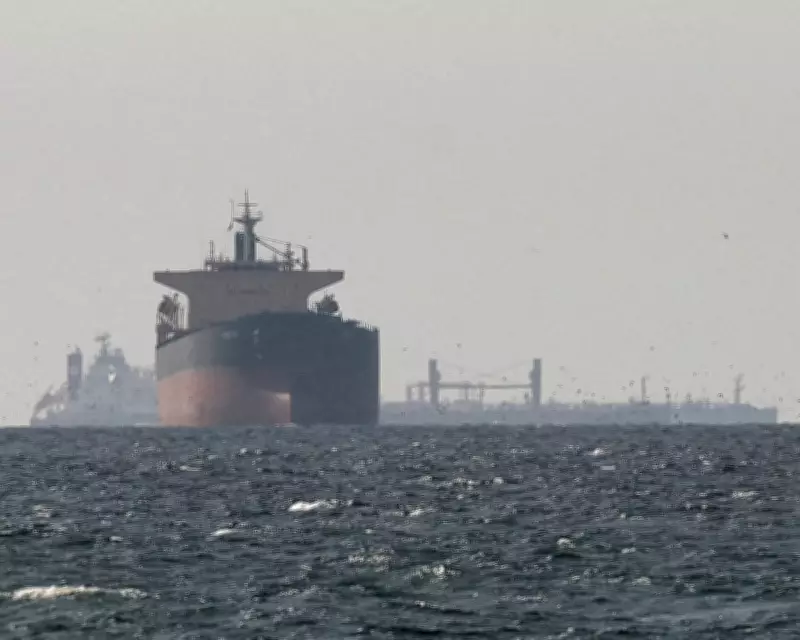
The United Kingdom has formally offered to host a major international security summit aimed at crafting a collective strategy to reopen the strategically vital Strait of Hormuz. This initiative comes as the economic repercussions of the ongoing conflict involving Iran continue to intensify, with the crucial shipping conduit effectively closed.
Defence Chiefs Grapple with Global Oil Supply Crisis
Senior defence officials have been engaged in intensive discussions on methods to unblock this essential maritime passage. Approximately one-fifth of the world's total oil supplies typically transit through the Strait of Hormuz, making its closure a severe blow to global energy markets and economic stability. The crisis was triggered by escalating tensions in the Middle East, primarily involving the United States and Israel.
Military Planning and International Coordination Underway
The UK Ministry of Defence has already dispatched military planners to US Central Command headquarters to evaluate potential options for safely escorting oil tankers through the strait. The passage has been rendered impassable due to Tehran's explicit threats of retaliatory attacks against commercial shipping.

In a significant show of multilateral concern, more than thirty nations—including the United Arab Emirates, the United Kingdom, France, Germany, Canada, and Australia—have jointly signed a statement committing to collaborate on "appropriate efforts" to safeguard the waterway and restore its operational status.
UK military leaders have conducted detailed talks with their international counterparts to address the practical challenges of securing the strait. Among the tactical options under serious consideration is the deployment of advanced minesweeping drones to the Gulf region. This deliberation follows the refusal by several Western nations to accede to former US President Donald Trump's requests for naval vessel deployments during the peak of the conflict's volatility.
Path Forward: A Proposed Security Conference
A senior defence official, speaking on condition of anonymity, revealed that a follow-up meeting between chiefs of defence staff from the signatory nations is scheduled for later this week. This gathering may also extend invitations to countries that have not yet endorsed the joint statement.
"I anticipate that at some point in the near future there'll be some kind of Strait of Hormuz security conference," the official stated. Potential venues for this high-level summit include London or the Royal Navy headquarters in Portsmouth. The objective is to "build this coalition and develop momentum so that as soon as the conditions are right, we're able to open a safe route through the strait and provide that reassurance to merchant shipping."
Political Pressure for De-escalation Mounts
During a session with the Commons liaison committee, Labour leader Keir Starmer cautioned that a "quick and early end" to the conflict was unlikely, despite Trump's decision to postpone strikes on Iranian power infrastructure. The UK and its allies are urgently advocating for a swift de-escalation, driven by growing alarm over the profound economic damage inflicted by the strait's closure.
The economic impact is already severe and widespread. Global oil prices and government borrowing costs have surged dramatically, exerting upward pressure on inflation rates worldwide. Matt Western, the Labour MP who chairs the joint committee on national security strategy, issued a stark warning. He characterized the conflict as rendering Trump's presidency one of the "most foolhardy and costly" for the international economy.
"Trump and Netanyahu's catastrophic military folly is crippling the global economy and hurting the pockets of British consumers," Western asserted. "Despite this government's best efforts, we are still heavily dependent on oil and gas. About 20% of the world's oil passes through the Strait of Hormuz; it is the busiest oil shipping channel in the world. And it is at a virtual standstill. As expected, the price of energy has skyrocketed. Gas prices have almost doubled and the price of oil has jumped."

Western called on Western leaders to maintain a firm stance in demanding urgent de-escalation. He accused "trigger-happy Trump" of committing a "massive strategic error which is damaging its allies and benefiting its adversaries," noting that geopolitical rivals like China and Russia are capitalizing on the crisis for their own economic and political gain.