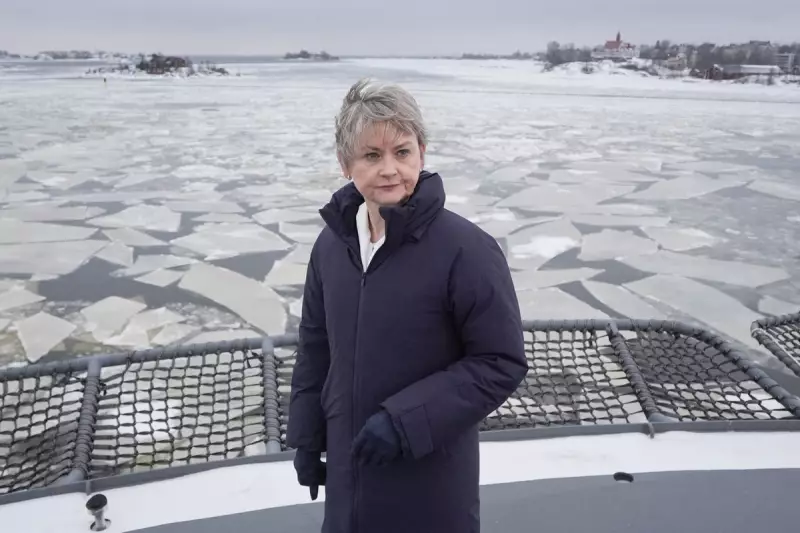
The United Kingdom has deployed a military officer to Greenland, joining a multinational effort to bolster security in the strategically vital Arctic region. This move comes as Denmark, which governs the semi-autonomous territory, enhances its military posture in the High North.
Allied Response to Arctic Tensions
Denmark's Defence Minister, Troels Lund Poulsen, announced the joint operation on Wednesday, 14 January 2026, stating it would involve several allied nations. He cautioned that "no one can predict what will happen tomorrow", underscoring the heightened sense of urgency. A spokesperson for Downing Street confirmed the deployment of one UK military officer at Denmark's request. The officer will join a reconnaissance group ahead of a planned exercise named Operation Arctic Endurance.
The UK government explicitly aligned itself with security concerns voiced by US President Donald Trump. "We share President Trump's concern about the security of the High North," the Downing Street spokesperson said. They framed the action as part of a broader effort by NATO and Joint Expeditionary Force (JEF) nations to reinforce the region through stronger exercises, aiming to deter Russian aggression and monitor Chinese activity.

International Coalition Forms
The mission has rapidly gained international support. Germany, Sweden, Norway, and France have all confirmed they will send personnel to the joint operation. According to a statement from Denmark's Ministry of Defence, the goal is to map out further cooperation to bolster regional security and strengthen allied operational capabilities in the challenging Arctic environment.
French President Emmanuel Macron confirmed his country's participation on Wednesday, announcing in a post on X: "At the request of Denmark, I have decided that France will participate in the joint exercises organised by Denmark in Greenland, Operation Arctic Endurance." He added that the first French military elements were already en route.
Background: Trump's Greenland Ambitions and Diplomatic Moves
The renewed military focus follows persistent pressure from President Trump, who has long insisted the US should assume control of Greenland to pre-empt Russian or Chinese influence. His administration has previously threatened to use force to annex the territory, causing significant concern within the transatlantic alliance.
Since the start of 2026, when US discussions about annexation became public, the UK has intensified its dialogue on Arctic security. Prime Minister Sir Keir Starmer raised the issue in calls last week with President Trump, the Danish prime minister, and the NATO Secretary-General.
Concurrently, Foreign Secretary Yvette Cooper has been touring Scandinavia, pledging to step up Arctic security. "Britain is stepping up on Arctic security," she stated ahead of her trip. "With our allies we are working to strengthen Arctic defences and deter any attempts from the likes of Vladimir Putin to threaten our interests and our infrastructure." She described Arctic security as a critical transatlantic partnership issue for both Britain and NATO.
Despite the underlying tensions, diplomatic channels remain open. Danish officials agreed to create a working group during a meeting in Washington on Wednesday with US Vice President JD Vance and Secretary of State Marco Rubio, even amidst what was described as a "fundamental disagreement" over the proposed American takeover of Greenland.