UK Submarine Shortage Exposes AUKUS Vulnerabilities as HMS Anson Recalled
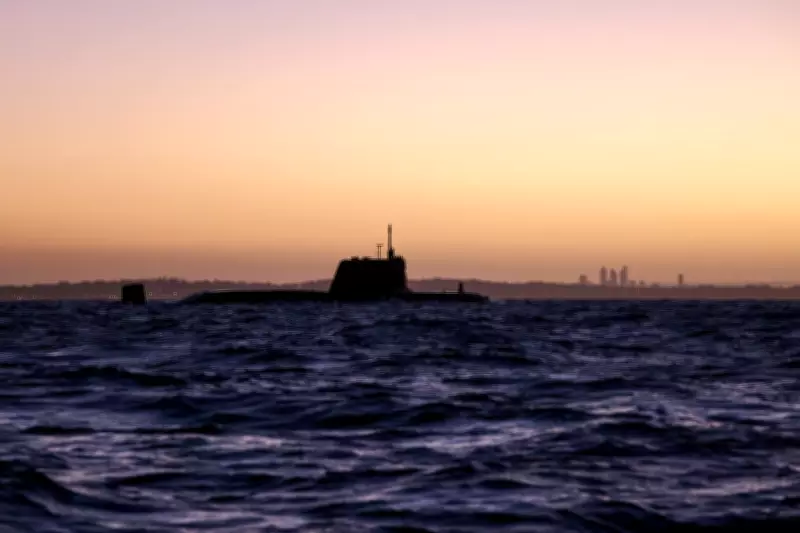
The recent deployment of HMS Anson, a British Astute-class nuclear attack submarine, to Australia was intended to symbolise a historic new phase in the AUKUS security pact. Surfacing off the coast of Perth last month, it was hailed as a demonstration of political will behind the ambitious trilateral agreement between Australia, the United Kingdom, and the United States. However, the submarine's abrupt recall to the Middle East amid escalating conflicts has starkly underlined the UK's scarcity of operationally ready attack submarines, casting shadows over the entire AUKUS framework.
A Fleet in Disrepair
HMS Anson is currently the only attack submarine in the British fleet that can be deployed, out of a supposed complement of six. The others are all undergoing maintenance, refits, or have been stripped for parts to keep other vessels afloat. This situation prompted the news site Navy Lookout to question whether local concerns should take priority over foreign adventurism. The recall of Anson, without fanfare or triumphalism, serves as a neat metaphor for AUKUS itself: abundant political intent but severely lacking in practical capacity.
The Demanding AUKUS Timeline
Under the AUKUS agreement, Australia is set to acquire nuclear-powered submarines, initially through US Virginia-class vessels and later via a new SSN-AUKUS class to be designed and built by the UK. The published optimal pathway forecasts the first UK-built AUKUS submarine for the Royal Navy in the late 2030s, with Australia's first vessel due in the early 2040s. However, this timeline is described as demanding by even the most optimistic accounts. The UK faces pressing priorities, including completing the final Astute-class boat and constructing four Dreadnought-class nuclear ballistic submarines, all at BAE Systems' Barrow-in-Furness shipyard.

Industry Challenges and Delays
Rear Admiral Philip Mathias, a former director of nuclear policy at the UK Ministry of Defence, has warned that the UK is no longer capable of managing a nuclear submarine program, citing gross mismanagement and catastrophic failures in leadership planning. Lord Case, formerly head of Britain's civil service, echoed this sentiment, calling it a source of national shame. The UK government insists it can build AUKUS submarines at a rate of one every 18 months, but the smaller Astute-class has averaged one every three to four years, with HMS Agamemnon taking over 12 years to complete.
Okopi Ajonye, co-director of the Nuclear Information Service, highlights that the UK's submarine industry is highly consolidated, with only one site producing all submarines. He points to ongoing challenges, such as the Rolls-Royce-led project for nuclear reactor cores being rated unachievable for four consecutive years. Without these cores, there can be no nuclear submarines, raising serious doubts about timely delivery.
Australia's Precarious Position
Australia finds itself in an invidious position, with the most at stake in AUKUS but the least control over its unfolding. If the US fails to provide Virginia-class submarines due to legislative constraints and the UK's timeline falters, Australia could be left with nothing, as its ageing Collins-class diesel-electric submarines are already extended beyond their slated lifespan. Australian tax dollars, totalling billions, are flooding into foreign shipbuilding industries, yet the country remains at the back of the queue.
Geostrategic and Environmental Concerns
Dr Marion Messmer of Chatham House argues that investments are starting to bear fruit, with Dreadnought construction milestones being met and capacity expanding at Barrow. She notes that the shifting geostrategic landscape, particularly since Russia's invasion of Ukraine, compels all AUKUS partners to uphold the deal. However, Marcus Hellyer of Strategic Analysis Australia describes himself as Aukus agnostic, questioning the lack of public debate and the reliance on a chronically underfunded UK naval enterprise.

Additionally, environmental concerns loom large. The UK has decommissioned 23 nuclear submarines but never dismantled a single one, with ten retired subs still nuclear-fuelled and sitting in docks. Australia has yet to identify a permanent storage site for high-level nuclear waste, despite promises made over three years ago.
Competitive Pressures
Since AUKUS was announced in 2021, no additional AUKUS-nation submarines have been built beyond pre-existing pipelines. In contrast, China, the superpower AUKUS aims to counter, has launched ten nuclear submarines in that time. China's dominance in civilian shipbuilding, driven by efficiency and technology, poses a significant competitive threat, underscoring the challenges facing Western naval industries.
In summary, the recall of HMS Anson has exposed critical vulnerabilities in the AUKUS pact, highlighting the UK's submarine shortages and raising questions about the feasibility of its ambitious timelines. As Australia's hopes hinge on foreign capabilities, the path forward remains fraught with uncertainty and demanding challenges.