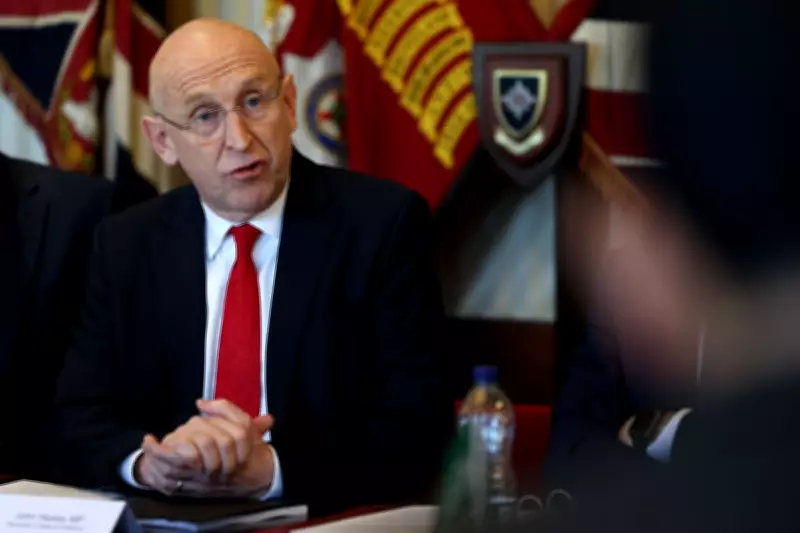
Defence Secretary John Healey has declared that Britain will significantly enhance its defensive support for Gulf nations in response to what he termed a "serious escalation" of conflict, following overnight Iranian strikes on multiple energy facilities across the region. Speaking during a visit to Dreghorn Barracks in Edinburgh, Mr Healey emphasised the urgent need for de-escalation as these attacks threaten to further destabilise the Middle East.
Iranian Strikes Target Critical Energy Infrastructure
In retaliation for an Israeli strike on its primary natural gas field, Iran launched coordinated attacks on key energy sites last night. The targets included a major Saudi oil refinery, several Qatari gas facilities, and two additional oil refineries in Kuwait. This aggressive move has immediately impacted global markets, with oil prices surging to 119 dollars per barrel on Thursday morning before settling slightly at 113 dollars, raising concerns about heightened global inflation and the security of fossil fuel supplies.
UK's Defensive Response and Regional Concerns
Mr Healey, in discussions with the Press Association, underscored the UK's shared anxieties regarding Iranian aggression. He stated, "They're a serious escalation. They further destabilise the region and we will step up the defensive support that we can offer to those Gulf states." British military assets are already actively engaged in the area, with RAF jets conducting defensive sorties against Iranian drones over the Gulf and British air defence systems safeguarding critical infrastructure in Saudi Arabia.

Furthermore, UK military planners have collaborated with US Central Command to develop proposals for reopening the Strait of Hormuz, a vital trade route for global oil and gas shipments. Mr Healey highlighted the domestic implications, noting, "We can see the impact here on the cost of living, the price of fuel, so it's important that we do everything we can with a lot of other countries that need to be involved in trying to reopen those straits." He advocated for de-escalation as the optimal strategy to alleviate pressure on world oil prices.
International Coordination and Diplomatic Efforts
In response to the crisis, Prime Minister Sir Keir Starmer convened an emergency Cobra committee meeting on Thursday morning. He also engaged in discussions with French President Emmanuel Macron and NATO Secretary-General Mark Rutte, focusing on the "egregious Iranian strikes" and formulating a "viable plan" to restore access through the Strait of Hormuz.
Subsequently, Sir Keir joined leaders from France, Germany, Italy, the Netherlands, and Japan in issuing a joint statement that strongly condemned Iran's attacks on shipping and energy facilities, as well as the "de facto closure" of the strait. The statement expressed "deep concern about the escalating conflict" and called on Iran to immediately cease its threats, including mine-laying, drone and missile attacks, and other obstructionist tactics against commercial shipping, in compliance with UN Security Council Resolution 2817.
Approved on March 11, Resolution 2817 specifically condemns Iran's assaults on neighbouring countries and urges Tehran to halt hostilities. The allied leaders also affirmed their "readiness to contribute to appropriate efforts" to reopen the strait and implement "other steps to stabilise energy markets," underscoring a unified international approach to addressing this critical security and economic challenge.