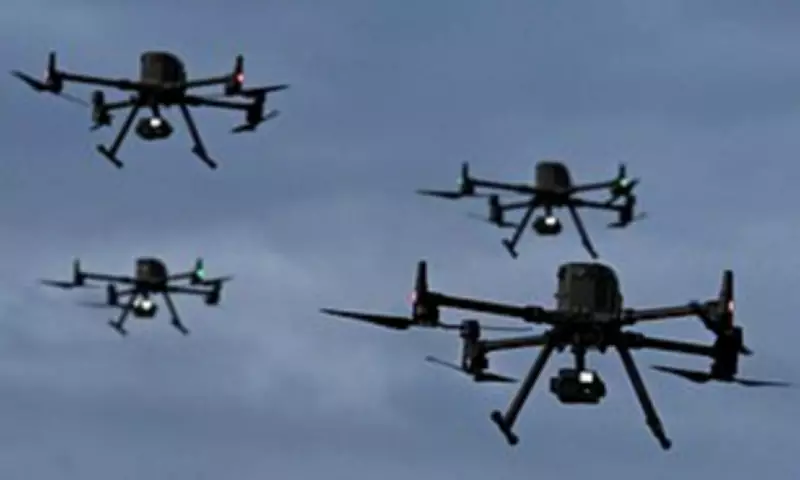
British troops will now be authorised to shoot down drones operating near their military bases under new powers that have been rapidly introduced. This legislative move comes in direct response to a concerning doubling of dangerous drone incidents recorded over the past year.
A Sharp Rise in Drone Incidents
Last year, there were more than 250 drone incidents reported in close proximity to UK defence sites, a significant increase from the previous year. Security officials suspect the involvement of foreign states in many of these events, raising serious national security concerns.
Sinister Activity at US Bases
In 2024, British soldiers specialising in counter-drone warfare were deployed to four separate US military bases located within the United Kingdom. This deployment followed multiple reports of suspicious drone activity. At American airbases in Suffolk, Norfolk, and Gloucestershire, swarms of up to twenty drones were observed.

Police authorities described these drones as 'non-hobby' platforms, leading to fears that they were part of a reconnaissance operation potentially linked to the Kremlin. The unidentified drones flew at low altitudes over runways, presenting a potentially fatal threat to aircraft and their crews.
New Defence Powers and Statements
On Monday night, Defence Secretary John Healey addressed the growing threat. 'The doubling of rogue drones near military sites in the last year underlines the increasing and changing nature of the threats we face,' he stated.
'Through the Armed Forces Bill we are giving our military greater powers to take out and shoot down threatening drones near bases and stepping up investment in counter-drone technology to keep Britain secure at home and strong abroad.'
Expanded Authority for Personnel
Previously, troops were restricted to diverting drones or implementing measures to shield the airspace above and around military installations. The new powers represent a substantial escalation in their response capabilities. Furthermore, personnel aboard Royal Navy ships will be granted the same enhanced authorities to take action against threats at sea, on the water's surface, and beneath it.
Statistical Evidence and Legislative Changes
The scale of the problem is clear in the data. There were 266 'Uncrewed Aerial Vehicle' incidents near defence sites in 2025, a sharp rise from 126 incidents recorded in 2024. Alongside the new shoot-down powers, tighter legislation has been introduced governing drone use. This includes a requirement for licences for aircraft weighing more than 100 grams, lowering the previous ceiling of 250 grams which had permitted the operation of much larger platforms.
Enhanced Security Measures
In a parallel move to bolster defences, restricted airspace status has now come into effect at forty UK military sites. This is supported by enhanced CCTV coverage and additional physical security measures at these bases. The Ministry of Defence has declined to comment on the findings of investigations conducted by MOD Police into the recent drone incursions.
Broader Context and Investment
The conflict in Ukraine has demonstrated the pivotal role of drones in modern warfare, with the country becoming a world leader in drone development for both munitions delivery and reconnaissance. Recognising this shift, the UK government has quadrupled its expenditure in this specialised area, allocating more than £200 million over the course of 2026 for counter-drone technology, which may include advanced systems like lasers.
European Cooperation on 'Drone Walls'
This national response is part of a wider European security initiative. Following repeated Russian incursions into NATO airspace, European allies are discussing the creation of interconnected 'drone walls'. These defensive networks would connect Scandinavia, the Baltic states, and Eastern European nations such as Poland. The first pan-European drone wall is anticipated to be operational from 2027, marking a significant step in collective continental defence.