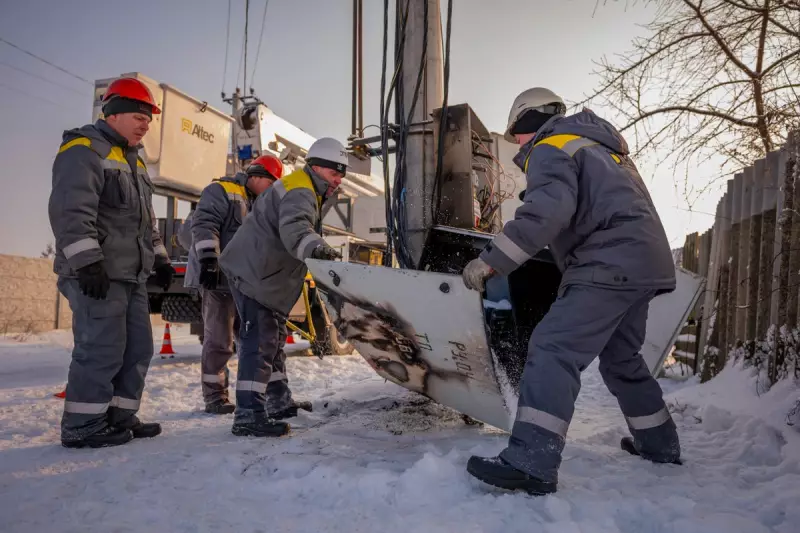
Ukrainian President Volodymyr Zelensky has declared his intention to impose a state of emergency within the nation's energy sector. This drastic step is a direct response to the severe and sustained Russian bombardment that has left critical infrastructure in ruins and millions without reliable power.
Unrelenting Assault on Critical Infrastructure
The decision, announced on Thursday 15 January 2026, follows what officials describe as a massive and coordinated Russian air assault targeting Ukraine's energy network. These attacks have caused widespread blackouts, disrupting electricity and heating supplies for countless households during one of the coldest periods of the year.
Repair crews are now engaged in a desperate race against time and the elements. Their work is focused on restoring essential services, particularly in the capital, Kyiv, which suffered some of the most significant damage from strikes carried out last week. The situation is compounded by the harsh winter conditions, with night-time temperatures plummeting to nearly -20C, further endangering vulnerable residents and hampering repair efforts on thousands of affected apartment blocks.

A Measure for Greater Flexibility and Response
In announcing the planned state of emergency, President Zelensky stated that existing measures and responses had proven insufficient to deal with the scale of the crisis. The new legal framework is designed to grant authorities enhanced options and greater flexibility to manage the aftermath of the attacks, streamline coordination, and accelerate the recovery process.
The move underscores the severity of the damage inflicted on Ukraine's power grid and the ongoing humanitarian challenge posed by the loss of heating in sub-zero conditions. It represents a shift to crisis-level governance for a vital sector of the economy and daily life, as the nation continues to defend itself against attacks on its civilian infrastructure.
A Nation Battling on Multiple Fronts
This energy crisis unfolds alongside continued military conflict. The announcement is intrinsically linked to the human cost of the war, as referenced by related reports of casualties, including four people killed in Kharkiv during the same wave of aerial attacks. The state of emergency in the energy sector is a stark reminder that the war's impact extends far beyond the front lines, directly threatening the basic survival of the population during winter.
As emergency teams work around the clock, the declaration aims to cut through bureaucratic hurdles, potentially allowing for the requisition of resources, imposition of special schedules, and centralised control over energy distribution to protect citizens from the extreme cold.