

Ukrainian Drone and Missile Assault Targets Russian Industrial War Machine
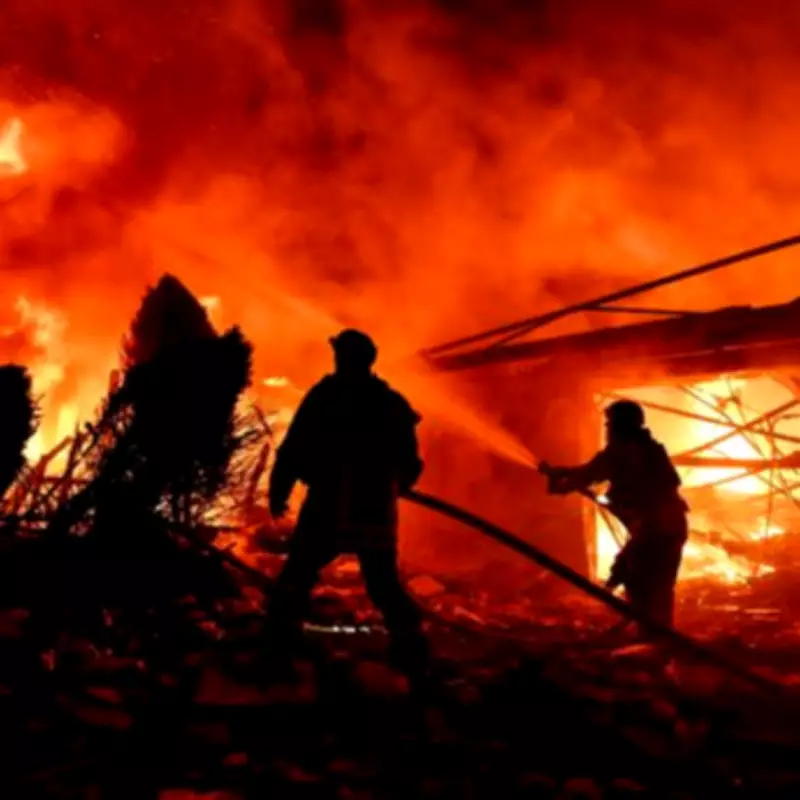
In a significant escalation of attacks behind enemy lines, Ukrainian forces have launched a coordinated barrage of missiles and drones targeting Russia's critical industrial infrastructure. The overnight and early morning assaults set multiple facilities ablaze, directly striking at Vladimir Putin's capacity to sustain his military campaign in Ukraine.
Strategic Strikes on Manufacturing and Chemical Plants
More than one hundred Ukrainian drones were deployed against manufacturing complexes, chemical production facilities, and metallurgical plants across Russian territory. These precision attacks aim to degrade Moscow's war economy and disrupt its ability to manufacture weapons, ammunition, and military vehicles.
Among the key targets was the KuibyshevAzot chemical plant in Russia's Samara region, a vital facility for producing materials used in munitions and explosives. Another successful strike hit a metallurgical plant in occupied Luhansk that specializes in manufacturing shell casings and armored vehicle components.

Additional waves involving approximately sixty drones targeted the Rostov and Krasnodar regions in the early hours, marking a strategic shift as Kyiv brings the conflict directly to Russian population centers and industrial heartlands.
Recent Ukrainian Successes Against Russian Infrastructure
This latest offensive follows Ukraine's successful attacks on the Baltic ports of Primorsk and Ust-Luga during the past week. These facilities represent the region's largest oil export terminals, handling approximately one million barrels of oil daily. The strikes demonstrate Ukraine's growing capability to disrupt Russia's energy exports and economic stability.
Pro-Kremlin Bloggers Break Ranks to Praise Ukrainian Military
In a remarkable development, prominent Russian military bloggers who typically support the Kremlin's war narrative have begun openly acknowledging Ukrainian successes and criticizing Russia's military performance. These influential voices risk severe penalties, including up to fifteen years imprisonment, for their candid assessments.
Yuri Podolyaka's Startling Assessment
Yuri Podolyaka, one of Russia's most followed military bloggers, has delivered a sobering evaluation that contradicts years of Russian propaganda about Ukrainian inferiority. In his latest analysis, Podolyaka praised Ukrainian forces as "highly qualified specialists" who are "working very effectively against our rear areas."
"Little by little, the advantage is going to our enemies," Podolyaka admitted. "They know how things work, and they are working to take advantage of the technical superiority that they have. Unfortunately, they are succeeding."
Growing Chorus of Criticism Within Russian Circles
Podolyaka represents a growing number of Russian military commentators who are willing to risk imprisonment to voice concerns about Russia's deteriorating battlefield position. These bloggers have become increasingly critical of Moscow's military strategy and execution.
"I know it seems like we - Russia - have more strength and more resources, but the enemy is counterattacking, and he is succeeding," Podolyaka stated, directly challenging the narrative of Russian military superiority.
Pessimistic Outlook for Russian Offensive Operations
The blogger expressed deep skepticism about Russia's much-anticipated 2026 offensive campaign, predicting significant Russian losses instead of breakthroughs. "Unfortunately, I think that in the coming months we will not be able to change this situation," he warned. "How we can actually do that, honestly, it's difficult to see. It's absolutely clear there will be big losses."
Admission of Ukrainian Tactical Superiority
In perhaps his most startling admission, Podolyaka acknowledged Ukrainian superiority in drone warfare and adaptive military tactics. "The enemy is working very effectively against our rear areas and is attacking our logistics... unfortunately, we have no way to protect those areas effectively," he confessed.

He further noted that "our enemy is very, very effective. He learns extremely quickly. Much more quickly than we do. He quickly creates new tactics, and even a strategy of modern war; now, even NATO countries are starting to use it, because they admit that in this, the Armed Forces of Ukraine is the leader in this area."
Podolyaka concluded with a frank assessment that reverses years of Russian military propaganda: "I can't say to you that they are weaker than us in this. Unfortunately, they're stronger."
This combination of successful Ukrainian strikes on Russian industrial targets and unprecedented criticism from within pro-Kremlin circles suggests significant challenges ahead for Moscow's war effort as the conflict enters its fifth year.





